
Israel Signals Direct Talks with Lebanon on Hezbollah Disarmament: A Historic Diplomatic Gambit

0
0
BitcoinWorld
Israel Signals Direct Talks with Lebanon on Hezbollah Disarmament: A Historic Diplomatic Gambit
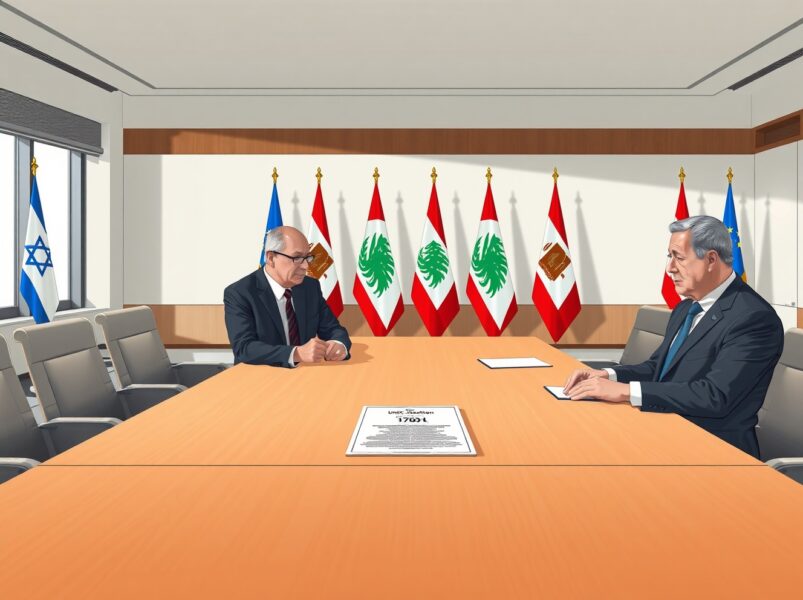
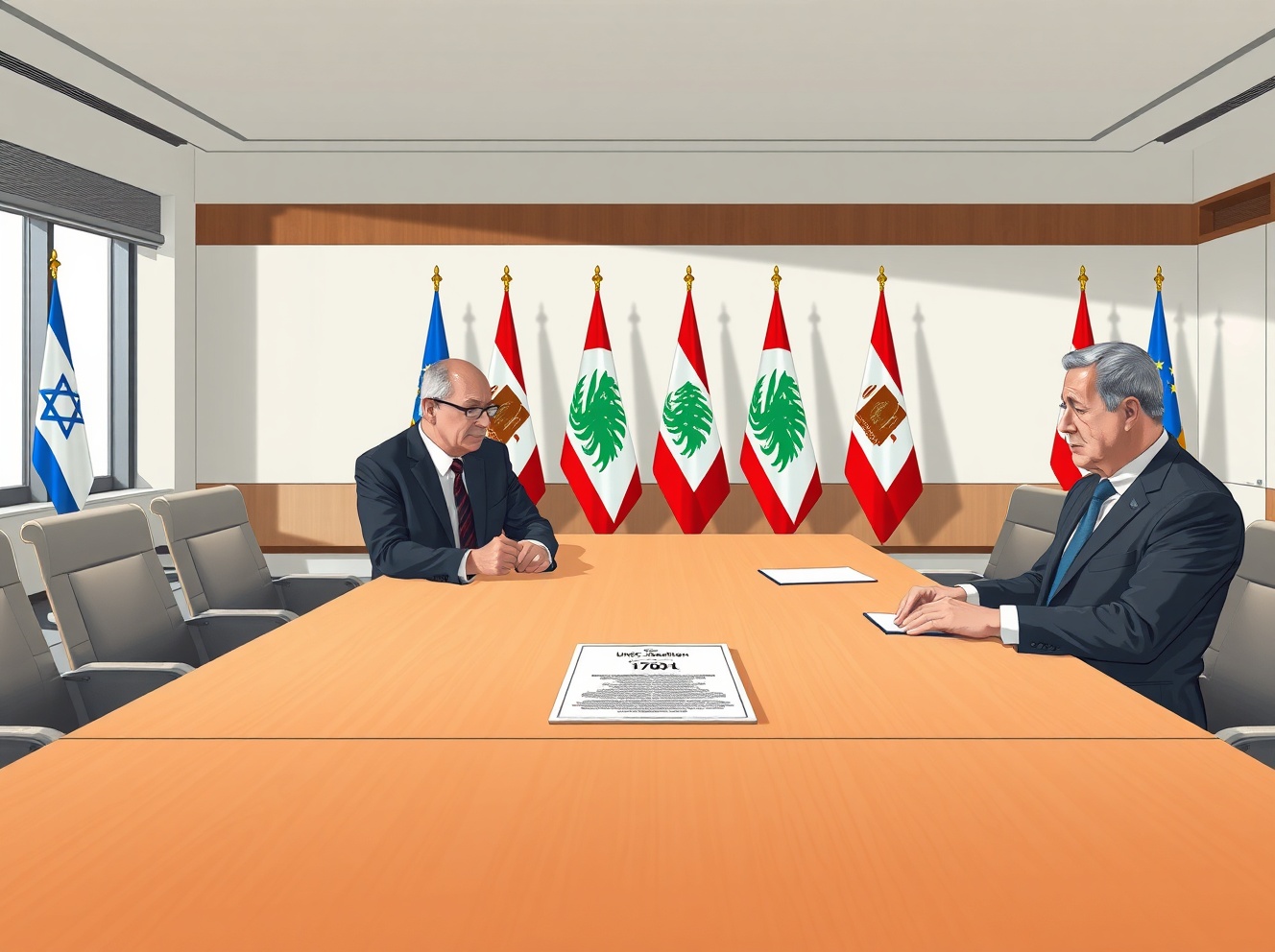
In a significant development for Middle Eastern geopolitics, Israel has formally signaled its readiness for direct talks with the Lebanese government concerning the long-standing issue of Hezbollah’s disarmament. This move, reported from Jerusalem and Beirut in early 2025, represents a potential diplomatic breakthrough after years of indirect negotiations and proxy conflict. The initiative directly addresses the core mandate of United Nations Security Council Resolution 1701, which ended the 2006 Lebanon War but has seen only partial implementation. Consequently, this overture could reshape the security architecture of the Levant, offering a fragile path toward de-escalation along a historically volatile border.
Israel Lebanon Talks: Decoding the Strategic Shift
Israeli officials have communicated this new position through multiple diplomatic channels, including the United Nations Interim Force in Lebanon (UNIFIL). The proposal explicitly calls for state-to-state negotiations, bypassing Hezbollah as a direct party. This framework insists on treating the militant group’s arsenal as a sovereign Lebanese responsibility. For context, Hezbollah maintains a vast military infrastructure independent of the Lebanese Armed Forces (LAF), with estimates suggesting a rocket arsenal exceeding 150,000 projectiles. Historically, Israel has engaged only in indirect talks, often mediated by Washington or through military posturing. Therefore, this shift toward direct dialogue marks a substantive change in Israeli strategy, likely driven by a complex assessment of regional deterrence and normalization prospects.
Analysts point to several converging factors enabling this move. First, the Lebanese state faces unprecedented economic and political crises, potentially weakening Hezbollah’s domestic political shield. Second, ongoing Israeli normalization with Arab states may have created indirect pressure on Lebanon. Third, there is a mutual, albeit unspoken, interest in avoiding another devastating war. A short table illustrates the core issues on the table:
| Israeli Core Demand | Lebanese Core Concern | UN Resolution 1701 Stipulation |
|---|---|---|
| Full disarmament of Hezbollah | Preserving national sovereignty | Arms only in hands of LAF & UNIFIL |
| LAF deployment in south Lebanon | Preventing border militarization | Establishment of a weapons-free zone |
| Cessation of Iranian arms transfers | Maintaining internal political balance | Respect for the Blue Line by all parties |
The Complex Road to Hezbollah Disarmament
The path to implementing any agreement on Hezbollah disarmament remains fraught with immense challenges. Hezbollah is not merely a militia; it is a deeply entrenched political and social movement with significant representation in Lebanon’s parliament and cabinet. Its leadership consistently frames its weapons as essential for defending Lebanon against Israeli aggression, making voluntary disarmament a non-starter in its current rhetoric. Furthermore, the group receives substantial logistical and financial support from Iran, linking its fate to broader regional power struggles. Any negotiation process must therefore navigate:
- Domestic Lebanese Politics: The need for a broad national dialogue that includes all factions.
- Security Guarantees: Potential offers to strengthen the LAF as the sole national defender.
- International Monitoring: An enhanced role for UNIFIL or a new verification mechanism.
Past attempts, like the 2008 Doha Agreement, focused on political power-sharing but sidestepped the disarmament issue. This time, the international context is different. The United States and European powers, wary of further regional escalation, may offer incentives for compliance. However, they also maintain Hezbollah on terrorism lists, complicating any direct engagement. Meanwhile, the Lebanese public, suffering from a collapsed economy, may prioritize stability and reconstruction over ideological resistance, potentially altering the domestic calculus for Hezbollah’s leadership.
Expert Analysis on Regional Security Implications
Regional security experts emphasize the high-stakes nature of these tentative direct talks. “This is less about immediate disarmament and more about establishing a new diplomatic process,” notes Dr. Amira Halabi, a senior fellow at the Middle East Institute. “Israel is testing whether the Lebanese state, in its current fragile form, can even begin to assert sovereignty over its southern territory. The real goal may be to create a sustainable framework for managing incidents and preventing miscalculation that leads to war.” Success, however limited, could set a precedent for conflict management in the region. Conversely, a public failure could harden positions and increase the likelihood of military confrontation. The indirect impact on other Iranian-backed groups in Syria and Iraq is also significant, as it could signal a shift in the regional deterrence balance.
Historical Context and the UN Resolution 1701 Framework
Any discussion of Israel Lebanon talks is inextricably linked to UN Security Council Resolution 1701. Adopted in August 2006, the resolution mandated a full cessation of hostilities, the deployment of the LAF and an expanded UNIFIL force south of the Litani River, and the disarmament of all armed groups in the area. While the ceasefire has largely held, the disarmament clause remains unfulfilled. For nearly two decades, this implementation gap has been the primary source of tension. Israel regularly cites violations, while Lebanon and Hezbollah argue that the weapons are a legitimate defense necessity. The new Israeli proposal essentially seeks to revive 1701 as a bilateral action plan, moving it from a static UN file to an active diplomatic track. This approach attempts to leverage international law as a basis for direct negotiation, providing a face-saving formula for both states.
Conclusion
The signal from Israel for direct talks with Lebanon on Hezbollah disarmament opens a delicate and unprecedented diplomatic window. While monumental obstacles persist, the mere initiation of a state-to-state channel on this core security issue is a historic development. Its success hinges on complex internal Lebanese politics, regional power dynamics, and the willingness of international actors to support a sustained process. The coming months will reveal whether this gambit can transition from a strategic signal to a tangible negotiation, potentially altering the risk of conflict and the future of regional security in one of the world’s most volatile arenas.
FAQs
Q1: What is UN Security Council Resolution 1701?
UNSC Resolution 1701 is the foundational document that ended the 2006 war between Israel and Hezbollah. It calls for a full ceasefire, the withdrawal of Israeli forces from Lebanon, the deployment of the Lebanese Armed Forces and an enhanced UNIFIL peacekeeping force in southern Lebanon, and the disarmament of all armed groups in the area.
Q2: Why is Hezbollah’s disarmament such a critical issue for Israel?
Israel views Hezbollah’s extensive rocket and missile arsenal, which is capable of striking deep into Israeli territory, as a primary national security threat. Disarmament is seen as essential for ensuring the safety of northern Israeli communities and preventing the group from initiating or escalating future conflicts.
Q3: How has Lebanon historically responded to calls for Hezbollah’s disarmament?
The Lebanese government has maintained an official policy of “the Army, the People, and the Resistance,” which has allowed Hezbollah to retain its weapons as a parallel force. Successive governments have argued that disarmament must occur within a comprehensive national defense strategy, often linking it to a broader peace agreement with Israel.
Q4: What role does Iran play in this situation?
Iran is Hezbollah’s principal patron, providing funding, weapons, training, and political support. Tehran views the group as a crucial component of its “axis of resistance” against Israel and Western influence. Iranian support fundamentally shapes Hezbollah’s capabilities and its reluctance to disarm.
Q5: What would be the first practical steps if talks proceed?
Initial steps would likely focus on confidence-building measures, such as reinforcing the LAF-UNIFIL presence in the south, establishing direct military-to-military communication lines to prevent border incidents, and potentially negotiating a phased reduction of Hezbollah’s offensive capabilities near the Israeli border, all under a mutually agreed verification mechanism.
This post Israel Signals Direct Talks with Lebanon on Hezbollah Disarmament: A Historic Diplomatic Gambit first appeared on BitcoinWorld.
0
0

 Manage all your crypto, NFT and DeFi from one place
Securely connect the portfolio you’re using to start.

0
0


0
0

0
0