
What Ends a Crypto Bear Market in 2026? Six Catalysts Experts Are Watching

0
0

With Bitcoin price down more than 40% from its October all-time high just five months ago, and the overall crypto market cap losing nearly $2 Trillion, there’s no doubt that we’re in a bear market. But the big question is, when does it end?Beneath the price weakness, structural shifts are underway. During the latest BeInCrypto Expert Council discussion, leaders from Standard Chartered, Bitwise, and institutional crypto markets argued that the end of the bear market will likely come from several catalysts building over time.
The CLARITY Act
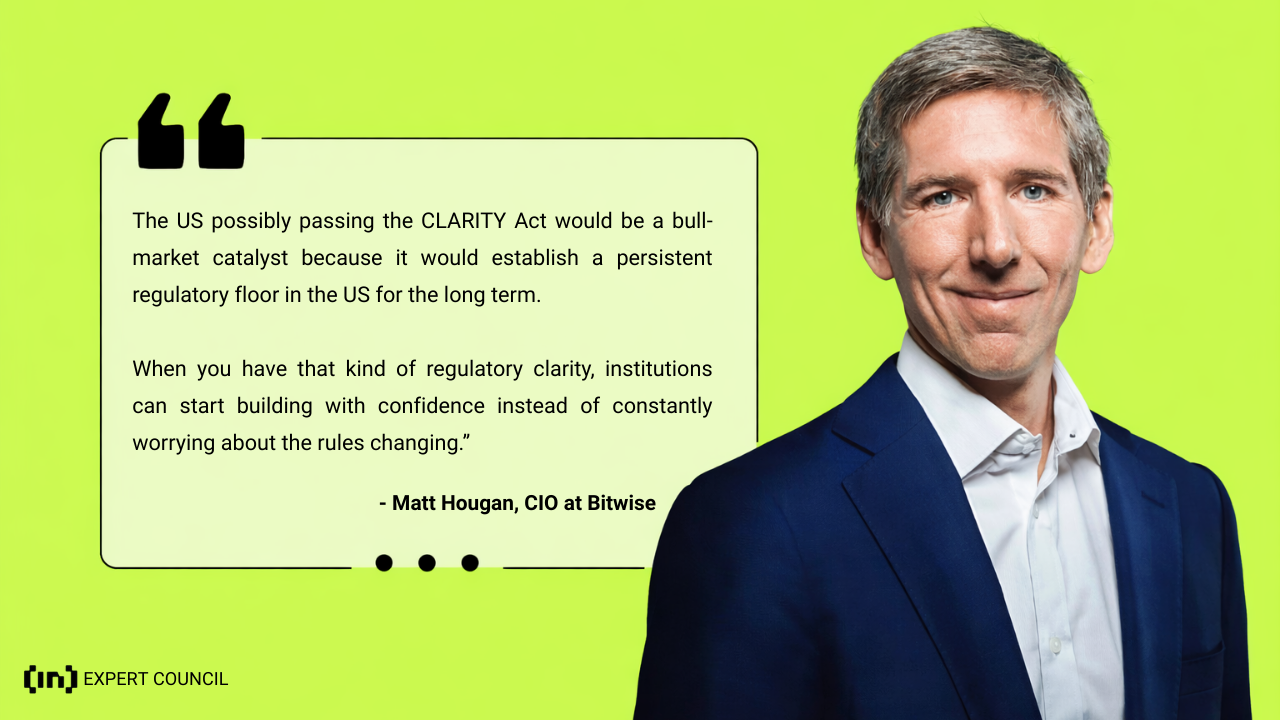
Since early 2025, there have been a lot of pro-crypto regulatory developments in the US. The GENIUS Act has opened the path for stablecoins, while the SEC has dropped its regulation by enforcement agenda.Yet, the biggest American crypto bill is still stuck, as Banks continue to push against stablecoin yields. The CLARITY Act.
The crypto market structure bill will define who oversees digital asset regulation. If passed, it will encourage banks, asset managers, and payment companies to expand their involvement.
For markets that are currently driven by caution and macro risk, the CLARITY Act could act as a powerful confidence signal.
Recovery in Tech Stocks and the Broader Macro Environment
Crypto markets remain heavily correlated with technology stocks and broader risk assets. When tech weakens, crypto often suffers amplified volatility.
Recent price declines have coincided with a broader risk-off environment, including pressure on technology equities and concerns about tighter financial conditions.
For example, the NASDAQ-100 Technology Sector Index remains down over 2% year-to-date.
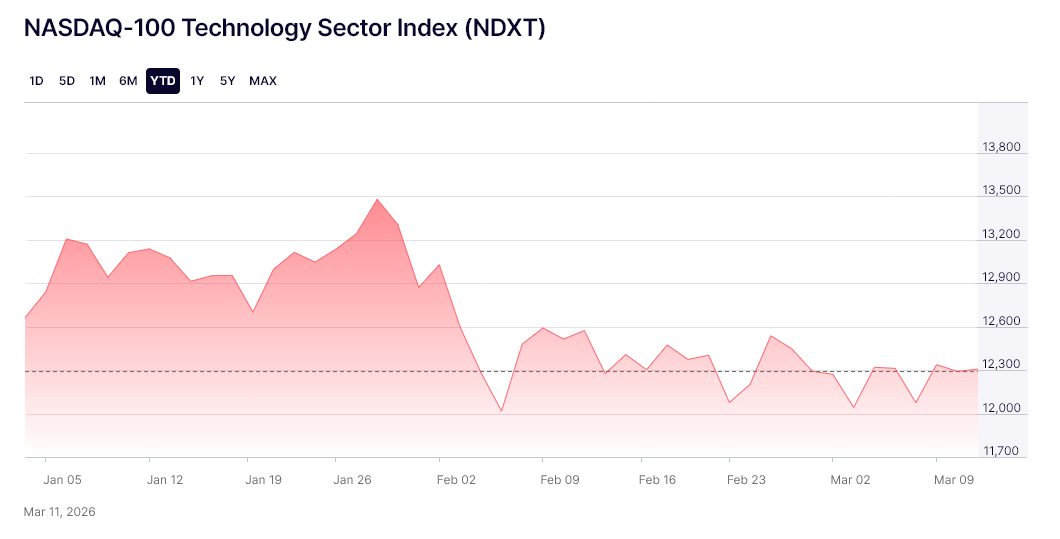 NASDAQ-100 Tech Index Price Chart. Source: Nasdaq
Because of the correlation, crypto may struggle to sustain a rally unless the macro backdrop improves.
In other words, the next crypto rebound may begin with signals outside the crypto sector itself.
The Return of Institutional ETF Flows
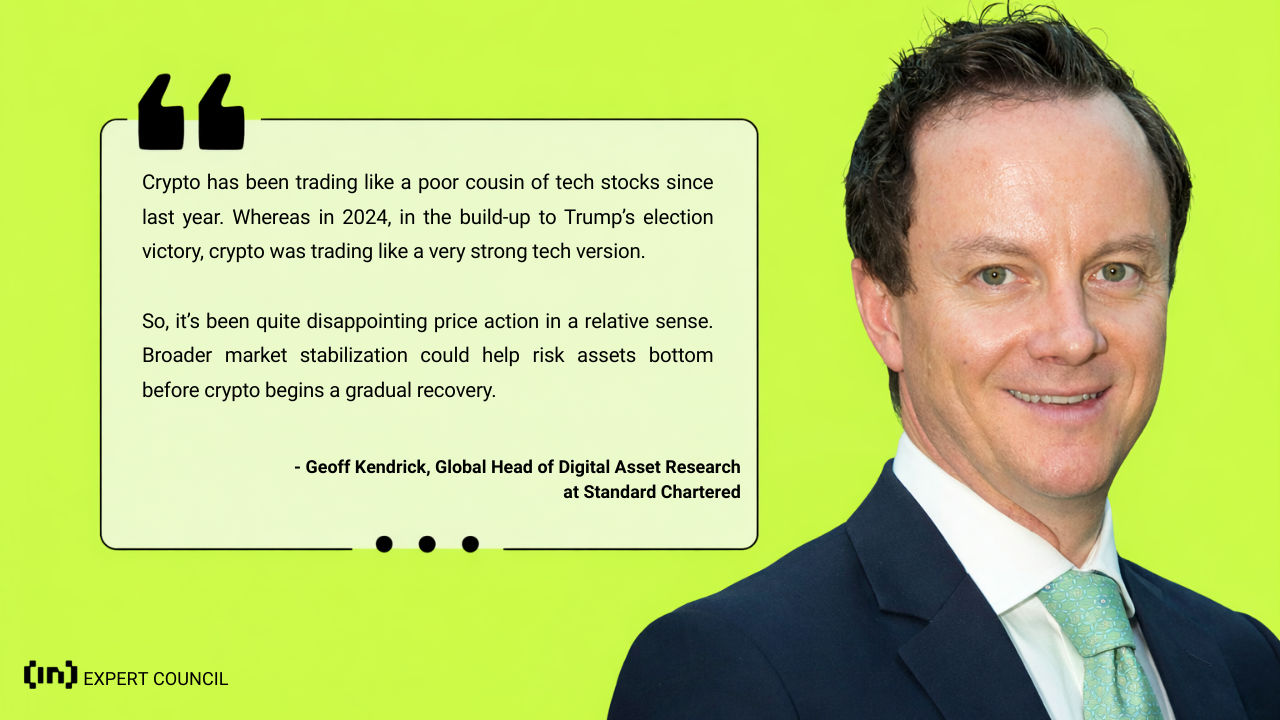
Institutional demand has become one of the most important forces shaping the crypto market. When Bitcoin ETFs saw strong inflows in 2024 and 2025, they absorbed significant market supply.
However, the recent downturn coincided with a wave of ETF outflows, which intensified the sell-off.
A reversal of that trend could signal that long-term investors once again view crypto prices as attractive entry points.
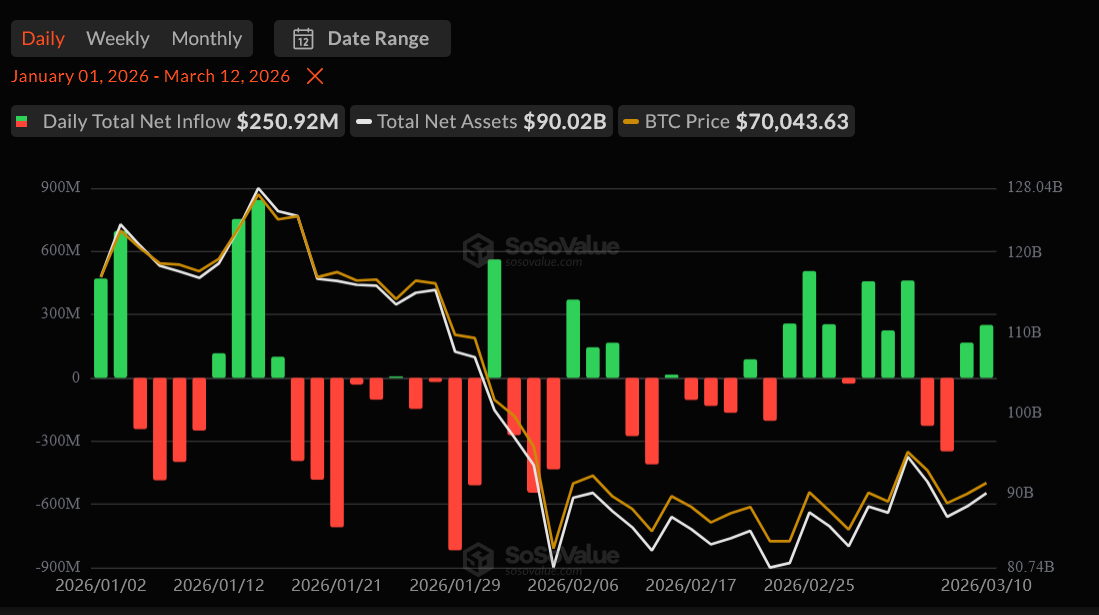 Daily Inflows and Outflows in US Spot Bitcoin ETFs Througout 2026. Source: SoSoValue
Institutional flows often move slowly, but once they return they can reshape market momentum.
“They’ll start to see Bitcoin prices at 50k or 60k as being extremely attractive medium-term plays,” Geoff Kendrick from Standard Chartered said.
Agentic Finance and the Next Blockchain Narrative
Another catalyst may come from a new technological narrative emerging around automated digital finance.
Agentic finance refers to AI-driven agents that can autonomously execute financial transactions, manage assets, and interact with blockchain networks.
The idea is still early, but major payments and technology companies are increasingly discussing automated financial systems built on blockchain rails.
If these ideas begin translating into real products and transaction growth, they could strengthen the long-term use case for decentralized infrastructure.
“The rise of agentic finance as a new narrative for crypto to build on, I think is a big emerging catalyst,” Matt Hougan said.
Progress on Quantum Risk Mitigation
Quantum computing risks have occasionally resurfaced as a concern for long-term blockchain security.
While the threat remains theoretical for now, parts of the crypto community continue to push for stronger cryptographic defenses.
Developers working on mitigation strategies could help remove one more uncertainty hanging over the market. Even incremental progress on quantum-resistant cryptography could reassure investors who worry about long-term infrastructure risk.
“Progress on quantum from Bitcoin core developers,” Hougan noted, could help address concerns among investors monitoring the issue.
Lower Volatility and Stronger Market Structure
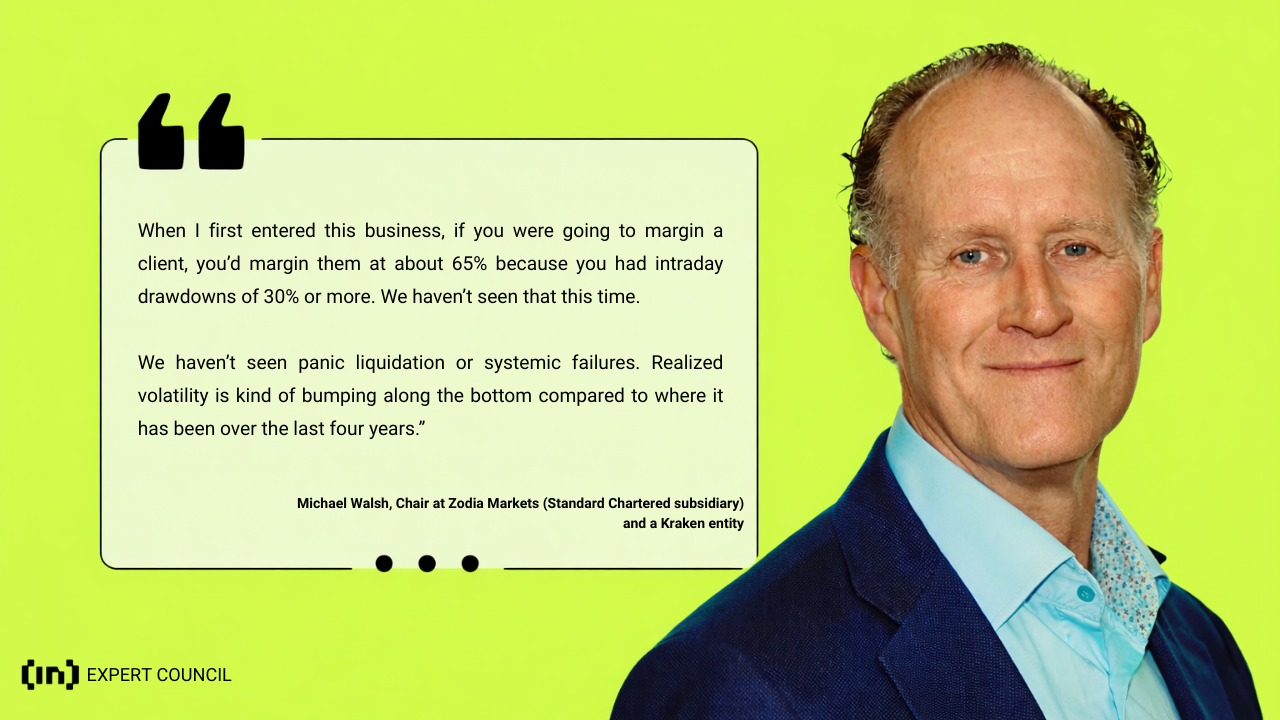
One notable difference between this downturn and previous crypto winters is the absence of large-scale industry failures. The collapse of major firms defined earlier bear markets, particularly in 2022.
Today, the market appears more stable. Infrastructure has improved, institutions are more involved, and volatility has moderated compared with earlier cycles.
Lower volatility often encourages investors to return, because markets begin to look less chaotic and more investable.
A Market That Turns Gradually, Not Overnight
The council’s final message was that the crypto market may not rebound through a single dramatic event.
Instead, the next cycle may begin slowly, as multiple structural developments build confidence over time.
“I think people are always asking what is the catalyst at which we bottom,” Hougan said. “That’s not the right mental model… I think of it like a scale where you add a pebble onto one side and it tilts a little bit.”
If that framework holds true, the end of the current bear market may not arrive suddenly. It may arrive quietly—one catalyst at a time.
0
0


 Manage all your crypto, NFT and DeFi from one place
Securely connect the portfolio you’re using to start.

0
0

0
0

0
0

0
0