
US Imposes Hormuz Blockade; Oil Rises as Bitcoin Dips to $70.6K

0
0
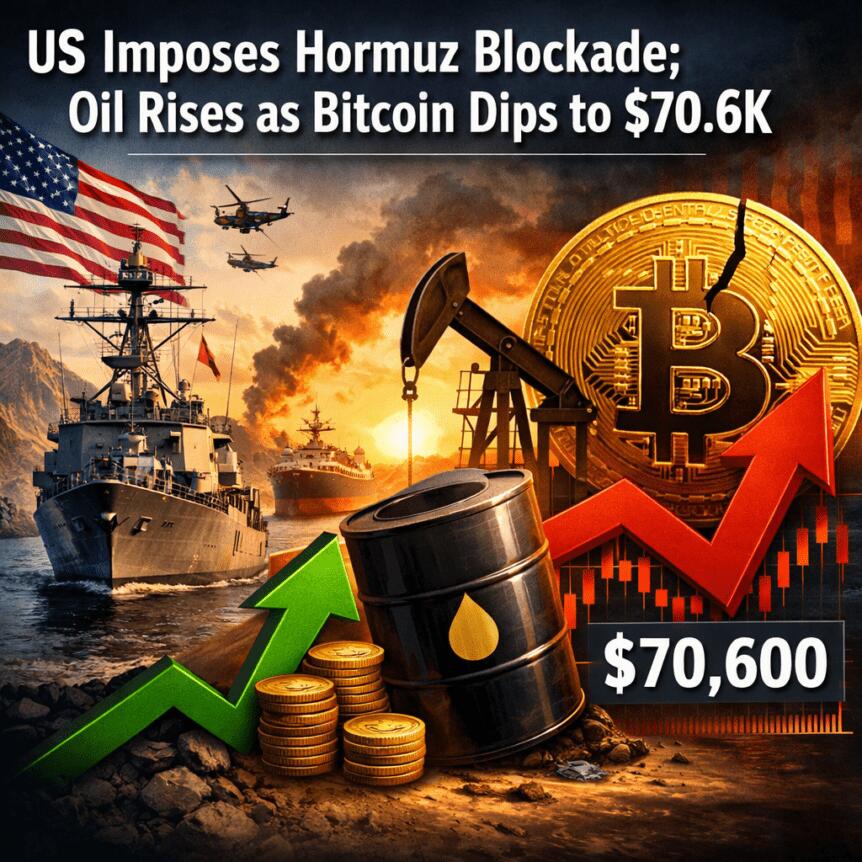
Geopolitical tensions surrounding the Strait of Hormuz intensified after the United States blockaded the waterway, following faltering peace talks with Iran. The move sent a sharp, if brief, reaction through Bitcoin markets: the leading cryptocurrency touched a low near $70,623 before a partial rebound, after the White House confirmed the blockade in a post that attributed the collapse of talks to Iran’s refusal to halt its nuclear program—the issue President Donald Trump framed as the decisive one.
Initial trading showed Bitcoin slipping about 1.9% to roughly $71,686 as the blockade was announced. Market activity accelerated after U.S. futures opened, with oil surging about 9.5% to $105 per barrel within half an hour and Bitcoin sliding further to the low-$70k range. By the time volatility settled into the day, Bitcoin was down about 2.7% on the session, underscoring how geopolitical shocks can ripple across both energy and crypto markets in tandem.
The flare-up adds to six weeks of disruption tied to the dispute over the Hormuz Strait, a channel that handles roughly one-fifth of global oil trade. The backdrop has been a period of elevated volatility in energy markets, framed by the strategic significance of the strait and the broader tension between the U.S. and Iran.
Amid the pace of headlines, a ceasefire was announced on Tuesday, while Iran pressed for war reparations and the unfreezing of blocked Iranian financial assets. Trump’s public framing focused on Iran’s reluctance to end its nuclear program, with the president contending that the nuclear issue remains the central hurdle to any settlement. He described Iran’s use of minelaying and toll demands as “world extortion,” and asserted that the U.S. Navy would block any vessels paying Iran and would destroy the mines. These statements illustrate how geopolitical risk feeds into the narrative around both traditional assets and crypto as investors weigh safety and hedging considerations.
Key takeaways
- Bitcoin briefly breached the $71k mark and dipped to $70,623 as the U.S. blockade of Hormuz was announced, reflecting immediate risk-off trading in a combustible geopolitical moment.
- Oil surged about 9.5% to $105 per barrel within minutes of market open, underscoring the tight coupling between energy risk and macro sentiment in crypto markets.
- The Hormuz dispute, which governs a significant slice of global energy flows, has kept oil volatility elevated and has fed into wider market anxiety about supply and sanctions risk.
- In the broader crypto narrative, Bitcoin has shown resilience despite the escalation, with some upside momentum forming as markets digest the new risk environment.
- Analysts caution that sanction regimes and the potential for crypto-enabled payments to Iran add a layer of regulatory risk that traders and institutions are watching closely.
Crypto markets in a geopolitically charged environment
Beyond the immediate price moves, the episodes around the Strait of Hormuz highlight a recurring theme for crypto markets: digital assets can react quickly to geopolitical shocks, sometimes displaying a degree of decoupling from traditional risk-on/risk-off cycles, but not immune to macro momentum. The price path this week underscores two interconnected dynamics. First, risk assets—including Bitcoin—tend to pull back when headlines point to intensified sanctions, potential military actions, or disruptions to critical trade corridors. Second, once initial panic subsides, Bitcoin and other crypto markets can reframe the narrative around hedging and diversification, particularly as traders reassess the balance of risk across assets with different sensitivities to sanctions and inflation pressures.
Macroeconomic ripples: oil, sanctions, and the regulatory horizon
Oil’s sharp swing in the wake of the Hormuz developments serves as a reminder of how energy markets act as a live barometer for global risk. When crude prices rally on supply concerns, the relative attractiveness of different hedges—whether traditional assets or crypto—gets re-evaluated in short order. The linked tension between sanctions policy and cross-border financial flows adds another layer of complexity for market participants who rely on transparent, compliant channels for settlement. In this environment, analysts have flagged the possibility that crypto-enabled payments to sanctioned regimes could trigger legal and reputational risks for shippers and financial service providers alike, a point underscored by researchers at Chainalysis in related reporting.
Amid these developments, traders are watching how policymakers, energy markets, and crypto rails interact over the coming weeks. If geopolitical friction persists, Bitcoin’s role as a non-sovereign, borderless asset may attract interest as a digital store of value or as a diversification tool within diversified portfolios. Conversely, tighter sanctions and heightened regulatory scrutiny could constrain some crypto activity in cross-border payments, particularly where authorities intensify monitoring of flows tied to geopolitical flashpoints.
Bitcoin’s ongoing resilience in a shifting risk landscape
Since the late February onset of intensified U.S.-Iran tensions, Bitcoin has traded with periods of recovery, rising about 7.4% to around $71,194 from its earlier levels. This trajectory places the crypto asset in a position to potentially outperform broader risk proxies during episodes of geopolitical stress, a pattern investors have observed at various points since the asset’s ascent into the macro narrative of 2020 and beyond. In the period stretching back to October, Bitcoin had previously peaked near $126,080, illustrating the substantial drawdowns and recoveries that have characterized the asset’s long arc of adoption, volatility, and institutional interest. While the current move is modest by historical standards, it contributes to the longer story of Bitcoin as a sometimes contrarian asset that gigabytes of market data have repeatedly tested against macro shocks and policy shifts.
As the situation unfolds, traders should keep an eye on several moving parts: the tempo of any diplomatic developments, the pace of sanctions enforcement, and energy-market volatility, all of which can feed into crypto price dynamics in meaningful ways. Market participants may also reassess risk premia across asset classes, given the potential for sanctions-related restrictions to influence cross-border flows and settlement mechanics in crypto markets.
In the near term, investors and users should watch how policymakers frame any potential ceasefire or de-escalation signals, whether new sanctions measures emerge, and how traders price the evolving risk premium across oil, equities, and digital assets. The interplay between geopolitics, energy supplies, and crypto rails remains a live topic, with clear implications for liquidity, volatility, and risk management in the weeks ahead.
Readers should stay tuned for updates on any settlement progress, changes to sanctions regimes, and further volatility in oil and crypto markets as the geopolitical landscape around the Strait of Hormuz develops.
This article was originally published as US Imposes Hormuz Blockade; Oil Rises as Bitcoin Dips to $70.6K on Crypto Breaking News – your trusted source for crypto news, Bitcoin news, and blockchain updates.
0
0


 Manage all your crypto, NFT and DeFi from one place
Securely connect the portfolio you’re using to start.
 Where will Bitcoin trade next?
Live Polymarket and Kalshi odds on Bitcoin price targets, compared side by side.
See Bitcoin price odds


