
Why is the Market Dumping? Bitcoin Below $66k as Geopolitical Risks Explode

0
0
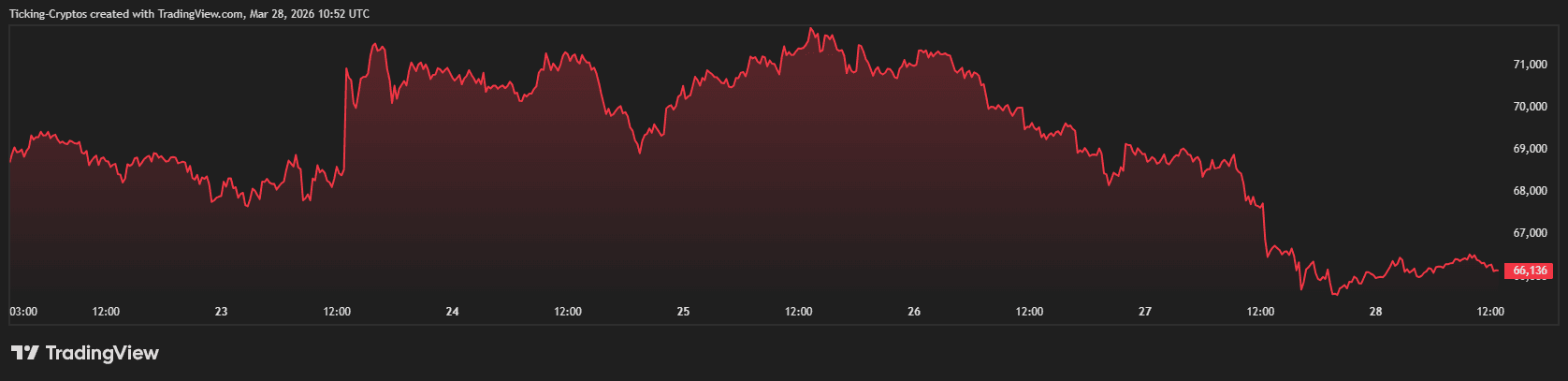
The global financial markets are currently in the midst of a violent "risk-off" rotation. Bitcoin (BTC) has surrendered the $70,000 handle and recently dipped below the $66,000 level, while the altcoin market is seeing double-digit percentage losses. This isn't just a "crypto thing"—equities and bonds are also under immense pressure.
As of late March 2026, a "perfect storm" of geopolitical escalation, a deteriorating bond market, and a pivot in central bank expectations has drained liquidity from risk assets. Here is a deep dive into the three primary reasons the market is dumping.
1. No Ceasefire: The US-Iran Conflict Escalates
The primary driver of the current "panic sell" is the worsening situation in the Middle East. Despite brief hopes for a diplomatic breakthrough, the conflict involving the United States, Israel, and Iran has reached a fever pitch.
- Maritime Stranglehold: Iran has effectively maintained its blockade of the Strait of Hormuz, a waterway responsible for 20% of global oil and gas transit. Since the start of the month, over 20 merchant ships have been struck.
- No Sign of De-escalation: The U.S. continues its military campaign to reopen the strait, but uncertainty remains at an all-time high.
- Impact on Risk Assets: Markets hate uncertainty. When global energy supplies are threatened, investors move capital out of "risk-on" assets like Bitcoin and into "safe havens" like gold or the U.S. Dollar.
2. Global Bond Market Crisis
The bond market is sending a massive "warning flare" to investors. We are currently witnessing a synchronized sell-off in sovereign debt, which is driving yields to levels not seen in decades.
- Japan’s 10-Year Yield: In a historic move, Japan’s 10-year bond yield hit 2.38%, its highest level since 1999. As a country that relies heavily on imported energy, Japan is particularly vulnerable to the current oil price spike.
- The MOVE Index: The MOVE Index, which measures U.S. Treasury volatility, has surged to 115.02. This indicates that bond traders are bracing for extreme instability.
- Inflation Expectations: With crude oil hovering above $107 a barrel, inflation expectations are soaring. This forces bond yields up, making debt more expensive and pressuring the valuations of growth stocks and cryptocurrencies.
3. The Return of the Hawkish Fed
Perhaps the most bearish development for the crypto market is the sudden shift in Federal Reserve expectations. Only a few months ago, the market was pricing in multiple rate cuts for 2026. That narrative has flipped entirely.
- No More Cuts: Consensus has shifted toward zero rate cuts for the remainder of 2026.
- Hike Odds Surging: According to the CME FedWatch Tool, the probability of a rate hike in 2026 has surged to 48.6% (up from near zero earlier this year).
- Liquidity Drain: A hawkish Fed means higher borrowing costs and reduced liquidity. Since Bitcoin often acts as a "liquidity barometer," the prospect of tighter monetary policy is a direct headwind for price appreciation.
Independent Analysis: Watching the "Trump Factor"
While the technicals and fundamentals look grim, one unconventional indicator to watch is the language used by President Donald Trump.
In recent cabinet meetings, Trump remarked that the "stock market hasn't come down a lot" despite the conflict. This suggests that the administration currently views the market decline as a manageable correction rather than a crisis.
The Reversal Signal: History suggests that a market bottom often coincides with a change in political rhetoric. Once the tone shifts from "the market is doing fine" to "the market is significantly undervalued" or "this is the best time to buy in history," we may see the first signs of a trend reversal.
For now, the structure remains bearish. If Bitcoin fails to reclaim $68,000, the next major support zone sits at the $62,600 level.
0
0


 Manage all your crypto, NFT and DeFi from one place
Securely connect the portfolio you’re using to start.

0
0

0
0

0
0

0
0