
ECB's March 2026 report puts regulatory microscope on DeFi projects and their tokens

0
0
The March 2026 paper by the European Central Bank (ECB) has put the regulatory microscope on DeFi projects, piling on a difficult period when most DeFi projects are facing a different type of headache when it comes to consistently posting revenue levels that justify participation or even maintain infrastructure.
The paper by the EU’s central bank specifically named Aave (Ethereum’s leading lending protocol), MakerDAO (the protocol behind the DAI stablecoin), UniSwap (one of the first AMMs and largest DEXs), and Ampleforth as examples of tokens that are difficult to cover with existing regulations such as the Markets in Crypto-assets (MiCA) laws because of the absence of any “centralised intermediaries who are subjcet to regulations and can be held accountable.”
ECB targets DAO governance tokens
According to the ECB paper, it tracked data and traced on-chain behavior during two periods in November 2022 and May 2023, and found that the distribution of governance tokens aligned with previously published papers that claimed DeFi governance is concentrated among small groups that hold a strong chokehold over their protocols.
In the paper: “While the governance tokens are held by a five or six-digit number of unique addresses, the top 100 holders account for over 80 percent of all token holdings for the four protocols.“
One of the protocols mentioned in the ECB paper, Aave, is embroiled in a governance battle over a hotly contested upgrade to V4. As reported by Cryptopolitan, Aave Chan Initiative founder Marc Zeller challenged the legitimacy of the governance process after the “Aave Will Win” funding proposal cleared its first major governance hurdle on March 1 with a slim 52.58% approval.
According to Zeller, whose ACI has since announced it would abandon the Aave ecosystem, three clusters, including one delegation from Aave Labs co-founder Stani Kulechov, swayed the outcome. His statements implied that Kulechov exerted undue influence to secure that vote, in line with the ECB’s claims.
The paper also pointed out the 3% of Uniswap and 22% of Aave’s DAO tokens were held by CEXs and DEXs as of October 2022, with the caveat that its researchers could not differentiate between exchange-owned wallets and customer holdings.
The ECB insists that “full decentralisation is not achieved” and that DeFi exists on a spectrum.
All that ambiguity is the crux of why the ECB is waving the white flag on its inability to present a regulatory regime that accounts for the decentralized nature of DeFi protocols.
DeFi protocols are not turning profits
Despite the headline-grabbing findings from the ECB paper, it used data compiled in 2022 and 2023, and by 2026 the DeFi landscape had changed radically, with OG participants such as Uniswap conceding their early lead to newer entrants like Hyperliquid and Pump.fun.
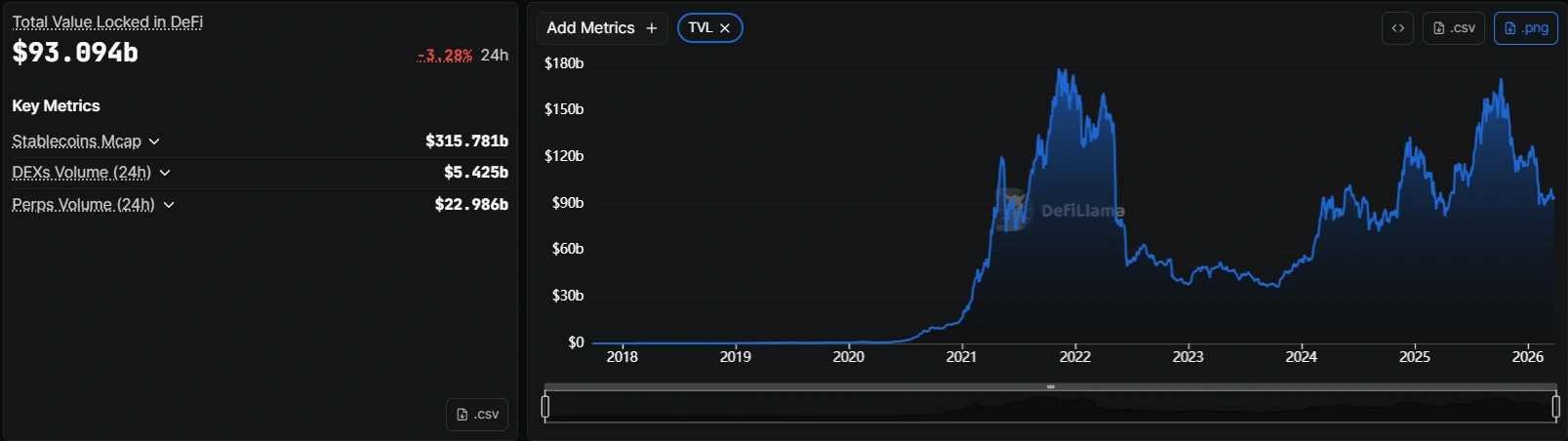
More than five years on from the highs of the DeFi summer of 2021, DeFi protocols are struggling across the board. Total value locked across DeFi is at $93 billion as of writing, down almost $70 billion from October last year, when it retested all-time records of almost $180 billion set in 2021.
The numbers are just as bad in terms of revenue too. Of the $34 million in revenue collected by 1,301 tracked protocols over the last 24 hours, Tether and Circle accounted for more than $23 million. Between Hyperliquid and Pump.fun, they collected another $2 million, which leaves $9 million split among the others.
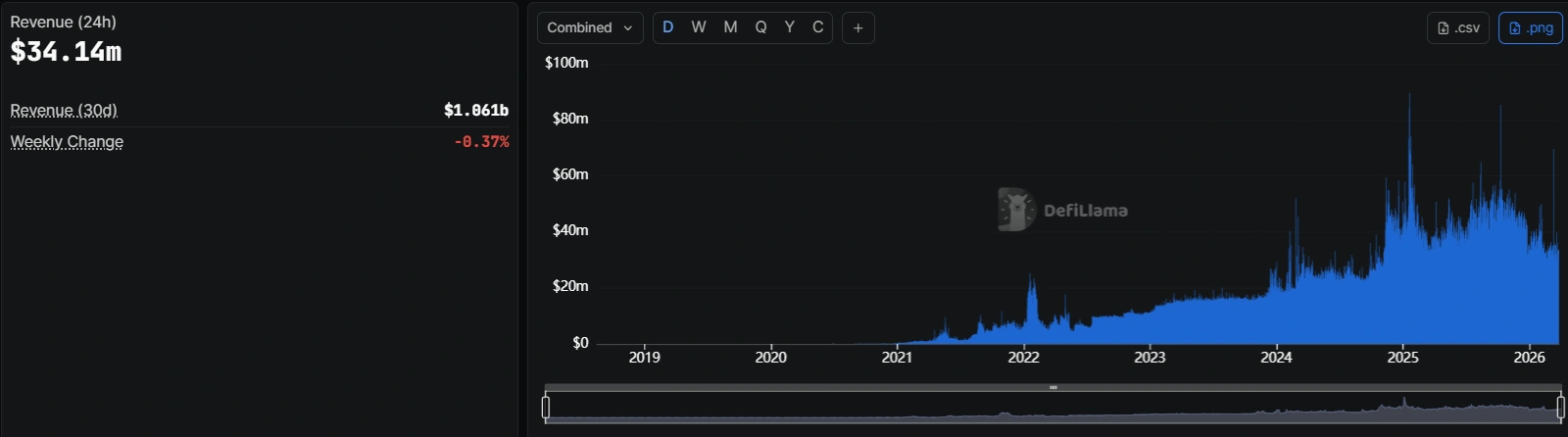
Uniswap contributed $126,944 to the grand total.
Uniswap remains in the top spot among DEXs by volume, processing over $1 billion spot volume in the last 24 hours, but Hyperliquid reported almost $6.4 billion over the same period.
Aave, the lending category leader mentioned in the ECB report, has almost 4 times the TVL and revenues posted by Morpho, the next largest protocol in its category.
Making up the rear, Zora, Blast, Hypertek, NaBet, Hegic, and Kairos Timeboost actually posted negative revenues over the last 30 days, with Kairos down more than $200,000.
ECB is behind in DeFi regulation framework
The ECB referred to the Danish FSA’s 2024 framework, which advises regulators to assess autonomy, smart contract immutability, human intervention, and embedded control mechanisms in their approach to regulating DeFi DAO tokens.
However, there remains a significant gap between regulators’ views of these tokens and how they are presented by their issuing entities, as evidenced by the differences between the DeFi landscape studied by the ECB and the current market.
MakerDAO goes by a different name these days, and as for Ampleforth, it is no longer the token it was in 2022/2023.
Don’t just read crypto news. Understand it. Subscribe to our newsletter. It's free.
0
0
 Manage all your crypto, NFT and DeFi from one place
Securely connect the portfolio you’re using to start.