
Bitcoin Whale Short Raises Fresh BTC Squeeze Risk as Market Leverage Builds

0
0

Bitcoin traders are watching a sharper shift in whale behavior after a large leveraged short position appeared on Hyperliquid, adding fresh pressure to an already nervous market. The move came as spot demand weakened, ETF outflows increased, and derivatives positioning became more crowded. For investors, the key issue is not only whether Bitcoin can hold its current range, but whether heavy bearish leverage could turn into fuel for a fast upside move if price rebounds.
Bitcoin Whale Short Signals a Defensive Market Shift
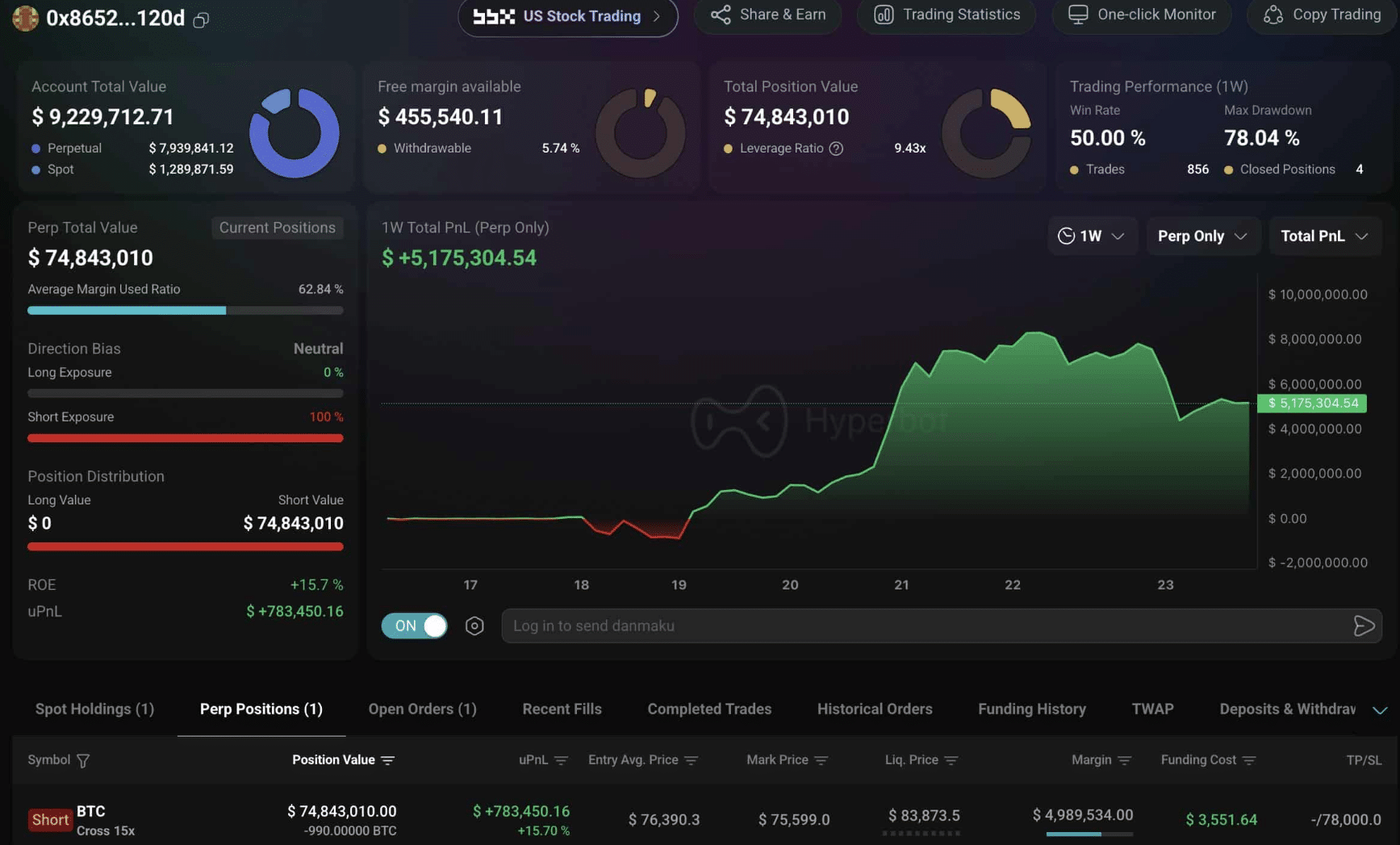
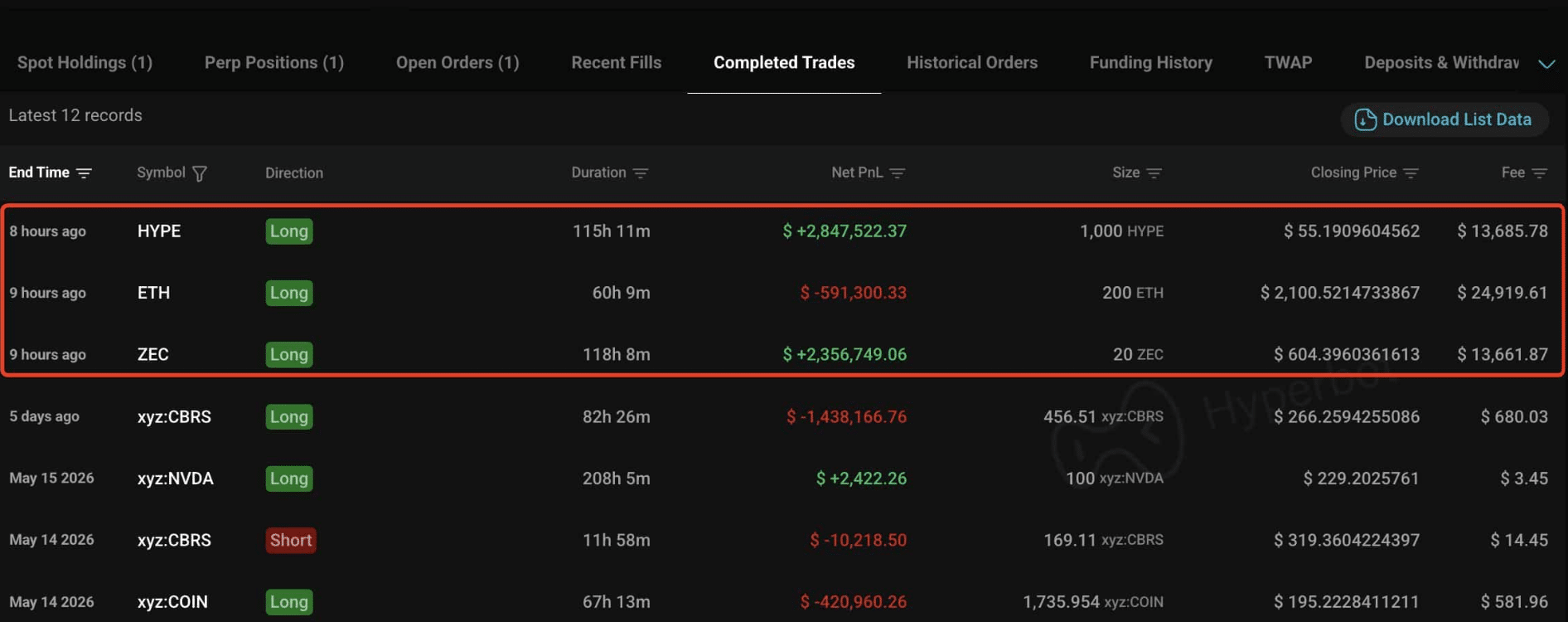
The Bitcoin whale short has drawn attention because it reflects how some large traders are moving away from risk and toward downside protection. According to market data cited in the report, a trader known as Evaded closed long positions in HYPE and Zcash worth around $2.85 million and $2.36 million before moving into a leveraged Bitcoin position. The same wallet reportedly absorbed nearly $591,000 in Ethereum losses before opening a 15x BTC short.
That position later expanded to roughly 990 BTC, valued near $74.84 million, while unrealized profit climbed above $783,000 as market conditions softened. The Bitcoin whale short matters because large visible positions can influence sentiment, especially on platforms where traders track whale activity in real time.
Why Leverage Is Raising Squeeze Risk
A Bitcoin whale short can pressure market sentiment, but it can also create its own risk. When too many traders lean in the same direction, the market becomes vulnerable to a squeeze. If Bitcoin moves higher instead of lower, short sellers may be forced to buy back BTC to close positions. That buying can push price up faster, creating the kind of chain reaction traders often see in crowded futures markets.
This is where open interest becomes important. High open interest shows that a large amount of capital is tied to active derivatives positions. When open interest stays elevated while volatility compresses, it can mean that traders are loading up before a larger move. In this case, the Bitcoin whale short sits inside a wider market where bearish positions have become more concentrated near resistance.
Spot Demand Remains the Weak Link
Derivatives are only one side of the market. Spot demand remains the cleaner test of real buying strength. The report noted that U.S. spot Bitcoin ETFs recorded about $105.2 million in daily outflows, while weekly selling moved above $850 million. A negative Coinbase Premium also pointed to softer institutional activity, which suggests that U.S.-based buying appetite has cooled.
That matters because a Bitcoin whale short becomes more powerful when spot demand is weak. If fresh buyers are not stepping in, leveraged sellers can keep control for longer. Still, markets rarely move in a straight line. If ETF outflows slow or spot buyers return near support, bearish leverage can quickly become unstable.
Key Indicators Traders Are Watching
The first indicator is ETF flow. Persistent outflows show weak spot demand, while renewed inflows can support price recovery. The second is open interest, which helps show whether futures traders are building large directional exposure. The third is the long-short ratio, which reveals whether traders are leaning bullish or bearish. The fourth is Coinbase Premium, often used as a rough gauge of U.S. institutional demand.
The Bitcoin whale short also puts liquidation levels in focus. If BTC rises into short liquidation zones, forced buying may lift price quickly. If BTC breaks lower instead, long liquidations could deepen the decline. This is why the current setup feels like a spring being pressed from both sides.
Conclusion
Bitcoin is now caught between weak spot demand and crowded bearish leverage. The Bitcoin whale short shows that some large traders are preparing for deeper downside, but the same position also raises the chance of a sharp reversal if the market moves against them. For now, ETF flows, open interest, Coinbase Premium, and liquidation clusters remain the main indicators to watch. The next meaningful BTC move may depend less on noise and more on which side of the leverage stack breaks first.
Frequently Asked Questions
What does a Bitcoin whale short mean?
A Bitcoin whale short means a large trader is betting that Bitcoin’s price will fall, usually through futures or perpetual contracts.
Why can a large short create squeeze risk?
A Bitcoin whale short can create squeeze risk when price rises and short sellers are forced to buy back BTC, which can push price higher.
Are ETF outflows bearish for Bitcoin?
ETF outflows can be bearish because they show weaker spot demand, especially when large institutions reduce exposure.
What should traders watch next?
Traders should watch ETF flows, open interest, long-short ratios, Coinbase Premium, and liquidation levels before making decisions.
Glossary of Key Terms
Open Interest: The total value of active derivatives contracts that have not been closed.
Short Squeeze: A fast price rise caused by short sellers closing losing positions.
Coinbase Premium: The price gap between Coinbase and other exchanges, often used to read U.S. demand.
ETF Outflows: Money leaving exchange-traded funds, which can signal weaker investor appetite.
Source
Read More: Bitcoin Whale Short Raises Fresh BTC Squeeze Risk as Market Leverage Builds">Bitcoin Whale Short Raises Fresh BTC Squeeze Risk as Market Leverage Builds
0
0


 Manage all your crypto, NFT and DeFi from one place
Securely connect the portfolio you’re using to start.

0
0


0
0

0
0