
Capital.com’s Kyle Rodda Flags Bitcoin’s ‘Binary Risk’ as Trump’s Iran Deadline Looms

0
0
Capital.com Senior Financial Market Analyst Kyle Rodda warned that Bitcoin (BTC) faces “binary risk” as President Trump’s Tuesday 8 PM ET ultimatum to Iran forces traders into a pure escalation-or-relief scenario.
BTC slipped below $69,000 on Tuesday after briefly topping $70,000 the previous day, as Iran rejected a 45-day ceasefire proposal and Trump declared the deadline “final.”
Trump’s Fourth Deadline and the Crypto Response
Trump has demanded Iran reopen the Strait of Hormuz or face strikes on every bridge and power plant in the country. This marks the fourth time the president has extended and reset his ultimatum since March 21.
A fifth delay remains possible if Trump sees a deal forming, though he said Monday he was “highly unlikely” to postpone again.
Rodda told BeInCrypto that markets are stuck in a holding pattern, waiting for one of two outcomes.
“The strikes happen, things escalate or they don’t, and then there’s another massive relief rally. Bitcoin remains range-bound, trading between about $US60,000 and $US75,000,” said Rodda.
He added that a major escalation would hit BTC through rising Treasury yields and a stronger US Dollar, both driven by surging oil prices.
The US Dollar Index (DXY) has consolidated around 100 and appears poised for a breakout, a signal that aligns with Rodda’s warning.
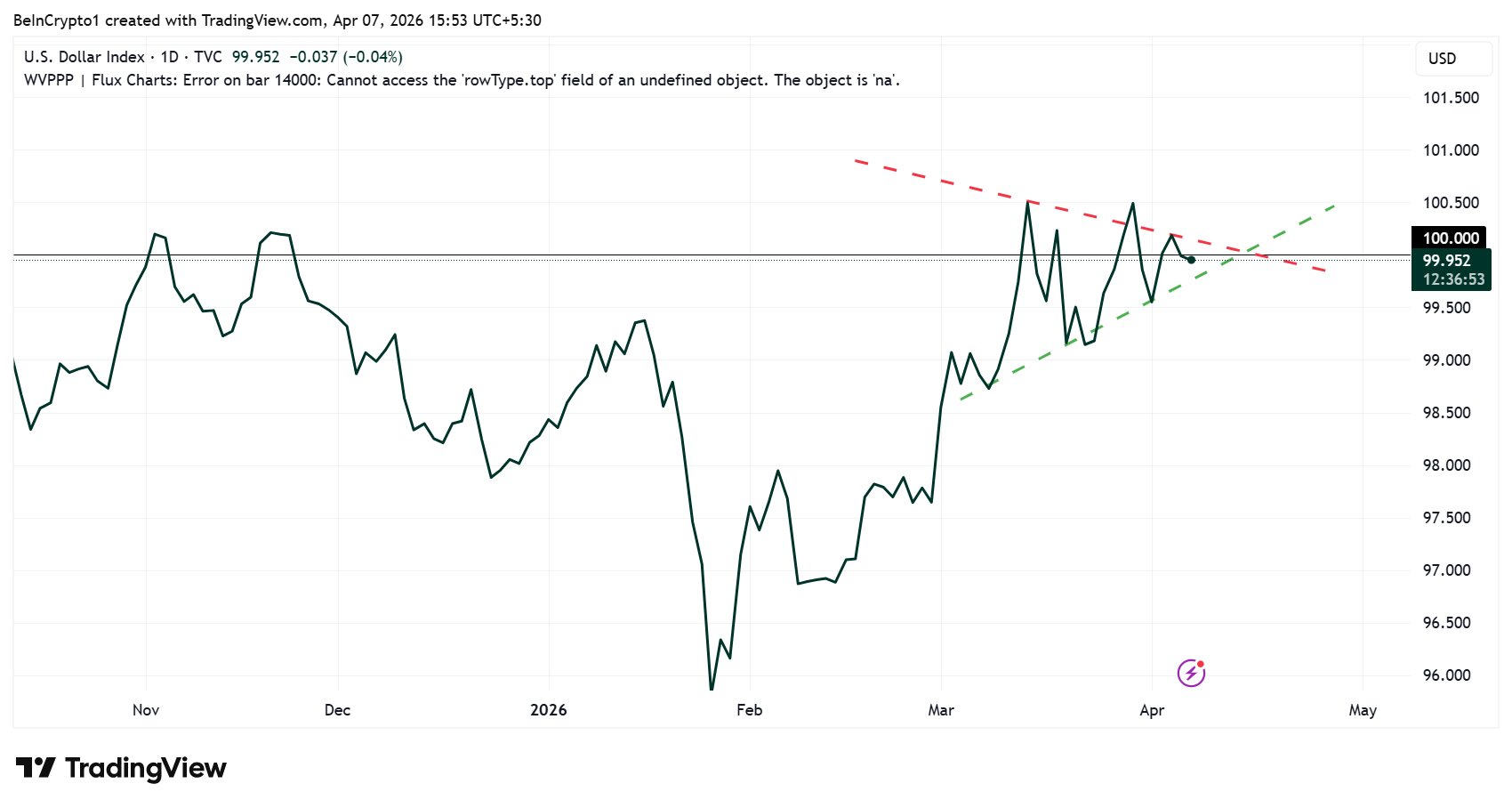 Dollar Index (DXY) Performance. Source: TradingView
The DXY structure mirrors prior fractal patterns from 2014 and 2021 that preceded extended BTC drawdowns.
“DXY breaking towards the upside will probably take USDT dominance with it… which naturally would mean you should see your next move down in Bitcoin,” said analyst Kyle Doops.
However, Rodda also flagged resilience beneath the surface.
“It must be remarked how resilient Bitcoin has been and there are tentative, though far from confirmed, signals that it is bottoming out,” he said.
A Bear Flag on the Clock
Technical structure adds another layer of urgency. BTC has been consolidating inside a bear flag pattern for roughly 60 days, matching the 54-day duration of the previous bear flag before it broke down.
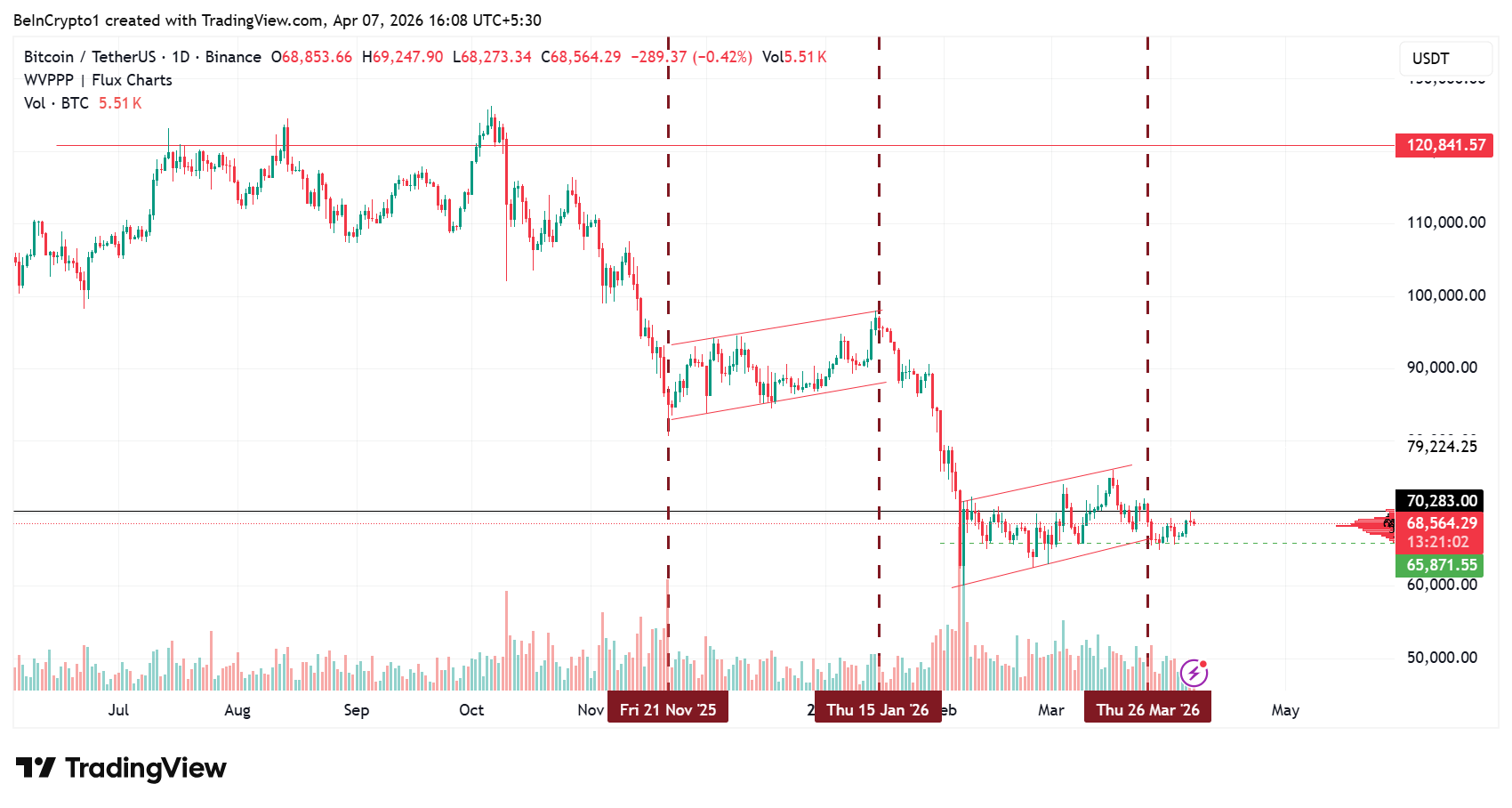 Bitcoin Price Performance. Source: TradingView
However, it is worth mentioning that declining volume across the pattern makes rallies hard to trust.
Daily crypto exchange volume has retraced to levels last seen during the FTX collapse, suggesting sentiment has cratered to historic lows.
In the same way, with oil as a leading signal, crude has tested resistance four times, and a breakout toward $128 per barrel would ripple across risk assets, pressuring BTC further.
Institutional Flows and Fading Volatility
Elsewhere, QCP Capital analysts noted that markets are increasingly fading from Trump’s escalation pattern after four consecutive deadline extensions.
Crude oil has softened and equity futures remain stable, suggesting reduced urgency around imminent strike risk.
Institutional demand has stayed constructive. Spot Bitcoin ETFs recorded $1.32 billion in net inflows in March, their first positive month since October 2025, snapping a four-month outflow streak.
MicroStrategy has also resumed BTC accumulation after a brief pause.
In the options market, implied volatility has drifted to its lowest level since the conflict began on February 28. Skew is normalizing as well, suggesting hedging demand has eased despite the geopolitical overhang.
Polymarket data shows traders assign just 3% probability to a ceasefire by April 7, rising to 30% by April 30.
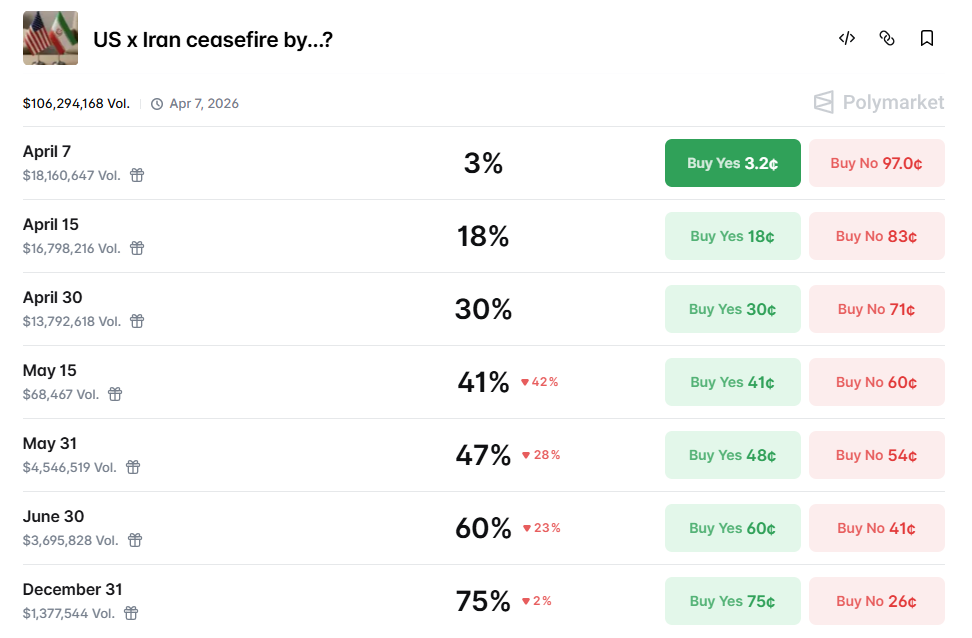 US x Iran ceasefire odds. Source: Polymarket
Reports also suggest Trump may delay the deadline again if a deal appears close, adding another variable to an already binary setup.
Whether Tuesday brings strikes or yet another extension, BTC’s reaction will test whether the tentative bottoming signals Rodda identified can survive both a geopolitical flashpoint and a bear flag running out of time.
0
0


 Manage all your crypto, NFT and DeFi from one place
Securely connect the portfolio you’re using to start.


0
0


0
0