
India Crypto News: USDT Supply Tightens, Premium Hits 8.5%

0
0
India Crypto News: How ED VDA Crackdown Tightens USDT Supply
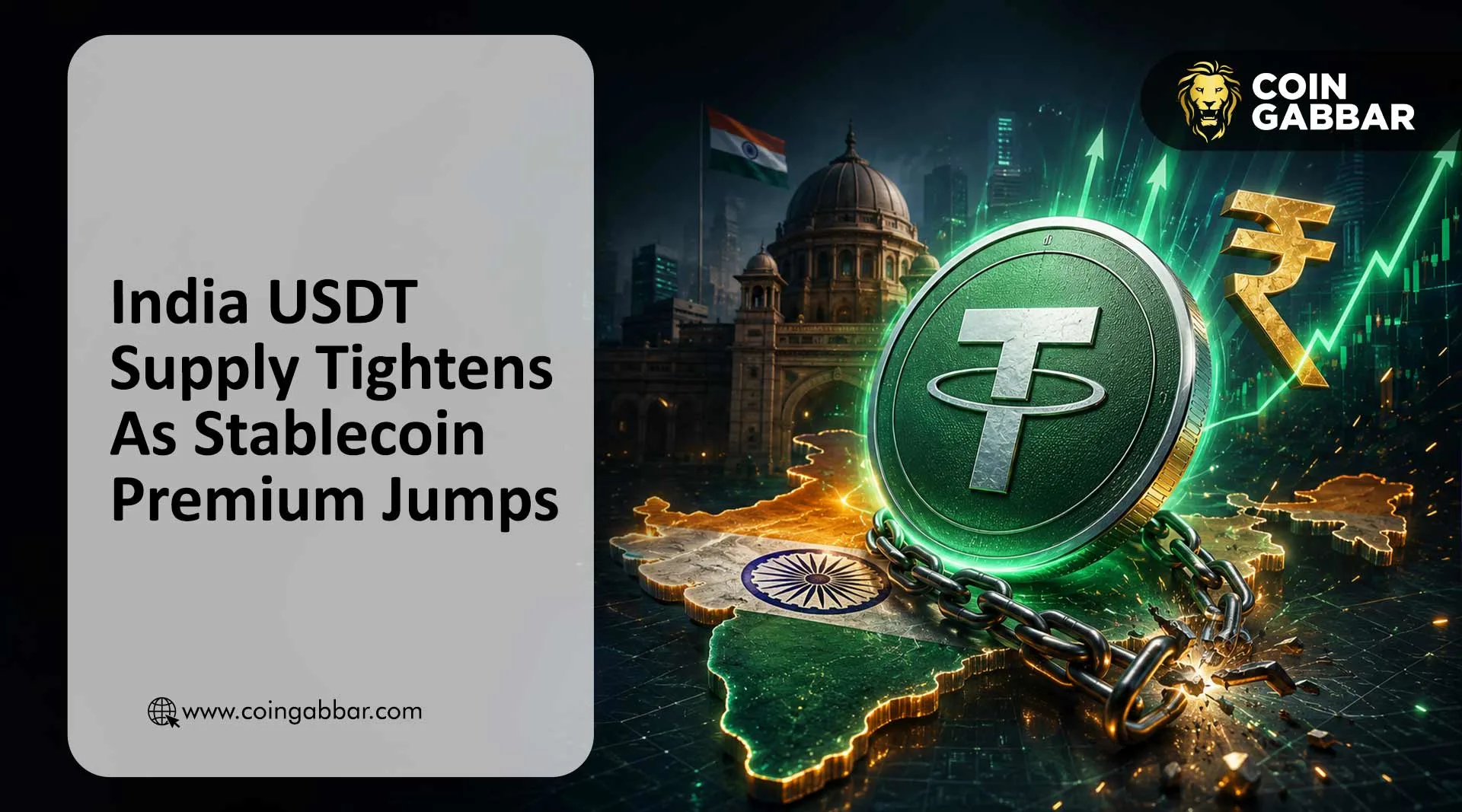
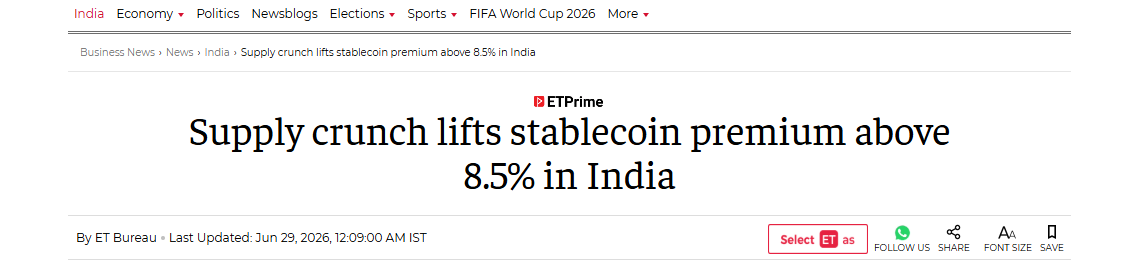
India's USDT supply has tightened fast, and the cost of getting hold of the stablecoin just jumped sharply. In the latest India crypto news, The Economic Times reported that the local premium on USDT climbed from its usual 3-4% range to over 8.5% this past weekend. On Saturday, USDT traded at ₹102.88, while the official USD/INR closing rate sat at ₹94.65 on Friday.
Why India USDT Supply Suddenly Slowed Down
The shortage didn't happen for no reason. It followed a crackdown by India's Enforcement Directorate on cross-border money transfers worth INR 250 billion that flowed through virtual digital assets.
That ED crackdown hit a popular channel many NRIs relied on to send USDT-based remittances back home. Once that channel came under scrutiny, fresh USDT stopped flowing into Indian wallets and exchanges at the usual pace.
Cryptocurrency Legal founder Purushottam Anand said part of the price jump reflects a risk premium tied directly to regulatory uncertainty. When traders aren't sure what enforcement looks like next, they price that uncertainty straight into the asset.
How The India Stablecoin Premium Compares To Normal Levels
The numbers tell the story clearly. Here's what changed:
USDT traded at ₹102.88 against an official USD/INR rate of ₹94.65
The premium jumped from a typical 3-4% range to over 8.5%
The gap means buyers now pay roughly 8 to 9 percent more than the official exchange rate just to hold USDT
Reduced inflows, paired with regulatory caution, are the two forces driving the squeeze
A premium this size doesn't show up during normal trading conditions. It shows up when supply tightens hard and confidence wavers at the same time.
How This Affect India Crypto Regulation Going Forward
This event fits into a bigger pattern. India crypto regulation 2026 has been tightening through enforcement actions rather than brand new laws.
The ED crypto crackdown 2026 targeted unauthorized transfers specifically, not cryptocurrency trading as a whole. Virtual digital assets remain legal in the country, though taxed heavily and subject to compliance rules under the Financial Intelligence Unit.
Indian Parliament is set to discuss the country's cryptocurrency regulatory framework on July 2. That conversation could shape how stablecoin flows and remittance channels operate going forward, especially after a squeeze is visible.
India Crypto Adoption 2026: User Impact
Stablecoins serve as a bridge for traders, remittance senders, and anyone hedging against currency swings. When that bridge narrows, the cost of crossing it rises for everyone using it.
Higher premiums hit retail traders and NRIs sending money home the hardest. Arbitrage opportunities shrink, transfer costs climb, and some users may shift toward alternative channels or other stablecoins entirely.
For a market with strong crypto adoption numbers, a supply crunch like this tests how much friction users will tolerate before looking elsewhere.
The premium spike also raises a bigger question about whether onshore, compliant stablecoin options could gain ground if offshore channels keep drawing regulatory attention.
What Comes Next For India Stablecoin Market
The premium could ease if inflows pick back up or stay high if regulatory pressure continues. Parliament's July 2 discussion on cryptocurrency rules will likely give the clearest signal yet on which direction this heads.
Until then, anyone relying on USDT for trading or remittances in the nation's crypto exchange is paying a real cost for a market still working through how enforcement and liquidity fit together.
Disclaimer: This article is for informational purposes only and does not constitute financial or investment advice. Cryptocurrency markets carry significant risk. Always do your own research before making any investment decisions.
0
0

 Manage all your crypto, NFT and DeFi from one place
Securely connect the portfolio you’re using to start.


0
0

0
0
