
Kenyan President’s Website Hacked as Attackers Demand 5 BTC Ransom in Defacement

0
0
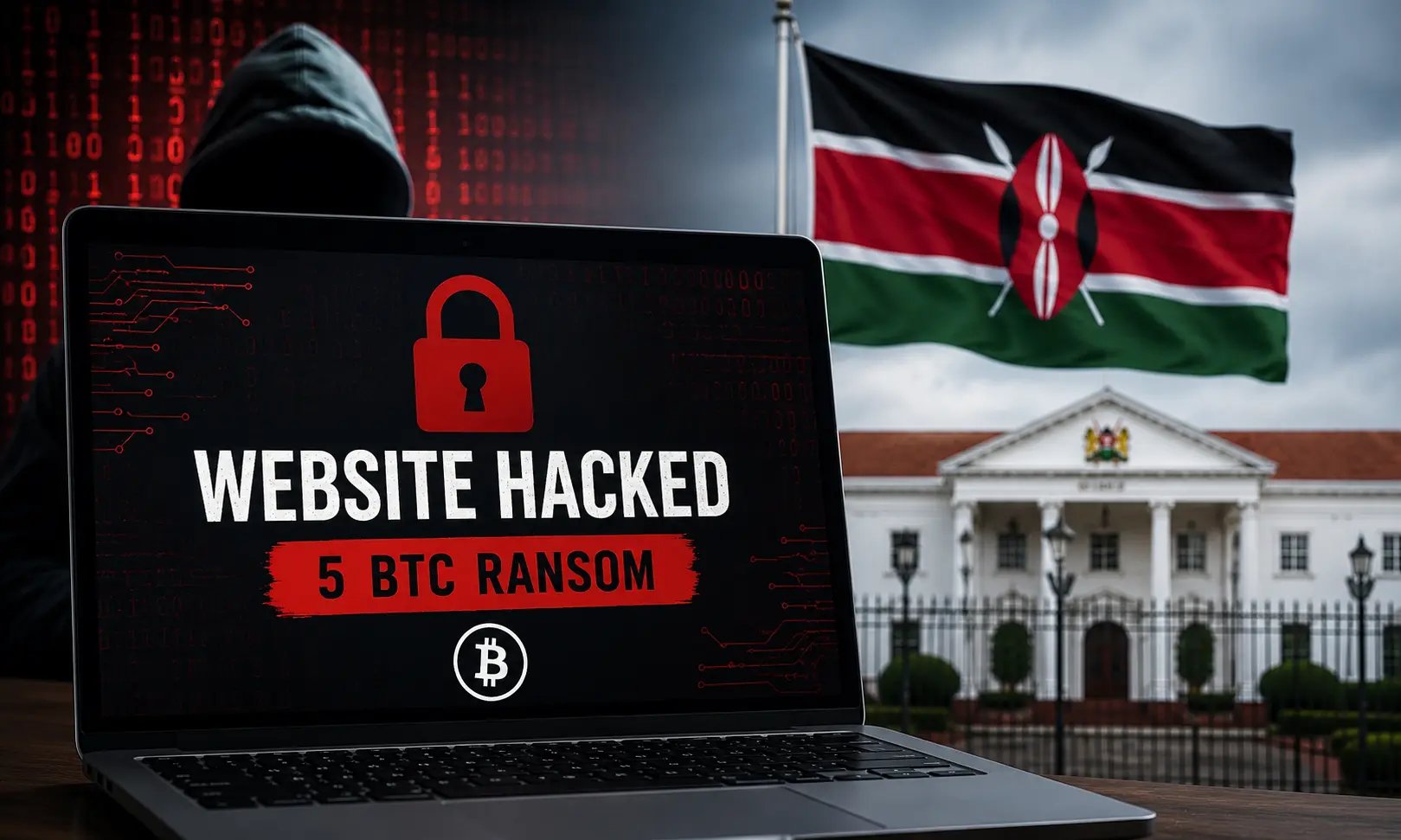
- Hackers defaced Kenyan President William Ruto’s official website, demanding 5 Bitcoin while State House launched cybersecurity investigations and restoration efforts.
- Authorities are examining whether attackers accessed internal government systems while preserving forensic evidence and reviewing server logs for compromise indicators.
- Previous cyberattacks against Kenyan government websites have renewed calls for stronger security audits, staff training, authentication controls and infrastructure protection.
Hackers defaced the official website of Kenyan President William Ruto and demanded a ransom of 5 BTC, replacing the homepage with threatening messages and a Bitcoin wallet address. State House confirmed the breach and immediately restricted access to the website while cybersecurity teams launched an investigation.
The attackers altered the homepage of president.go.ke, replacing official government content with messages directed at President Ruto. They warned they would release unspecified information unless the Bitcoin payment was made before the deadline displayed on the website.
At current market prices, the demand equals approximately Ksh41.3 million. Moreover, parts of the original State House website remained visible during the incident, indicating the attackers mainly modified the public-facing homepage.
State House disclosed that its Information and Communication Technology team responded immediately after detecting the breach. Additionally, the government began restoration efforts while investigators worked to determine how the attackers gained access.
Also Read: Meta Eyes Up to $10B AI Compute Lease Deal With Anthropic
Hackers Display Bitcoin Wallet and Payment Deadline
The defaced homepage described the demand as a final warning and instructed the government to transfer 5 BTC before the stated evening deadline. Besides the ransom request, the attackers added messages mentioning several individuals while leaving some official website elements untouched.
However, authorities have not confirmed any of the claims contained in the message. Instead, investigators are examining whether the intrusion remained limited to the website interface or extended into internal government systems.
Additionally, the National Kenya Computer Incident Response Team Coordination Centre joined State House ICT personnel in the investigation. Their priority is securing the affected systems while preserving digital evidence for forensic analysis.
Consequently, investigators are reviewing authentication records, server activity, and website infrastructure to establish the attack method and determine whether any government data was compromised.
Previous Government Cyberattacks Raise Security Questions
The latest breach follows coordinated cyberattacks that targeted several Kenyan government websites in November 2025. Those attacks disrupted digital services across ministries including Health, Education, Labour, Environment, ICT, Tourism, Interior, and State House.
The earlier incidents exposed weaknesses in public digital infrastructure and temporarily interrupted access to essential government services. As a result, the latest website defacement has renewed concerns about the resilience of Kenya’s online government platforms.
Moreover, the attack highlights the continued use of Bitcoin in cyber extortion campaigns. Criminal groups frequently request cryptocurrency payments because they enable rapid international transfers and provide greater transaction privacy than conventional payment methods.
Authorities Review Cybersecurity Defenses
Officials have not disclosed whether the attackers gained access to government databases or other back-end systems. Nevertheless, the incident has intensified scrutiny of cybersecurity measures protecting Kenya’s critical digital infrastructure.
Additionally, cybersecurity experts have repeatedly recommended routine security audits, stronger authentication controls, employee cybersecurity training, and independent vulnerability assessments. Those measures could help reduce the risk of similar attacks targeting government websites and essential public services.
The hacking of President William Ruto’s official website has renewed attention on the security of Kenya’s government digital infrastructure. As investigations proceed, authorities are expected to use the findings to strengthen cybersecurity protections for critical public platforms.
Also Read: FTX to Distribute Another $900 Million as Creditor Repayments Near $11 Billion
The post Kenyan President’s Website Hacked as Attackers Demand 5 BTC Ransom in Defacement appeared first on 36Crypto.
0
0

 Manage all your crypto, NFT and DeFi from one place
Securely connect the portfolio you’re using to start.


0
0


0
0