
Ethereum Is Unifying Its Transaction Model — The Impact Could Be Huge

0
0


Ethereum is moving toward a unified transaction model. Core developers formally confirmed this direction during the All Core Devs Execution call on August 27, 2026.
At the meeting, they moved EIP-8141, also known as Frame Transactions, to “Scheduled for Inclusion” status for the upcoming Hegotá upgrade.
EIP-8081, the Meta EIP for the Hegotá upgrade, now also lists EIP-8141 among the proposals committed to the fork.
Three Tracks Converging Into One
Ethereum has run three separate paths toward account abstraction until now. The legacy model relies on a single signed transaction executed directly through the EVM, rigid and high-friction by design.
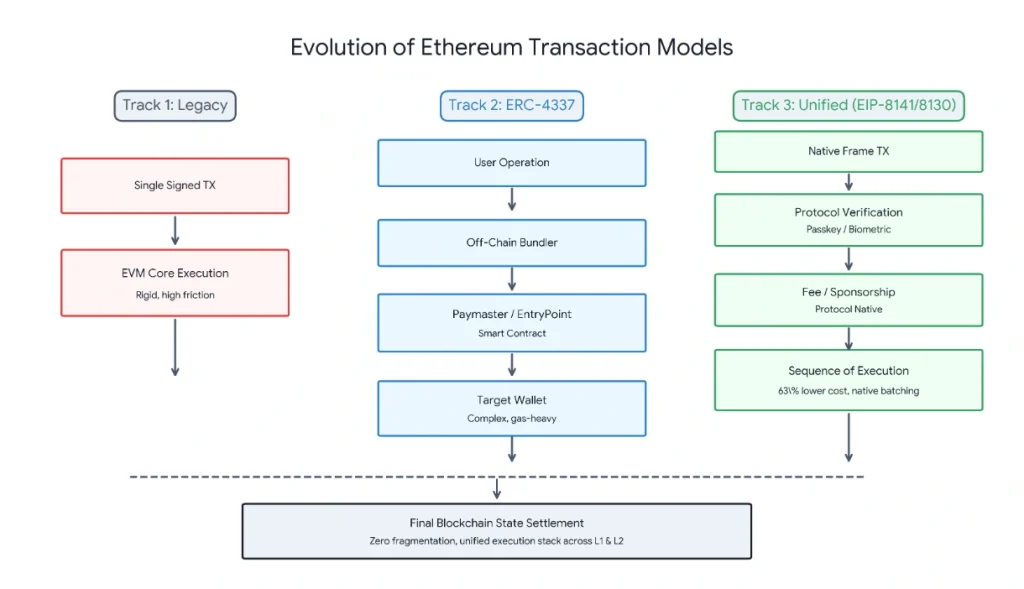
ERC-4337, live since 2023, layers smart-contract wallets on top through UserOperations, off-chain bundlers, and a Paymaster EntryPoint contract, functional but complex and gas-heavy.
EIP-8141 itself introduces a third path: native Frame Transactions that decompose a transaction into validation, payment, and execution frames.
It handles protocol verification through passkeys or biometrics and fee sponsorship natively, cutting costs by an estimated 63% through built-in batching.
All three tracks now funnel toward the same endpoint, a unified execution stack with zero fragmentation across Ethereum’s Layer 1 and Layer 2s.
Base Isn’t Waiting Around
Coinbase’s Base network isn’t sitting still while Hegotá takes shape. EIP-8130, a rival account abstraction design championed by Base, is set to launch on the Layer 2 in September 2026.
Developers on both sides have said publicly they’re coordinating through Ethereum’s weekly account abstraction breakout call to prevent EIP-8141 and EIP-8130 from splitting into incompatible standards.
This is exactly the fragmentation risk the unified model is meant to solve in the first place.
The Hegotá fork itself isn’t expected until 2027, following the Glamsterdam upgrade slated for Q4 2026.
ETH’s Price Reflects a Bigger Rally
Ethereum traded at $2,457.07 as of August 29, 2026, up 30.6% over the past 30 days.
Price sat nearly flat between $1,800 and $1,850 through most of early and mid-August, then broke sharply higher starting August 20.
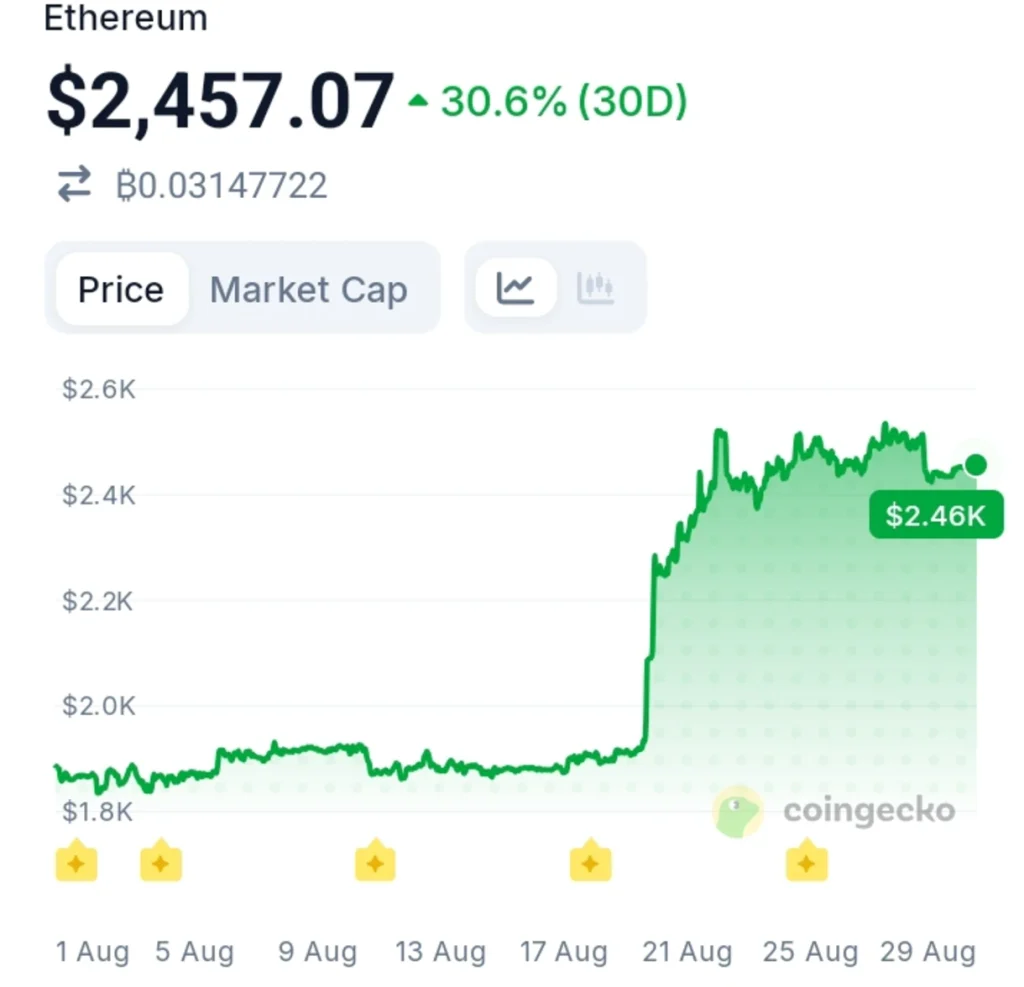
It climbed past $2,200 within days and briefly touching $2,500 by August 25 before settling near current levels.
The scheduling news lands directly on top of that momentum rather than ahead of it.
What This Means for the Roadmap
Techgaged previously reported on Ethereum’s holder-side momentum during this same rally, when whale accumulation addresses were adding aggressively to their positions.
Techgaged also flagged the network’s growing staking base, noting that roughly half of ETH’s total supply now sits locked in staking contracts, infrastructure that a native account abstraction layer would sit directly on top of.
If EIP-8141 and EIP-8130 genuinely converge rather than fork into separate standards, this becomes the single biggest UX upgrade Ethereum has shipped since the Merge, and one that could matter more for mainstream adoption than any price move this month.
Disclaimer:
This article is for informational purposes only and does not constitute financial, investment, or trading advice. The views expressed are based on publicly available data, market observations, and the author’s interpretation at the time of writing. Cryptocurrency markets are highly volatile and unpredictable, and past performance or current technical setups do not guarantee future results. Readers should conduct their own research and consult with a qualified financial advisor before making any investment decisions. TechGaged does not accept liability for any losses incurred based on the information presented.
The post Ethereum Is Unifying Its Transaction Model — The Impact Could Be Huge appeared first on TechGaged.com.
0
0

 Manage all your crypto, NFT and DeFi from one place
Securely connect the portfolio you’re using to start.


