
Why 5.14% Treasury Yields Are Fueling Bitcoin Supercycle Hopes

0
0

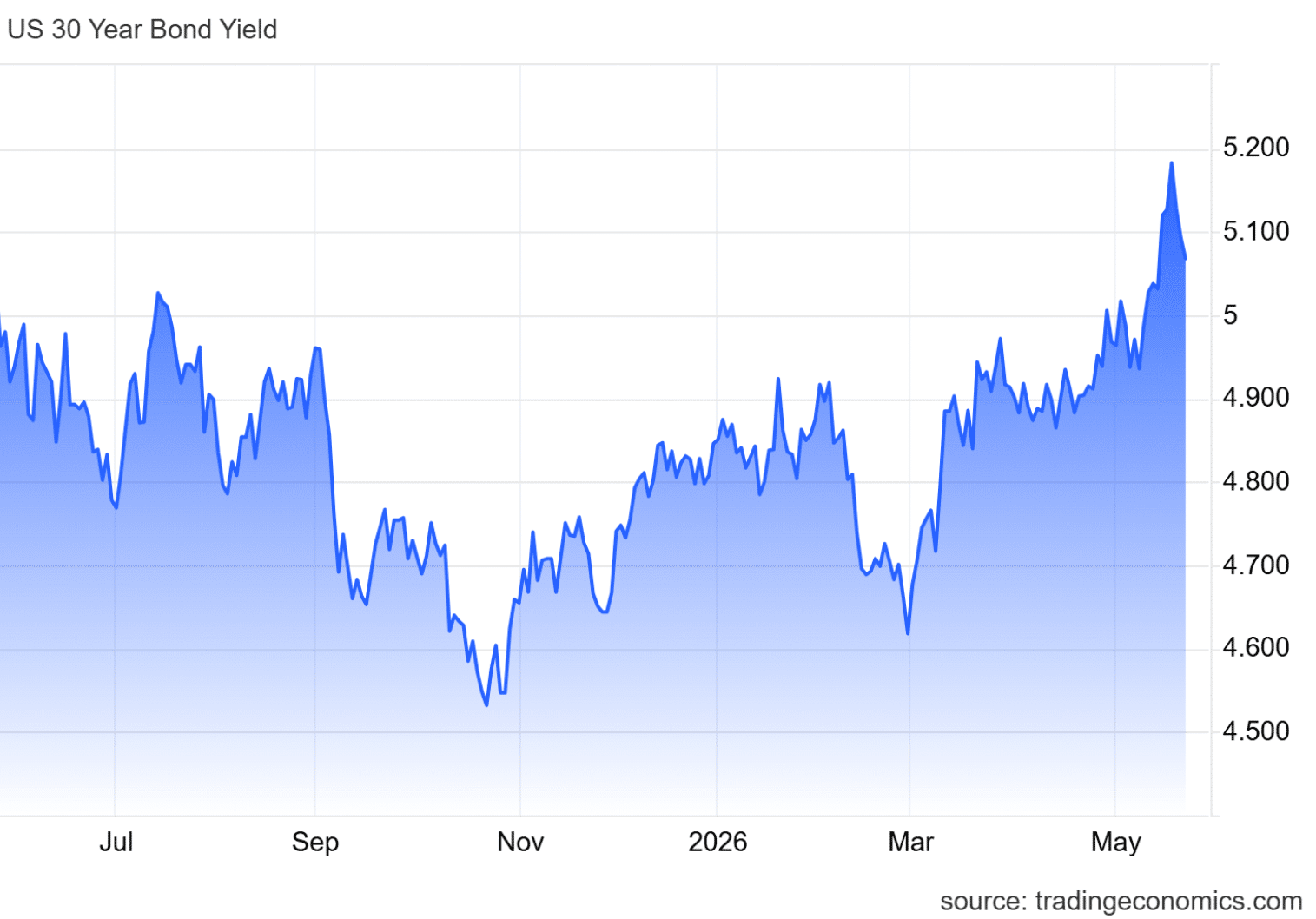
Bitcoin is trading less like a stand-alone crypto asset and more like a pressure gauge for the global financial system. Long-term U.S. Treasury yields have moved above 5.14%, while Japan’s 10-year government bond yield has touched 2.8%, raising fresh questions about debt costs, liquidity, and risk appetite. Traders are now debating whether the same pressure could later support a Bitcoin supercycle if policymakers return to easier money.
Why the Bitcoin Supercycle Debate Is Back
The Bitcoin supercycle debate has returned because bond markets are flashing warnings beyond crypto. A 30-year U.S. Treasury yield near its highest level since 2007 changes how investors price risk, because government debt suddenly offers a stronger return without crypto-style volatility. That makes Bitcoin harder to hold for funds compared to every asset against safer yield.
Still, the longer-term argument moves in the opposite direction. If debt costs keep rising, governments may face tougher choices on spending, borrowing, and currency strength. Bitcoin supporters argue that an asset with fixed supply becomes more attractive when traditional money systems look stretched. That is the core of the Bitcoin supercycle thesis.
Treasury Yields Are Tightening Crypto Liquidity
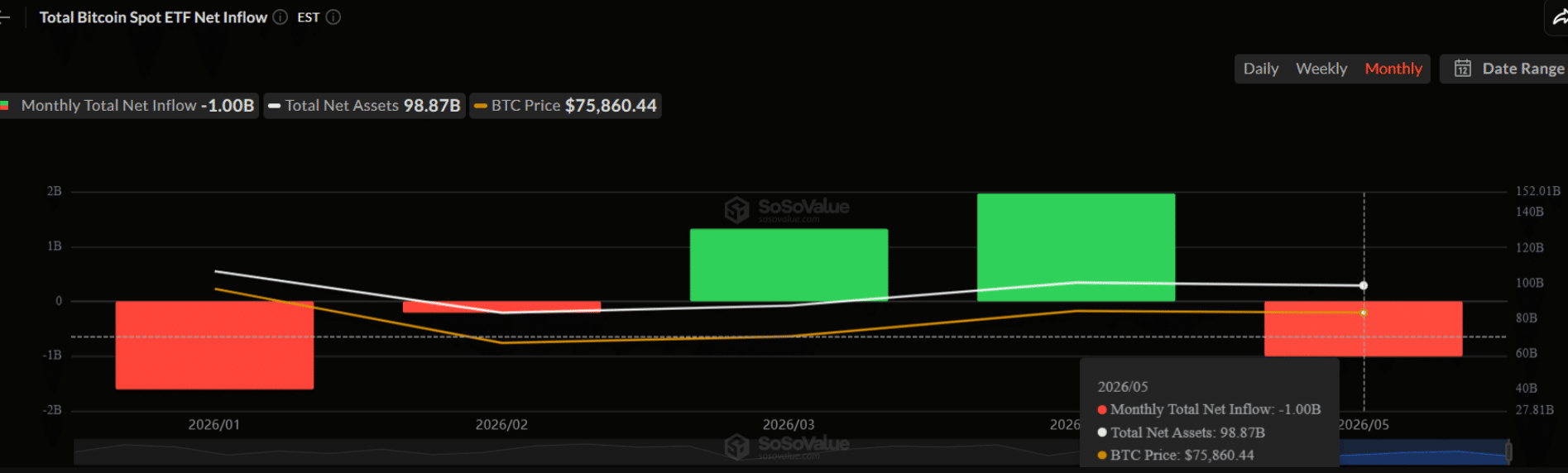
High yields drain oxygen from risk markets, when bonds pay more, cash often moves away from speculative assets, and Bitcoin tends to feel that shift quickly. Recent U.S. spot Bitcoin ETF data showed $290.4 million in net outflows on May 15 after $630.4 million left on May 13, which points to cooler institutional demand during the yield shock.
This does not mean the Bitcoin supercycle case is finished. It means the market is being forced through a tougher filter. Weak hands sell when yields rise, while long-term buyers watch liquidity, ETF flows, and on-chain demand before stepping in again.
Key Crypto Indicators Traders Are Watching
The first indicator is Treasury yield direction. If the 30-year yield holds above 5%, Bitcoin may stay choppy because safer assets compete for capital. The second is ETF flow. Persistent outflows show caution, while renewed inflows would suggest institutions are buying weakness.
The third signal is Bitcoin dominance. If dominance rises while altcoins weaken, capital is hiding in the most liquid crypto asset. The fourth is spot volume, which shows whether real buyers are active or whether price moves are mainly driven by leverage. Finally, long-term holder supply matters because reduced selling from older wallets can tighten available supply when demand returns.
Together, these indicators decide whether the Bitcoin supercycle remains a credible macro thesis or just a phrase traders repeat during volatility.
What This Means for Bitcoin Price Action
Bitcoin’s short-term path may remain uneven as traders balance two opposing forces: rising real-world yields and the belief that debt stress will eventually lead to more liquidity. That tension is why the market can look weak in one week and constructive the next.
A clean recovery would likely need softer yields, slower ETF outflows, and stronger spot demand. Until then, the Bitcoin supercycle argument will depend more on macro confirmation than hype.
Conclusion
Bitcoin is facing a serious macro test, and the 5.14% Treasury yield has made that test harder. Yet the same pressure is also feeding the Bitcoin supercycle debate, because rising debt costs may expose limits in the current financial system. The signal is not one candle or one ETF flow print. It is the full mix of yields, liquidity, institutional demand, and long-term holder behavior.
Frequently Asked Questions
What is the Bitcoin supercycle?
The Bitcoin supercycle is the idea that BTC could enter a longer growth phase if global debt pressure, currency weakness, and liquidity changes push more investors toward scarce digital assets.
Why do Treasury yields affect Bitcoin?
Treasury yields affect Bitcoin because higher yields make safer assets more attractive. When investors can earn more from government bonds, they often reduce exposure to volatile assets.
Are ETF outflows bearish for Bitcoin?
ETF outflows are usually a short-term bearish signal because they show weaker institutional demand. However, they do not alone decide the full market trend.
Glossary of Key Terms
Treasury yield: Return investors earn from U.S. government debt.
ETF flows: Money moving into or out of exchange-traded funds.
Liquidity: Available money moving through markets.
Bitcoin dominance: Bitcoin’s share of total crypto market value.
Sources
Read More: Why 5.14% Treasury Yields Are Fueling Bitcoin Supercycle Hopes">Why 5.14% Treasury Yields Are Fueling Bitcoin Supercycle Hopes
0
0


 Manage all your crypto, NFT and DeFi from one place
Securely connect the portfolio you’re using to start.

0
0

0
0

0
0

0
0