


0
0
BitcoinWorld
Revolutionary: Aster Launches Zero-Fee Trading for All Stock Perpetual Futures
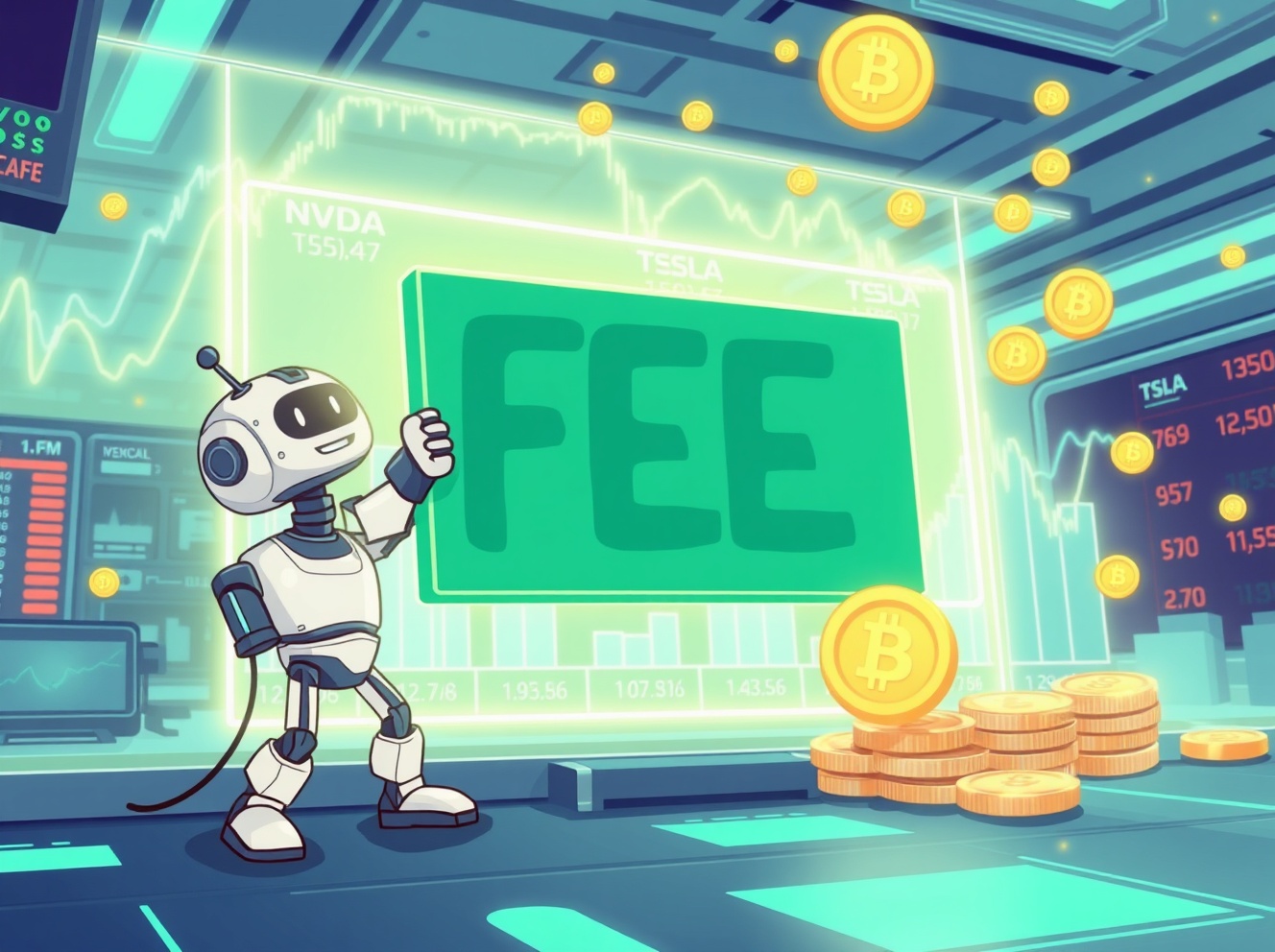
Imagine trading popular stocks like NVIDIA or Tesla with zero fees. That’s the revolutionary reality Aster Protocol just created. The decentralized exchange has boldly eliminated all trading fees for its entire suite of stock perpetual futures. This isn’t a limited-time gimmick; it’s a strategic move to fundamentally reshape on-chain derivatives trading. For traders, it means keeping more profit from every successful trade on major assets.
Aster’s announcement is a game-changer for decentralized finance (DeFi). The platform has removed the maker and taker fees for contracts tracking giants like NVIDIA (NVDA), Tesla (TSLA), Amazon (AMZN), and Apple (AAPL). In traditional finance or even on many crypto exchanges, these fees add up, eating into profits. Therefore, Aster’s model provides a clear cost advantage. It allows traders to enter and exit positions on these popular stock perpetual futures without the burden of transaction costs, making strategies like high-frequency trading or scalping more viable on-chain.
You might wonder how a business can survive without charging fees. The answer lies in the long-term vision for liquidity. Aster’s primary goal is to attract a high volume of traders to its platform. More traders mean deeper liquidity—the ease of buying or selling an asset without affecting its price significantly. Consequently, by offering zero-fee stock perpetual futures, Aster aims to become the most liquid venue for these instruments in the DeFi space. This creates a powerful network effect: better liquidity attracts more users, which in turn creates even better liquidity.
The benefits for users are substantial:
While the offer is compelling, savvy traders should consider a few points. First, the exchange must sustain itself. Aster will likely rely on other mechanisms, such as potential funding rate differentials or future premium services. Second, users must still account for blockchain gas fees for transactions, which are separate from the trading fees Aster has waived. Finally, the security and reliability of the smart contracts powering these stock perpetual futures remain paramount. Always conduct your own research before depositing funds.
Aster’s aggressive move pressures other decentralized exchanges to reconsider their fee structures. It signals a maturation phase where platforms compete on user experience and cost, not just on being first to market. This focus on stock perpetual futures also bridges the gap between traditional equity markets and crypto, offering a familiar product with a decentralized twist. For the ecosystem, it drives innovation and user adoption, pushing DeFi closer to its promise of open, efficient, and accessible global markets.
Aster’s elimination of trading fees is a bold bet on the future of decentralized derivatives. It places the trader’s profitability at the forefront and challenges the status quo. By removing a significant cost barrier for stock perpetual futures, Aster isn’t just running a promotion—it’s attempting to build the most liquid and trader-friendly platform in the sector. This move could very well redefine what traders expect from a DeFi exchange.
Q1: Is Aster’s zero-fee policy a limited-time promotion?
A: No. Aster has explicitly stated this is not a short-term promotion but a permanent measure aimed at securing long-term liquidity for its platform.
Q2: Do I still have to pay any fees at all?
A: You will not pay any maker or taker trading fees to Aster. However, you are still responsible for the network gas fees (like on Ethereum or Arbitrum) required to execute transactions on the blockchain.
Q3: Which stock perpetual futures contracts are included?
A: The policy applies to all of Aster’s stock perpetual futures, including major names like NVIDIA (NVDA), Tesla (TSLA), Amazon (AMZN), and Apple (AAPL).
Q4: How can Aster afford to offer zero trading fees?
A: The exchange’s strategy is to attract massive trading volume and liquidity. A highly liquid platform becomes more valuable and can potentially be sustained through other mechanisms, such as funding rates or future value-added services.
Q5: Is my money safe trading on Aster?
A: As with any DeFi protocol, you should always audit the smart contracts and understand the risks involved. The removal of fees does not directly relate to the security of the underlying protocol.
Q6: Can I trade these perpetual futures from any country?
A: DeFi is generally permissionless, but you must ensure that trading derivatives, especially on stocks, complies with your local regulations.
Found this breakdown of zero-fee stock perpetual futures trading helpful? Share this article with your network on Twitter or Telegram to spark a conversation about the future of low-cost DeFi trading!
To learn more about the latest decentralized finance trends, explore our article on key developments shaping the future of on-chain derivatives and institutional adoption.
This post Revolutionary: Aster Launches Zero-Fee Trading for All Stock Perpetual Futures first appeared on BitcoinWorld.
0
0
 Manage all your crypto, NFT and DeFi from one place
Securely connect the portfolio you’re using to start.


