
Silver Price Advances Despite Restrictive Fed Stance and Persistent Inflation Risks: A Strategic Investment Outlook

0
0
BitcoinWorld
Silver Price Advances Despite Restrictive Fed Stance and Persistent Inflation Risks: A Strategic Investment Outlook
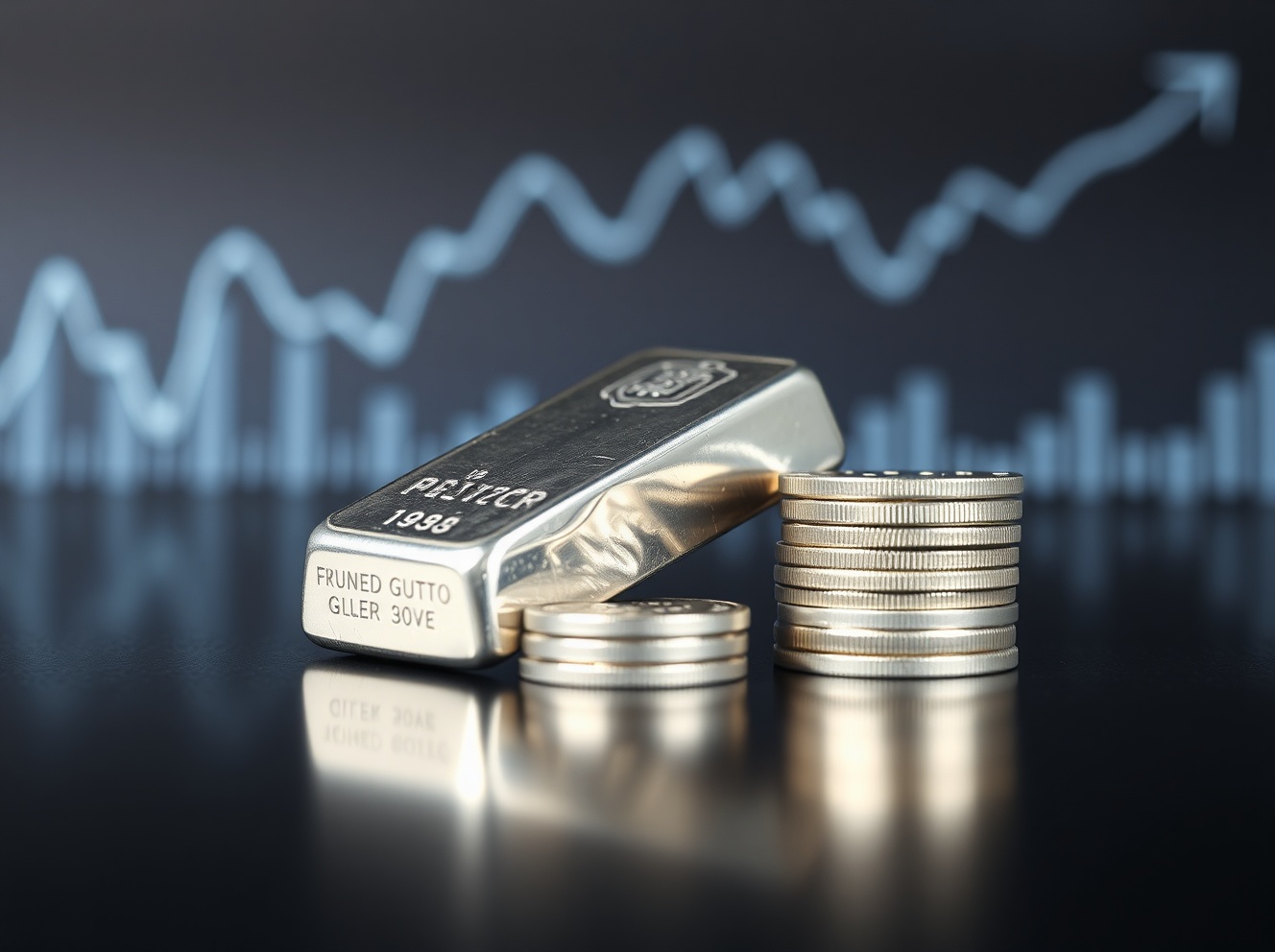
The silver price continues to advance, demonstrating remarkable resilience in the face of a restrictive Federal Reserve stance and persistent inflation risks. As of early 2025, silver has carved a distinct path upward, diverging from traditional expectations tied to interest rate policy. This movement has captured the attention of investors and analysts alike, who are now reassessing the metal’s role in a complex macroeconomic environment. The rally in silver price underscores a broader shift in market dynamics, where traditional safe-haven assets are being revalued amid stubborn inflationary pressures and cautious central bank signals.
Silver Price Rallies Amid Restrictive Fed Stance
The Federal Reserve’s restrictive stance, characterized by elevated interest rates and a cautious approach to easing, has not deterred the silver price. Historically, higher interest rates increase the opportunity cost of holding non-yielding assets like silver. However, current data reveals a decoupling from this conventional relationship. The Fed’s continued focus on curbing inflation, which remains above its 2% target, has created a unique environment. Investors are increasingly viewing silver as a hedge against both inflation and potential economic slowdown, driving demand. This trend is particularly evident in the industrial sector, where silver’s use in solar panels, electronics, and medical devices provides a tangible demand floor.
Persistent Inflation Risks Fuel Silver Demand
Persistent inflation risks are a primary catalyst behind the silver price advance. Despite the Fed’s efforts, core inflation metrics have proven sticky, hovering around 3.5% in early 2025. This scenario erodes purchasing power and pushes investors toward tangible assets. Silver, often called “poor man’s gold,” benefits from this flight to safety. Additionally, supply constraints from major mining regions, including labor disputes in Peru and declining ore grades in Mexico, have tightened the market. The World Silver Survey reports a fourth consecutive year of structural deficits, further supporting prices. This supply-demand imbalance creates a compelling narrative for continued price appreciation.
Industrial Demand Provides a Strong Foundation
A key factor in the silver price resilience is its dual role as both a monetary and industrial metal. The green energy transition has significantly boosted industrial demand. Silver is a critical component in photovoltaic cells, with solar energy consumption expected to rise by 15% in 2025. This sector now accounts for over 20% of total industrial silver demand. Furthermore, advancements in 5G technology and electric vehicles are increasing silver usage in connectors and circuitry. This industrial demand provides a buffer against purely speculative price swings, grounding the silver price in real-world economic activity. Analysts at the Silver Institute note that this diversification of demand is a structural shift that supports long-term value.
Market Dynamics and Technical Analysis of Silver Price
Technical analysis of the silver price reveals strong support levels and bullish patterns. The metal has broken above its 200-day moving average, a key indicator for momentum traders. Resistance levels are now being tested near $28 per ounce, with a potential breakout toward $30 if macroeconomic conditions persist. Trading volumes have increased by 25% year-over-year, indicating growing institutional interest. The Commodity Futures Trading Commission (CFTC) data shows a rise in net long positions held by hedge funds, signaling bullish sentiment. However, volatility remains a concern, with daily price swings of 2-3% not uncommon. This volatility creates both opportunities and risks for short-term traders.
Comparison with Gold: Silver’s Catch-Up Potential
When comparing silver price performance with gold, a notable divergence emerges. While gold has also rallied, silver has lagged in percentage terms, creating a historically high gold-to-silver ratio, currently above 85:1. Many analysts view this ratio as a signal for potential silver outperformance. Historically, when the ratio exceeds 80, silver tends to rally sharply relative to gold. This “catch-up” potential is a common theme in market commentary. Investors seeking leveraged exposure to precious metals often turn to silver for its higher beta. A 10% move in gold often translates to a 15-20% move in silver, amplifying returns in bullish environments.
Expert Insights on Silver Price Outlook
Market experts offer a cautiously optimistic outlook for the silver price. “The combination of persistent inflation, industrial demand, and supply deficits creates a perfect storm for silver,” says Dr. Elena Martinez, a senior commodities analyst at Global Markets Research. “The Fed’s restrictive stance is a headwind, but it’s being overshadowed by stronger fundamental drivers.” Another expert, John Sterling, a portfolio manager at Precious Metals Capital, adds: “Investors should watch for any shift in Fed rhetoric. A pivot to easing would be a massive catalyst for silver. Until then, the metal is proving its worth as a strategic portfolio diversifier.” These insights highlight the nuanced interplay of factors driving the market.
Risks to the Silver Price Advance
Despite the positive momentum, several risks could derail the silver price advance. A sudden hawkish surprise from the Fed, such as a rate hike, could strengthen the US dollar and pressure commodity prices. Additionally, a global recession would dampen industrial demand, particularly from China, the world’s largest manufacturing hub. The ongoing geopolitical tensions, while supportive in the short term, could lead to risk-off sentiment that favors cash over assets. Finally, technological substitution in solar panels, such as the use of copper or perovskite, poses a long-term demand risk. Investors must weigh these factors against the bullish narrative.
Conclusion
In conclusion, the silver price advances despite a restrictive Fed stance and persistent inflation risks, driven by robust industrial demand, supply deficits, and its safe-haven appeal. The metal’s dual role as an industrial and monetary asset provides a unique value proposition in the current economic landscape. While risks remain, including potential Fed tightening and global economic slowdown, the underlying fundamentals suggest continued support for prices. For investors, silver offers a compelling opportunity for portfolio diversification and inflation hedging. The coming months will be critical in determining whether this advance can sustain its momentum or faces new headwinds.
FAQs
Q1: Why is silver price rising despite high interest rates?
Silver price is rising due to strong industrial demand from green energy and electronics, persistent inflation fears, and supply deficits, which outweigh the negative impact of high interest rates.
Q2: How does the Fed’s restrictive stance affect silver?
The Fed’s restrictive stance typically strengthens the US dollar and raises opportunity costs, which can pressure silver. However, current market dynamics show silver decoupling from this relationship due to other strong fundamentals.
Q3: What are the main risks to the silver price rally?
Key risks include a sudden hawkish Fed move, a global recession reducing industrial demand, a stronger US dollar, and potential technological substitution in key industries like solar energy.
Q4: Is silver a better investment than gold in 2025?
Silver offers higher volatility and potential for greater percentage gains compared to gold, especially if the gold-to-silver ratio normalizes. However, it also carries higher risk and is more sensitive to industrial cycles.
Q5: What industrial sectors drive silver demand?
The primary industrial sectors driving silver demand include solar energy (photovoltaics), electronics (connectors, circuits), medical devices (antibacterial coatings), and automotive (electric vehicles, 5G infrastructure).
Q6: How can investors buy silver?
Investors can buy silver through physical bullion (bars, coins), exchange-traded funds (ETFs) like SLV, futures contracts on commodity exchanges, or mining stocks that provide leveraged exposure to the silver price.
This post Silver Price Advances Despite Restrictive Fed Stance and Persistent Inflation Risks: A Strategic Investment Outlook first appeared on BitcoinWorld.
0
0


 Manage all your crypto, NFT and DeFi from one place
Securely connect the portfolio you’re using to start.

0
0

0
0

