
Blockstream builds bitcoin cross-layer swaps backup one week after Boltz’s outage

0
0
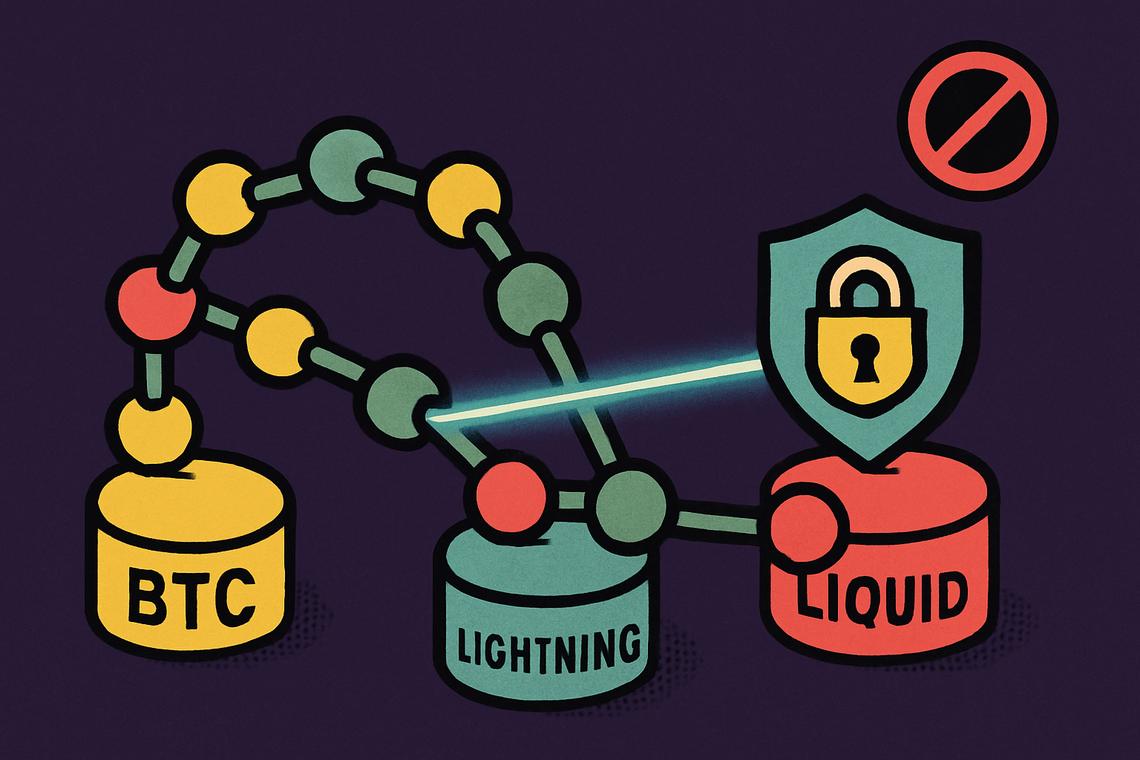
Bitcoin’s plumbing just got a new backup system. Blockstream has rolled out Blockstream Swaps, a service designed to move funds seamlessly across the Bitcoin mainchain, the Lightning Network, and the Liquid Network, and the timing makes the launch impossible to ignore. The company unveiled the tool on August 10, 2026, framing it as a way to handle bitcoin cross-layer swaps without relying on a single point of failure — a concern that suddenly feels far less theoretical than it did a month ago.
Key takeaways
- Blockstream Swaps, announced August 10, 2026, moves funds across Bitcoin’s mainchain, Lightning, and Liquid Network and is currently in beta with select participants.
- The launch comes exactly one week after Boltz, the leading swap provider linking Lightning and Liquid, suspended operations on August 3, 2026, following AI-directed attacks.
- No user funds were lost in the Boltz incident; its self-custodial design absorbed the attack without exposing customer assets.
- Blockstream Swaps runs on HTLC-based atomic swaps, a trustless mechanism that returns funds automatically if a transaction fails.
- Blockstream built the product on Lightning-Liquid atomic swaps it launched in December 2025, and describes the new release as complementary rather than a competitor to existing platforms.
Blockstream unveils Blockstream Swaps for Bitcoin cross-layer transfers
Blockstream Swaps gives users a single interface to pick a source layer and a destination layer, then lets an atomic swap handle the mechanics in between. That’s the core promise: instead of juggling separate tools for mainchain Bitcoin, Lightning, and Liquid, users get one consolidated pathway for liquid network swaps and Lightning routing alike.
Seamless fund movement across Bitcoin mainchain, Lightning, and Liquid
The service connects all three layers of Bitcoin’s ecosystem — something no single prior tool had fully achieved. Users can shift value between the base chain, Lightning’s fast payment rails, and Liquid’s asset-focused sidechain, closing a gap that had left the network’s infrastructure looking fragmented.
Beta launch and participant access
For now, access is limited. Blockstream Swaps is currently in beta with select participants, and interested users can request access, though the company hasn’t set a firm date for wider availability. A broader rollout is planned, but Blockstream has stopped short of promising a specific timeline for general release.
Technical foundation and operation of Blockstream Swaps
The service is built on HTLC-based atomic swap mechanisms, which guarantee that a trade either completes fully on both sides or doesn’t happen at all. That structure is what makes the swaps trustless — no custodian ever holds a user’s funds mid-transaction.
HTLC-based atomic swap mechanism ensures trustless transactions
HTLC stands for Hash Time-Locked Contract, essentially a smart contract that locks funds until conditions are met. If a swap fails partway through, the funds simply return to their original owner once a timeout window passes. This is the same logic that has underpinned blockstream atomic swaps since the company’s earlier Lightning-Liquid rollout.
Support for submarine swaps converting BTC to LBTC via Lightning
Blockstream Swaps supports submarine swaps, which let users convert on-chain BTC into LBTC — Liquid Bitcoin, the network’s pegged native asset — and route payments through Lightning. Rather than juggling multiple apps to accomplish this, users interact with one interface that picks the right path automatically.
Context and implications of Boltz suspension on August 3, 2026
Boltz had been the dominant self-custodial service connecting Lightning and Liquid through atomic swaps, and its abrupt suspension on August 3, 2026 exposed how much of the ecosystem leaned on a single provider. When one service becomes the default rail for bitcoin cross-layer swaps, its outage doesn’t just inconvenience users — it stalls an entire segment of the network’s plumbing.
Boltz’s AI-directed attacks and impact on swap ecosystem
A wave of AI-directed attacks forced Boltz offline just a week before Blockstream’s announcement. The disruption underscored a structural weakness: the Bitcoin ecosystem had come to depend heavily on one swap provider for moving value between Lightning and Liquid, and when that provider went dark, there was no obvious immediate substitute.
Security outcomes from Boltz’s self-custodial architecture
Despite the attack, no user funds were compromised. Boltz’s self-custodial architecture held up exactly as designed, meaning the automated exploits disrupted service availability without ever putting customer assets at risk. That distinction matters for anyone evaluating the broader category of boltz swap suspension fallout — the failure was operational, not custodial.
Blockstream’s strategic positioning and ecosystem integration
Blockstream has been deliberate about how it frames the new product: as a complement to existing swap infrastructure, not a replacement for it. That positioning matters because it signals the company isn’t trying to dominate the swap market outright — it’s trying to add redundancy to a system that just proved it needed some.
Blockstream’s complementary approach to existing swap platforms
The company has stated plainly that it does not intend to displace platforms already operating in this space. Instead, the goal is to widen the overall infrastructure available to users, so that a single outage doesn’t leave the entire ecosystem without a way to move funds between layers.
Building on prior Lightning-Liquid atomic swaps since December 2025
This isn’t a rushed reaction to Boltz’s troubles. Blockstream had already launched Lightning-Liquid atomic swaps back in December 2025, laying the technical groundwork for a more complete product. The August 2026 release simply extends that foundation to include mainchain Bitcoin, completing the triangle between all three layers rather than introducing something built from scratch.
Overview of Liquid Network’s federated sidechain governance
Liquid itself is a federated sidechain, with its peg between BTC and LBTC managed by a consortium of functionaries that includes major exchanges and financial institutions. Blockstream developed and continues to maintain the network, giving the company a direct stake in ensuring cross-layer tools work reliably on top of it.
Why does any of this matter beyond the immediate news cycle? Because Bitcoin’s usefulness as a payment and settlement network increasingly depends on how easily value moves between its layers. A single dominant swap provider going offline — even briefly, even without losing user funds — is a reminder that infrastructure resilience isn’t optional once an ecosystem scales. Blockstream’s answer, at least for now, is to offer an alternative route rather than wait for the next outage to expose the same gap again.
FAQ
What is Blockstream Swaps?
Blockstream Swaps is a new service that enables users to move funds seamlessly between Bitcoin’s mainchain, Lightning Network, and Liquid Network.
Why did Blockstream launch this new swap service?
Blockstream launched Blockstream Swaps following Boltz’s suspension due to AI-directed attacks, aiming to fill gaps in Bitcoin’s cross-layer infrastructure.
How does Blockstream Swaps ensure secure transactions?
It uses HTLC-based atomic swap mechanisms that guarantee either both sides complete or neither does, ensuring trustless, intermediary-free swaps.
Were any user funds lost during the Boltz attacks?
No user funds were compromised during Boltz’s AI-directed attacks due to its self-custodial architecture.
Article produced with the assistance of artificial intelligence and reviewed by the editorial team.
0
0

 Manage all your crypto, NFT and DeFi from one place
Securely connect the portfolio you’re using to start.


0
0

0
0