
US Stocks Close Lower: A Stark Sell-Off Grips Major Indices as Investors Retreat

0
0

BitcoinWorld
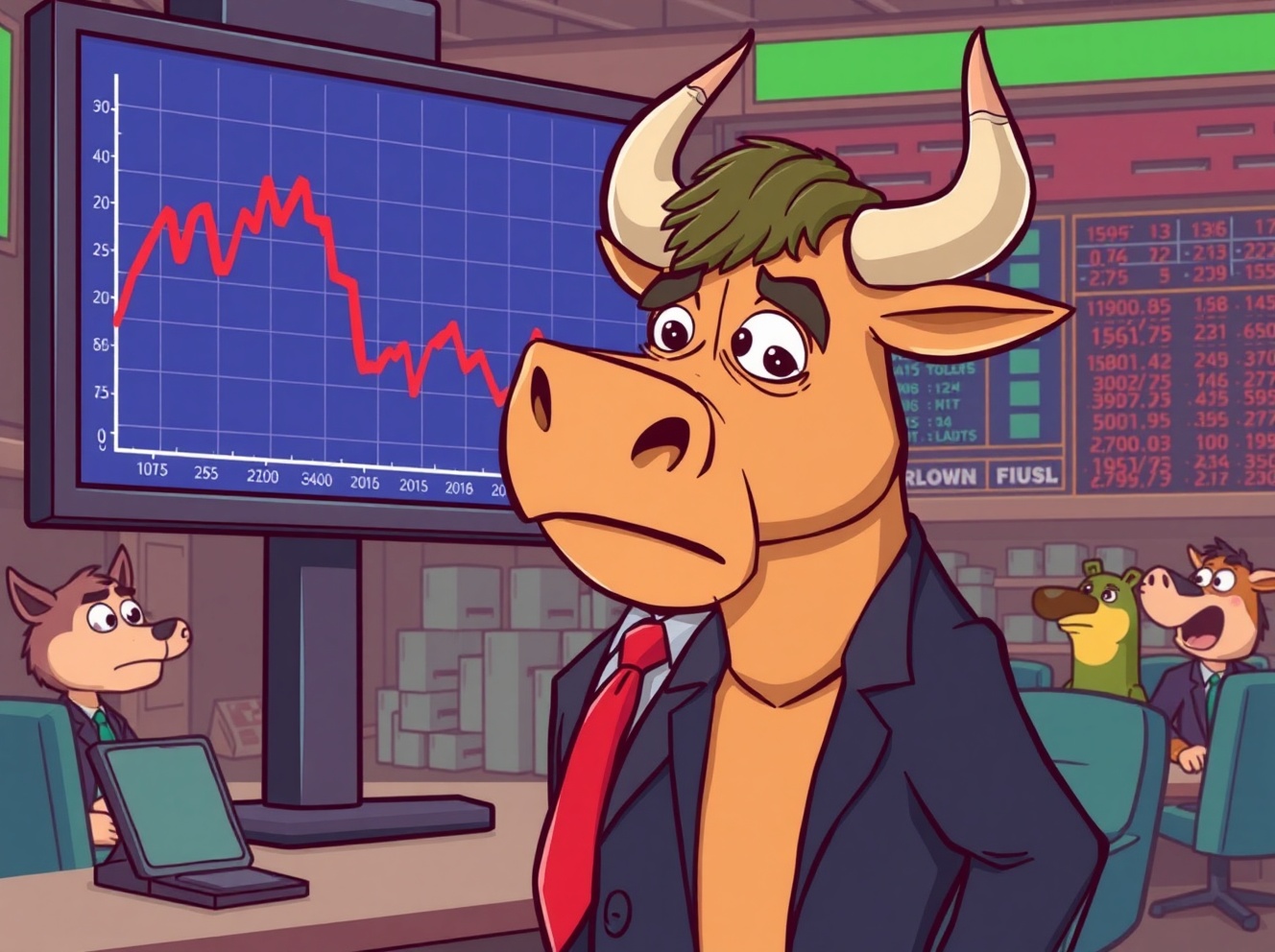
US Stocks Close Lower: A Stark Sell-Off Grips Major Indices as Investors Retreat
In a significant downturn that captured Wall Street’s attention, US stocks closed lower on Tuesday, March 18, 2025, with all three major benchmarks surrendering substantial ground. The session culminated in a broad-based sell-off, reflecting heightened investor caution amid evolving economic signals. Consequently, market participants grappled with a pronounced shift in sentiment, leading to measurable declines across key indices. This movement underscores the dynamic and often unpredictable nature of equity markets, where daily fluctuations can signal deeper underlying currents.
US Stocks Close Lower: Analyzing the Day’s Market Performance
The trading day concluded with clear losses across the board. Specifically, the benchmark S&P 500 index retreated by 1.2%, a move that erased gains from the previous week. Similarly, the Dow Jones Industrial Average also fell by 1.2%, highlighting pressure on blue-chip and industrial sectors. Meanwhile, the technology-heavy Nasdaq Composite experienced the steepest decline, dropping 1.59%. This underperformance often signals investor unease with growth-oriented and higher-valuation companies. Furthermore, the synchronized nature of the declines suggests a market-wide reassessment of risk rather than isolated sectoral trouble.
Market breadth, a key indicator of internal health, was decidedly negative. For instance, declining stocks significantly outnumbered advancers on both the New York Stock Exchange and the Nasdaq. Trading volume was notably above the 30-day average, confirming the conviction behind the selling pressure. This data, provided by major financial data terminals, points to institutional activity driving the move. Additionally, the CBOE Volatility Index (VIX), often called the market’s “fear gauge,” spiked by over 18%, reflecting a sharp increase in expected near-term turbulence.
Contextualizing the Market Decline
To understand why US stocks closed lower, one must examine the preceding economic landscape. The sell-off did not occur in a vacuum. In the weeks prior, markets had rallied on optimism surrounding potential Federal Reserve policy shifts. However, recent economic data releases have tempered that optimism. A hotter-than-expected Consumer Price Index (CPI) report for February, released just last week, reminded investors that the path to the Fed’s 2% inflation target remains bumpy. Persistent inflation pressures can delay anticipated interest rate cuts, a scenario that typically weighs on stock valuations.
Simultaneously, bond markets exhibited telling behavior. Yields on the 10-year U.S. Treasury note, a global benchmark for borrowing costs, climbed several basis points during the session. Higher yields on “risk-free” government bonds make future corporate earnings less valuable in today’s terms, applying downward pressure on equity prices. This classic dynamic between bonds and stocks played a central role in Tuesday’s session. Moreover, a strengthening U.S. dollar, as tracked by the DXY index, added another layer of complexity, potentially denting the overseas earnings of multinational corporations listed on U.S. exchanges.
Expert Perspective on Market Mechanics
Financial analysts point to a confluence of technical and fundamental factors. “The market was technically overbought following a strong first-quarter rally,” notes a senior strategist from a major investment bank, referencing relative strength index (RSI) readings that had approached 70. “Today’s action represents a healthy, albeit sharp, consolidation as investors digest mixed macroeconomic signals.” This view is echoed by portfolio managers who observed profit-taking in sectors that had led the year’s gains, particularly information technology and consumer discretionary. Historical context is also instructive: pullbacks of 2-5% are common within broader bull markets, occurring several times a year on average.
Sector Performance and Key Drivers
The decline, while broad, revealed nuanced sectoral weaknesses. A brief analysis of sector performance via the Select Sector SPDR ETFs shows:
- Technology (XLK): Down approximately 1.8%, leading the declines.
- Consumer Discretionary (XLY): Fell roughly 1.6%.
- Communication Services (XLC): Dropped about 1.5%.
- Utilities (XLU): Showed relative strength, declining only 0.4%, often a sign of defensive positioning.
This pattern indicates a classic “risk-off” rotation, where capital flows out of growth-sensitive sectors and into more defensive or value-oriented areas. Furthermore, specific corporate news contributed to the negative tone. Disappointing quarterly guidance from a major semiconductor firm reverberated through the tech sector. Additionally, concerns about slowing consumer spending, hinted at in recent retail sales data, pressured retail and automotive stocks. The energy sector also faced headwinds from a concurrent drop in crude oil prices, influenced by global demand worries.
The Global and Historical Context
The day’s weakness in US stocks was partially mirrored in international markets. Major European indices, including the FTSE 100 and DAX, closed in negative territory. Asian markets had set a cautious tone earlier in the day. This global correlation underscores the interconnected nature of modern finance, where sentiment and capital flow freely across borders. Historically, comparing this single-day drop to past events provides perspective. For example, the 1.2% drop in the S&P 500, while notable, pales in comparison to the volatility witnessed during the 2020 pandemic sell-off or the 2008 financial crisis. It is, however, one of the more significant single-session declines of 2025 thus far.
Examining longer-term charts reveals that despite today’s setback, the primary uptrend for major indices remains technically intact, supported by key moving averages. Market historians often reference periods like the “Taper Tantrum” of 2013 or the fourth-quarter sell-off of 2018, where sharp declines were followed by sustained recoveries once economic uncertainty cleared. The current environment shares similarities with those periods, characterized by central bank policy uncertainty and recalibrating growth expectations.
Impact on Retail and Institutional Investors
The immediate impact of US stocks closing lower varies by investor profile. For the average retail investor with a long-term, diversified portfolio, the day’s movement is largely noise. Financial advisors consistently emphasize that reacting to daily volatility often harms long-term returns. Conversely, for active traders and quantitative funds, such volatility creates both risk and opportunity through increased volume and price movement. Institutional asset allocators may use such dips to rebalance portfolios or initiate positions in favored stocks at slightly lower valuations. The key takeaway is that market declines are a normal feature of investing, not an anomaly.
Conclusion
In summary, the session where US stocks closed lower served as a stark reminder of market sensitivity to economic data and interest rate expectations. The declines in the S&P 500, Nasdaq, and Dow Jones were driven by a reassessment of inflation’s persistence and its implications for monetary policy. While the sell-off was broad and sentiment-driven, it occurred within a market that had seen substantial gains year-to-date. Moving forward, investor focus will likely remain fixed on incoming economic reports and commentary from Federal Reserve officials. Ultimately, days like these test investor discipline and highlight the importance of a structured, evidence-based investment strategy over emotional reactions to short-term price movements.
FAQs
Q1: Why did US stocks close lower today?
The primary drivers were rising bond yields and renewed concerns about persistent inflation, which could lead the Federal Reserve to maintain higher interest rates for longer. This environment pressures stock valuations, especially for growth companies.
Q2: Which index fell the most, and why?
The Nasdaq Composite fell the most (-1.59%) because it is heavily weighted toward technology and growth stocks. These companies are more sensitive to higher interest rates, which reduce the present value of their future earnings.
Q3: Is this a sign of a coming bear market or recession?
Not necessarily. Single-day pullbacks are common in bull markets. While it signals increased caution, most economists do not view a one-day decline, on its own, as a predictor of a recession. Broader economic indicators remain mixed.
Q4: What should an investor do when the market drops like this?
Long-term investors are generally advised to avoid making impulsive decisions based on short-term volatility. Instead, they should review their financial plan, ensure their portfolio is appropriately diversified, and consider whether their risk tolerance aligns with their investments.
Q5: How does this decline compare to historical market drops?
This decline is relatively modest in historical terms. For context, the average intra-year pullback for the S&P 500 is around 14%. Today’s move is well within the range of normal market fluctuations, though it is one of the larger single-day drops seen in 2025 so far.
This post US Stocks Close Lower: A Stark Sell-Off Grips Major Indices as Investors Retreat first appeared on BitcoinWorld.
0
0

 Manage all your crypto, NFT and DeFi from one place
Securely connect the portfolio you’re using to start.

0
0


0
0

0
0