
Standard Chartered Launches Singapore First Stablecoin Card, “DeCard,”

0
0
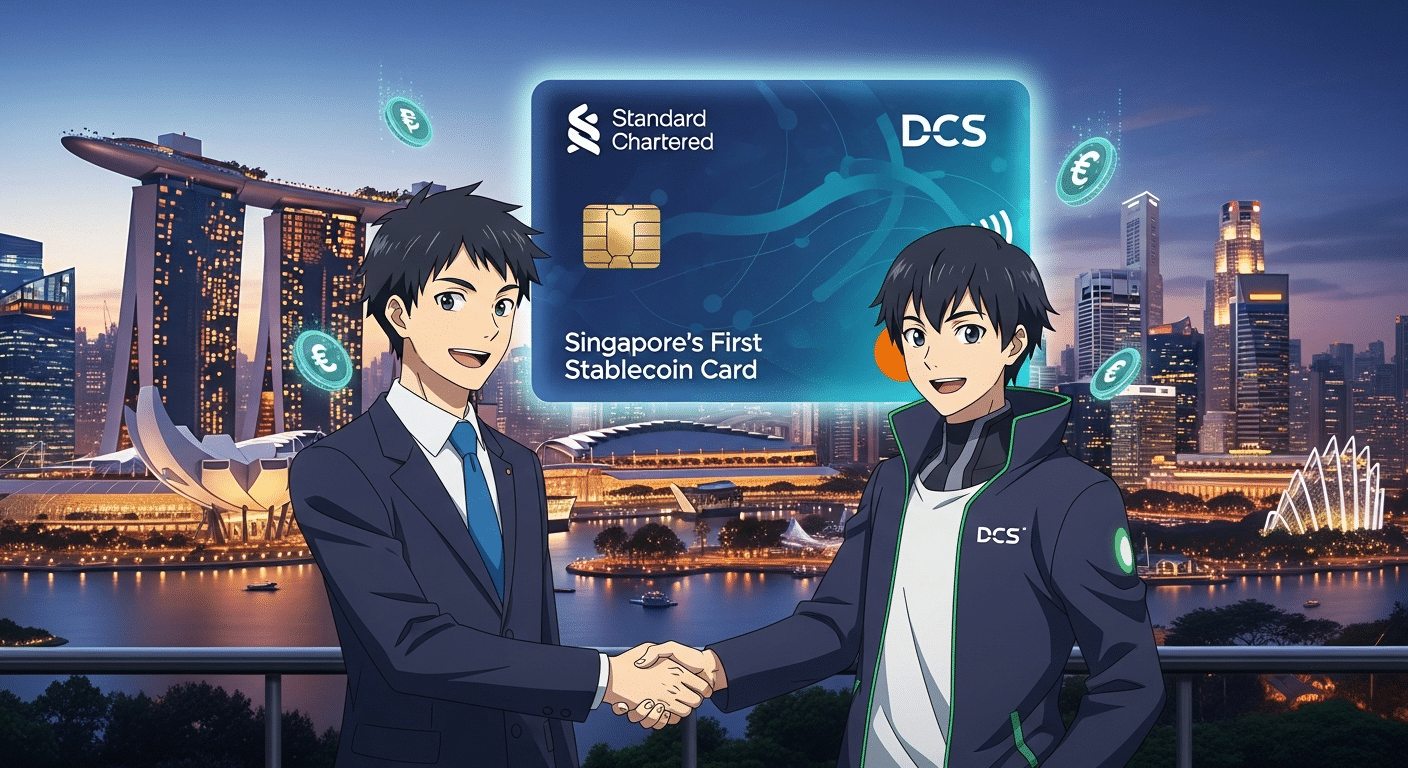
Standard Chartered and DCS have jointly introduced Singapore’s first stablecoin card called DeCard. This strategic move marks a significant milestone in the integration of digital assets with traditional finance.
According to official reports, Standard Chartered has been appointed as the principal banking partner for DeCard. The card will reportedly allow users to spend stablecoins directly at physical stores and merchants across Singapore.
Standard Chartered Launches DeCard with DCS
Financial giant Standard Chartered, in collaboration with DCS Card Centre, has launched DeCard, a stablecoin-focused credit card. This innovative card allows users to make payments with stablecoins at physical stores and merchants island-wide in Singapore.
Notably, DeCard connects DeFi to traditional payments, letting cardholders use stablecoins for daily purchases without worrying about crypto volatility or complicated conversions. The card’s D-Vault system securely tracks balances, handles repayments, and settles crypto-to-fiat transactions instantly.
As part of the partnership, Standard Chartered is now the principal banking partner for DeCard, handling transaction banking, liquidity, and foreign exchange operations. “Our investments in our platforms, capabilities, and solutions allow us to be the trusted banking partner bridging TradFi to DeFi,” said Dhiraj Bajaj, Global Head of TB FI Sales at Standard Chartered.
Why is This Partnership Significant?
Significantly, DCS will leverage Standard Chartered’s virtual account and API infrastructure to create unique virtual accounts for each DeCard user, enabling instant payment identification and reconciliation across multiple channels. This setup aims to make stablecoin transactions as seamless as traditional payments.
According to DCS Chief Commercial Officer Joan Han, the partnership will “bring secure, transparent, and efficient stablecoin payments to the mainstream.” It intends to tackles a major crypto issue – slow and complicated digital-fiat conversion. DeCard combines retail payment speed with blockchain efficiency, making transactions seamless.
While the DeCard pilot is launching in Singapore, Standard Chartered plans to roll out to other markets soon. This project showcases Singapore’s growing reputation as a hub for digital payment innovation, as more institutions adopt blockchain-based finance. “This partnership is in line with our continued efforts to offer banking solutions for innovative fintech partners,” stated Bajaj.
Stablecoin Regulation in Singapore
Interestingly, Standard Chartered’s DeCard aligns with Singapore’s growing support and acceptance of stablecoins. With the Monetary Authority of Singapore (MAS) establishing a robust legal framework for stablecoins under the Single Currency Stablecoin (SCS) regulation in 2023, the country has become a leader in the crypto space.
DeCard is launching amid rapid stablecoin growth, with digital dollars combining crypto speed and fiat stability. The global market has surged over $301 billion, and analysts predict the supply could exceed $2 trillion by 2028 as regulated payment alternatives gain traction.
This framework targets stablecoins pegged to the Singapore Dollar (SGD) or G10 currencies, with requirements including 1:1 reserve maintenance, limited issuance activities, and initial operation solely from Singapore.
The nation has seen several changes in the stablecoin sector in the last year. These changes include the introduction and subsequent platform expansion of StraitsX’s XSGD, a SGD-pegged stablecoin backed by DBS Bank and Standard Chartered.
In May, it made its first appearance on the XRP Ledger with Ripple, thus facilitating cross-border transactions and on-chain settlements. Moreover, in June, Ripple added institutional features. By the end of September, XSGD was the first Singapore dollar-backed stablecoin to be listed on Coinbase, hence allowing global trading from Sept 30.
Conclusion
Standard Chartered’s launch of DeCard, Singapore’s first stablecoin card, marks a significant milestone in integrating digital assets with traditional finance. This innovative card allows users to spend stablecoins directly at physical stores and merchants across Singapore, combining retail payment speed with blockchain efficiency.
Frequently Asked Questions
- What is DeCard?
DeCard is Singapore’s first stablecoin card launched by Standard Chartered and DCS, allowing users to spend stablecoins directly at physical stores. - How does DeCard work?
DeCard enables seamless stablecoin payments by instantly converting crypto to fiat through its secure D-Vault system. - Why is the Standard Chartered–DCS partnership important?
The partnership bridges traditional finance with DeFi, promoting faster, safer, and more efficient stablecoin transactions in Singapore.
Glossary
Stablecoin: A type of cryptocurrency pegged to a stable asset like the US Dollar or Singapore Dollar to minimize price volatility.
DeCard: Singapore’s first stablecoin payment card by Standard Chartered and DCS, enabling users to spend stablecoins at physical stores.
DCS (DCS Card Centre): A Singapore-based financial services provider that issues and manages credit and payment cards.
D-Vault: DeCard’s system that securely manages stablecoin balances, repayments, and real-time crypto-to-fiat settlements.
XSGD: A Singapore Dollar-backed stablecoin issued by StraitsX, supported by DBS Bank and Standard Chartered.
Read More: Standard Chartered Launches Singapore First Stablecoin Card, “DeCard,”">Standard Chartered Launches Singapore First Stablecoin Card, “DeCard,”
0
0
 Manage all your crypto, NFT and DeFi from one place
Securely connect the portfolio you’re using to start.
