
Bitcoin Price Crash as Iran Israel Conflict Triggers $500M Liquidations

0
0

This article was first published on The Bit Journal.
Bitcoin price crash headlines swept across financial media after the Iran-Israel conflict triggered one of the sharpest sell-offs of the quarter. In a market already walking on thin ice, geopolitical tension acted like a match to dry grass.
Prices fell rapidly as traders rushed to reduce exposure, triggering waves of forced liquidations that rippled across derivatives platforms. What looked like a single red candle on the chart quickly evolved into a broader stress test for crypto’s structure, liquidity, and investor confidence.
According to the source, confirmation of escalating military tension in the Iran-Israel conflict pushed investors into risk-off mode. Crypto reacted within minutes.
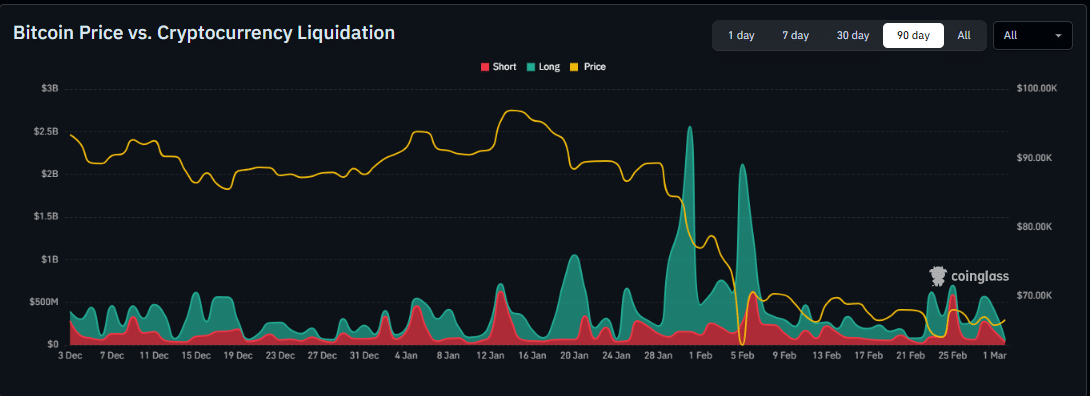
As tracked by live market data, Bitcoin slid from the mid $65,000 range toward the low $60,000s, while Ethereum dropped from near $3,500 to below $3,200. Altcoins including Solana and XRP followed the same path.
Bitcoin Price Crash Unfolds When Geopolitics Hits the Order Book
The Iran Israel conflict delivered the strongest external shock of the week. More than $500 million in leveraged positions were liquidated across derivatives platforms as traders rushed to reduce exposure. Long positions were forced closed as support levels broke. Short positions also suffered during sharp intraday swings.
The Bitcoin price crash once again challenged the narrative of digital gold. During moments of geopolitical stress like the Iran Israel conflict, Bitcoin often trades like a high-risk tech stock rather than a defensive asset. Market observers noted that crypto’s round-the-clock liquidity makes it the first place traders react when headlines turn urgent.
Security Risks Return at the Worst Moment
Just as markets tried to stabilize, security concerns resurfaced. Ethereum co-founder warned that crypto security can never be perfect, citing system complexity and human error. That statement gained weight quickly.
IoTeX confirmed a $4.3 million exploit involving its ioTube bridge after a validator key was compromised. FOOMCASH reported a $2.26 million loss from a zkSNARK copycat attack. Ploutos Money faced backlash after allegations of an exit scam involving 188 ETH. During a Bitcoin price crash, trust becomes fragile, and even smaller incidents feel magnified.
Stablecoins and Regulators Step Into the Spotlight
The Iran Israel conflict did not only pressure prices. It intensified scrutiny on stablecoins and exchanges. In South Korea, the central bank proposed allowing only banks to issue stablecoins after major exchange-related concerns. In the United States, the Office of the Comptroller of the Currency advanced new guardrails focusing on reserve transparency and governance.
Tether disclosed that it has frozen $4.2 billion in USDT linked to illicit activity since 2023 and confirmed plans to discontinue its offshore yuan-backed CNH₮ token. Meanwhile, World Liberty Financial’s USD1 stablecoin briefly faced depegging fears following reports of an attempted attack.
Binance also remained under scrutiny. The exchange claimed sanctions-related exposure dropped by 97 percent following compliance upgrades. Its leadership rejected reports linking Binance flows to entities connected to the Iran Israel conflict. Even so, regulators continue to monitor closely.
Institutions Adjust While Exchanges Diverge
Despite the Bitcoin price crash, institutional players did not retreat entirely. Strategy completed its 100th Bitcoin purchase, reinforcing its long-term thesis. Jane Street increased its stake in the company by 473 percent to $144 million, even while facing regulatory penalties abroad tied to past market controversies.
At the same time, Gemini reduced its workforce by roughly 25 percent and withdrew from the UK, EU, and Australia. Other firms expanded. OKX secured a Malta license. Animoca Brands obtained regulatory approval in Dubai. The market response remains uneven.
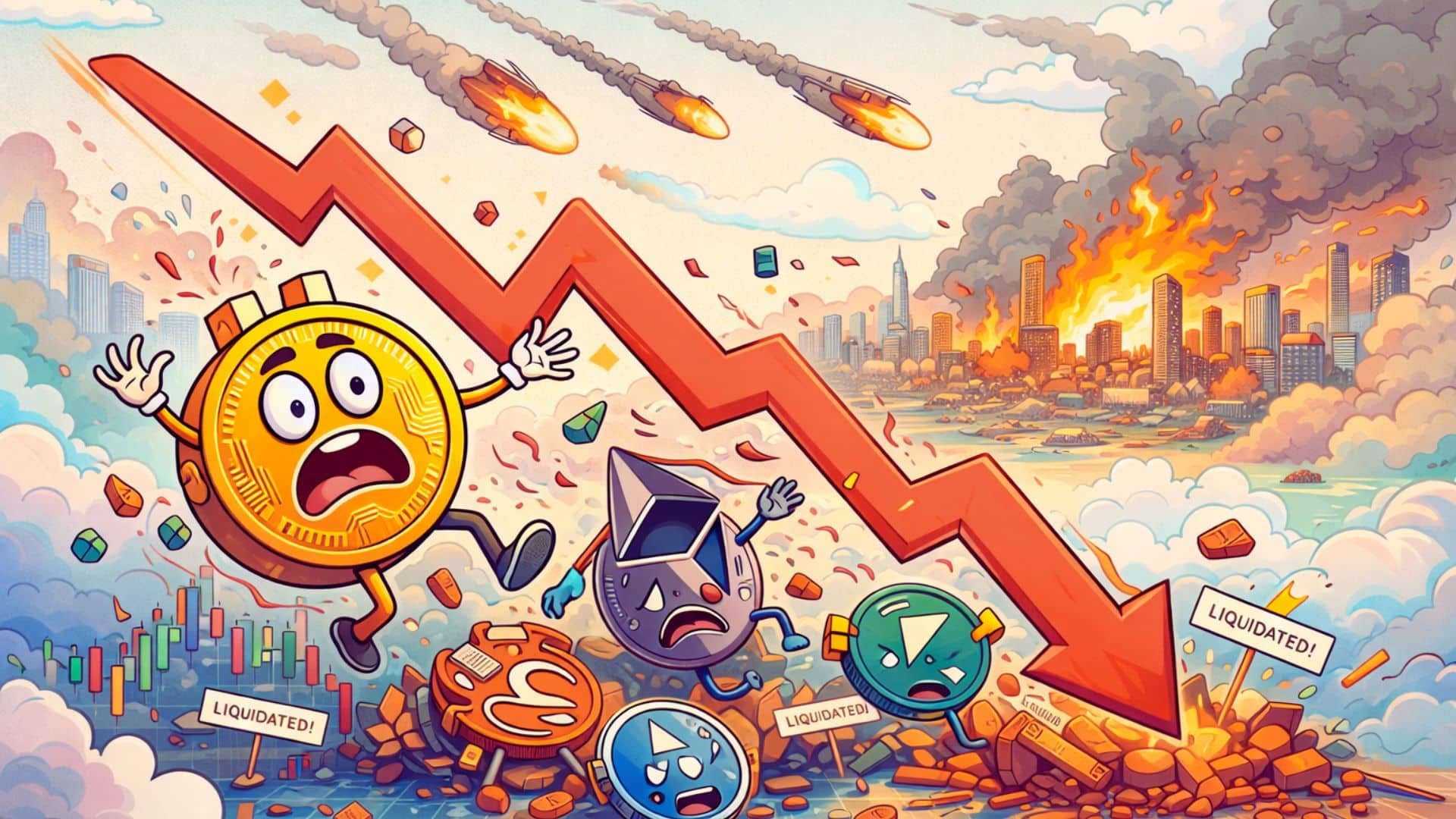
On prediction platform Polymarket, traders now assign higher probability to Bitcoin falling toward $45,000 than returning to $100,000 soon. Sentiment has turned defensive, shaped by the Iran Israel conflict, macro uncertainty, and unresolved industry risks.
The FTX saga also resurfaced. Sam Bankman-Fried argued the collapse reflected a liquidity crunch rather than insolvency and disputed the widely cited $8 billion shortfall. Ongoing bankruptcy proceedings continue, with payouts expected to exceed 100 percent of certain claim values.
Meanwhile, nearly 85 percent of tokens launched in 2025 now trade below their issue price. Oversupply and fading demand have weighed heavily. Still, isolated wins emerged, including a reported 165x return by a venture firm tied to early Polymarket exposure.
Conclusion
The Bitcoin price crash tied to the Iran Israel conflict reflects more than fear. It highlights how interconnected crypto has become with global politics, regulation, and market structure. Yet infrastructure held firm. Institutions adjusted positions. Builders kept shipping upgrades. Even amid volatility, the ecosystem kept moving.
The coming weeks will test resilience. If geopolitical tensions ease, recovery may follow. If risks deepen, volatility will remain elevated. For financial students, analysts, and developers, this moment offers a lesson in market psychology. Crypto does not operate in isolation. It reacts to the world in real time, sometimes faster than any other asset class.
Glossary of Key Terms
Liquidation: Forced closure of leveraged positions when margin requirements fail.
Stablecoin: A cryptocurrency pegged to a stable asset like the US dollar.
Bridge Exploit: A hack targeting systems that transfer assets across blockchains.
Risk-Off Sentiment: Investor behavior favoring safety over high-risk assets during uncertainty.
Leverage: Borrowed capital used to increase trading exposure.
FAQs About Bitcoin Price Crash
Why did the Bitcoin price crash this week?
The Bitcoin price crash followed escalating tensions in the Iran Israel conflict, which triggered global risk-off selling.
How much was liquidated during the sell-off?
More than $500 million in crypto derivatives positions were liquidated across major exchanges.
Did institutions exit the market?
Data suggests institutions rebalanced exposure rather than fully exiting during the Bitcoin price crash.
Are stablecoins at risk after this event?
Stablecoins remain operational, but regulators worldwide are tightening oversight after recent volatility.
Sources/References
Read More: Bitcoin Price Crash as Iran Israel Conflict Triggers $500M Liquidations">Bitcoin Price Crash as Iran Israel Conflict Triggers $500M Liquidations
0
0


 Manage all your crypto, NFT and DeFi from one place
Securely connect the portfolio you’re using to start.


0
0

0
0

0
0