
Sber explores USDT-backed lending as Russia weighs digital ruble demand

0
0
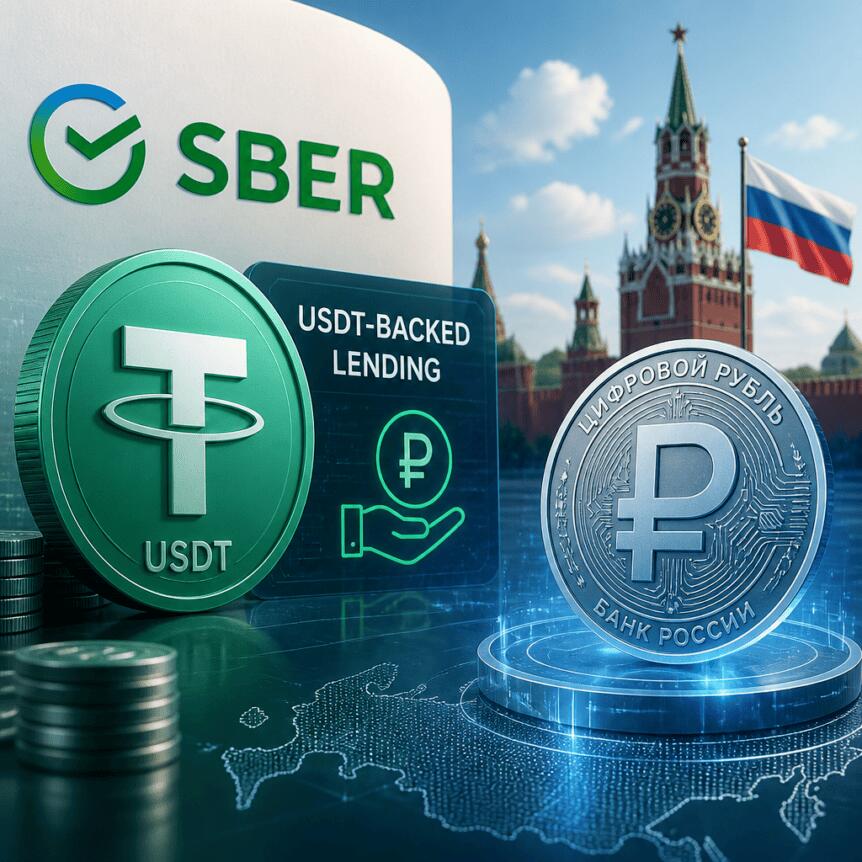
Sber, Russia’s largest bank, is looking to widen the collateral it accepts for its crypto-backed lending products. According to a Friday report by TASS, the bank’s deputy chairman Anatoly Popov said Sber plans to add Tether’s USDt stablecoin and Ether, alongside Bitcoin, once the Bank of Russia clears those assets for public trading.
The move is tied to the rollout of Russia’s newly regulated crypto market. President Vladimir Putin signed a crypto law on Aug. 4, with core provisions scheduled to take effect Sept. 1. Under that framework, the central bank is set to decide which digital assets may be traded on regulated exchanges—an authority that directly affects what can be used as collateral in mainstream financial products.
Key takeaways
- Sber plans to expand crypto-backed lending collateral to include USDT and Ether in addition to Bitcoin.
- The bank said it will add the new collateral assets after the Bank of Russia permits them for public trading.
- Russia’s regulated crypto market begins under a law signed by President Vladimir Putin on Aug. 4, with key provisions starting Sept. 1.
- The central bank has proposed Bitcoin, Ether, and USDT for regulated exchange trading based on criteria including market capitalization and trading history.
- Sber has shown caution toward wider demand for Russia’s digital ruble (CBDC), according to earlier remarks reported by TASS.
Collateral expansion depends on the central bank’s approved asset list
Popov told TASS that Sber intends to adapt its existing crypto lending offerings and “gradually expand” as the country’s new crypto rules come into force. The timing hinges on regulatory clearance: Sber said it will introduce additional collateral after the Bank of Russia allows the relevant assets to be traded publicly.
This is a notable shift in practical terms. While Bitcoin has often been the first digital asset banks explore for custody, settlement, and lending structures, collateral diversification can materially change risk management and client accessibility. A stablecoin and a major smart-contract asset broaden the set of options available to borrowers who want to align collateral with their own exposure or business needs.
Why Russia’s regulated market rules are the trigger
Russia’s new law restructures the digital-asset landscape by giving the Bank of Russia authority to determine which crypto assets may trade on regulated exchanges. As described in earlier coverage cited by Cointelegraph, the central bank’s role is central to creating an official, compliance-oriented market rather than leaving trading primarily to informal or offshore venues.
Cointelegraph previously reported that the Bank of Russia proposed Bitcoin, Ether, and USDT for regulated exchange trading on Aug. 11. The proposal was said to be based on requirements that included market capitalization, trading volume, and at least five years of price history on overseas markets. If regulators follow through on the proposal, it would effectively clear the path for banks like Sber to consider these assets within domestic, regulated finance.
For Sber, that linkage between exchange eligibility and banking collateral is likely to reduce legal and operational uncertainty. Instead of testing collateral on a largely gray basis, the bank can align lending terms with assets that regulators treat as eligible for public trading.
CBDC skepticism highlights Sber’s cautious stance
Sber’s crypto collateral plans arrive alongside a separate, more skeptical view of Russia’s central bank digital currency. TASS previously reported comments from Sber’s chief financial officer Taras Skvortsov suggesting the bank had not seen strong demand for the digital ruble.
Skvortsov said Sber sees “little evidence of broad demand” for the CBDC, and that neither retail nor corporate clients nor financial institutions were pushing for it. In the same reported remarks, he indicated there was no clear interest in the instrument beyond the central bank’s involvement.
While crypto-backed lending and CBDCs are different products with different regulatory aims, the contrast is instructive for readers watching how Russian institutions prioritize digital finance tools. Sber appears willing to expand where it sees a clearer regulatory pathway for market-based assets, while remaining unconvinced that the CBDC will quickly find broad use before or after its wider rollout.
What investors and borrowers should watch next
Sber’s announcement effectively points to a sequence of events: regulators must approve the assets for public exchange trading under the new framework, and then banks can operationalize those assets as collateral. That means the key near-term uncertainty is not whether Sber wants to broaden collateral, but whether and when the Bank of Russia finalizes the eligibility of USDT and Ether for regulated venues.
As the Sept. 1 implementation window approaches, market participants should monitor regulatory updates from the central bank—particularly any steps that confirm which assets become eligible on regulated exchanges. Those decisions will likely determine how quickly Russian financial institutions can move from pilot-style crypto services to more scalable lending structures that incorporate stablecoins and non-Bitcoin assets.
This article was originally published as Sber explores USDT-backed lending as Russia weighs digital ruble demand on Crypto Breaking News – your trusted source for crypto news, Bitcoin news, and blockchain updates.
0
0


 Manage all your crypto, NFT and DeFi from one place
Securely connect the portfolio you’re using to start.


