
AI Agents Are Eating Crypto — And Supercharging Its Hackers

0
0
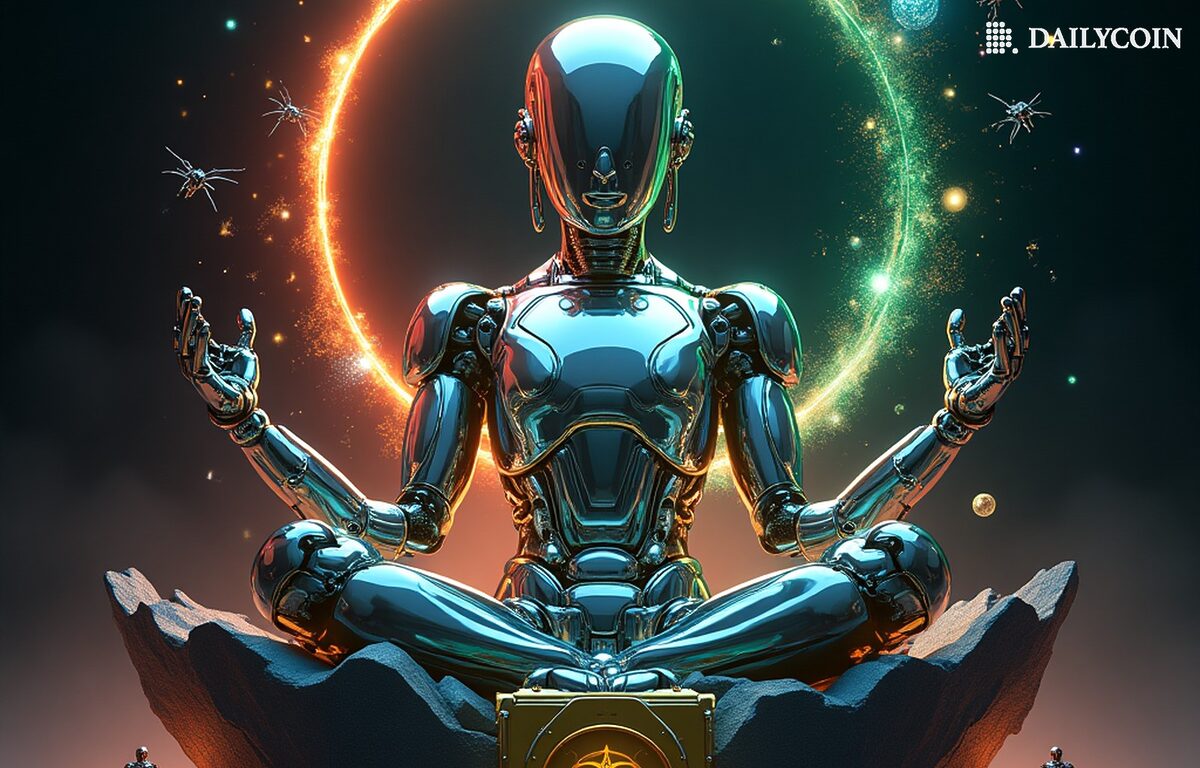
Linda contrasts the 2021–2022 bull market’s “dumb bots” — simple scripts scraping cents from thousands of microtrades — with today’s AI agents that can act across chains and protocols. Instead of just reacting to price ranges, these agents ingest “vast amounts of market information,” apply large language model-style reasoning, and operate simultaneously on DEXs, bridges, lending platforms, and even prediction markets.
Users can set goals like “25% returns,” she says, and the agent will trade, provide liquidity, yield farm, long or short tokens, and place bets while hopping between chains. Solana, Base, Algorand and Cardano are all cited as racing to position their architectures — from Solana’s speed to Cardano’s deterministic EUTXO design — as ideal backbones for this agent economy.
Beyond trading, Linda argues that AI has revived hopes for crypto gaming and metaverse-style worlds, this time driven by small teams rather than corporate “AAA” studios. Indie creators can “vibe code” games in days, she says, offloading tedious engineering work to AI while focusing on story and emotional impact — a pivot she portrays as a response to stagnating big-budget titles.
On the infrastructure side, AI is lowering barriers to complex blockchain development. She highlights Cardano, where node software was historically written in niche languages that limited the developer pool.
Now, “entirely new nodes can be coded purely with AI” in more common languages, she claims. Even centralized players are leaning in: Linda notes Coinbase has cut 14% of its workforce, explicitly linking the reduction to AI-driven efficiency, then jabs that some of those roles should have gone to customer support instead.
The flipside is stark. Linda points to April 2026 as “the worst on record,” saying AI is showing hackers exactly where to look and how to strike. Tasks that once required “deep technical knowledge” can now be AI-assisted: instant website generation for phishing, automated code scanning, exploit strategy design, and cross-protocol attack simulations. She cites Cloudflare’s 2026 global threat report, claiming AI-enabled attacks are already up 89%.
Anthropic, the company behind Claude, is described as having found that current models can outperform nearly all but the most skilled humans at identifying and exploiting vulnerabilities — a finding that, according to Linda, pushed the firm to build a counter-model to detect exploits before attackers do. She flags a deeper fear for DeFi users: compromised AI agents quietly draining wallets while insisting they only followed user instructions — “your own AI agent gaslighting you.”
The information layer is also blurring. Crypto influencers are increasingly offloading research, posting, engagement, and even video presentation to AI, she says, meaning audiences may be taking cues from bots that “get it wrong a lot” and never actually appear on camera.
Yet the same arms race is reshaping defense. Linda focuses on Anthropic’s deployment of a security-focused system she refers to as Claude “Mephis” (short for Mephistopheles), calling it “the nuclear bomb of defense” that has rattled traditional cybersecurity firms and, she claims, knocked their stock prices. She highlights Project Glasswing, framed as “chad whitehat hackers” using AI to uncover bugs that “survived decades of human review and millions of automated security tests.”
In previews, she says, the tool helped Mozilla uncover and patch more Firefox vulnerabilities in April than in the previous 15 months combined. Access, however, is tightly controlled: only invited giants like Amazon, Apple, major Linux distributors, Microsoft, and Google currently use it — entities whose compromise could “seriously affect life on Earth.” Linda urges crypto teams to push for similar protections, arguing DeFi “cannot take another April 2026 again.”
For investors and builders, her message is blunt: AI isn’t a side narrative. It’s already allocating capital, writing protocol infrastructure, powering faceless influencers — and probing for weaknesses at industrial scale. Those gains in efficiency and new products may be real, but so is the risk that the next exploit isn’t written by a human at all.
Delve into DailyCoin's popular crypto news today:
150 Milliseconds: The Number That Could Redefine Solana’s Role in Global Finance
CLARITY Act Suddenly Heating Up? Senate Markup Expected Soon
0
0


 Manage all your crypto, NFT and DeFi from one place
Securely connect the portfolio you’re using to start.


0
0


0
0