
What Counts as a Digital Commodity? CLARITY Act Impact on BTC, XRP and SOL

0
0

This article was first published on The Bit Journal.
For years, one question has been plaguing the US crypto industry: Is a token a security or a digital commodity? The answer to this question has a huge impact on how it can be traded, who gets to regulate it, whether exchanges can even list it, and how comfortable institutions feel holding onto it.
The discussion entered a new phase in 2026 when the US Securities and Exchange Commission (SEC) and the Commodity Futures Trading Commission (CFTC) jointly classified several major cryptocurrencies as digital commodities. Lawmakers also kept pushing forward the CLARITY Act, a bill that aims to turn this regulatory interpretation into federal law.
If this bill ends up getting passed, it could potentially bring about one of the most important crypto reforms in US history.
Why the Definition of a Digital Commodity Matters
A digital commodity is generally defined as a crypto asset that gets its value from the operation of the actual blockchain network operating and market supply demand forces. The value doesn’t come from the efforts of a company or promoter. Regulators have cited examples, such as Bitcoin, Ethereum, XRP, Solana, Cardano, Avalanche, Litecoin and several others.
The difference between securities and commodities matters because they’re subject to totally different rules.
Securities usually come under the close watch of the SEC, meaning they need extensive disclosures, registration requirements and tighter rules to follow. On the other hand, commodities face much lighter oversight, mainly with regulators looking at market integrity, fraud prevention and derivatives markets.
For crypto projects, that difference can make all the difference between success in the US market or hitting an insurmountable legal hurdle.
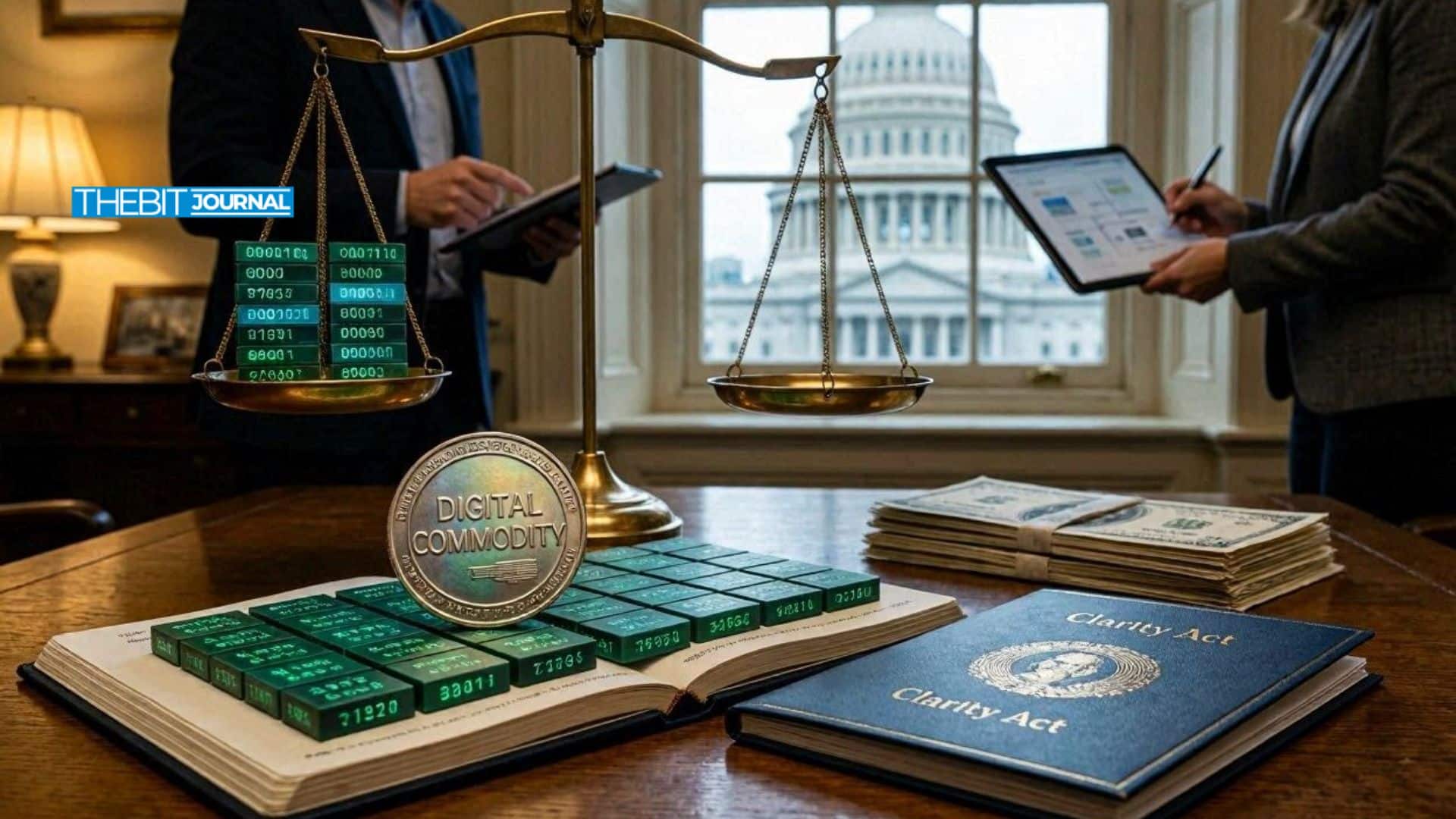
The Regulatory Shift of 2026
Back in March 2026, the SEC and CFTC jointly dropped a clarification about how federal securities laws apply to digital assets. They came up with these categories like digital commodities, digital securities, stablecoins, digital tools and digital collectibles to give a better idea.
In the guidance, the agencies specifically identified 16 major tokens as digital commodities; that includes Bitcoin (BTC), Ethereum (ETH), XRP, Solana (SOL), Cardano (ADA), Dogecoin (DOGE), Litecoin (LTC), Stellar (XLM) and a host of others.
There is however, a catch, this classification isn’t a firm law that can’t be changed. Future administrations could modify or reverse that interpretation, creating uncertainty for businesses and investors. This is why the crypto industry keeps such a close eye on the CLARITY Act.
What the CLARITY Act Would Do
The Digital Asset Market Clarity Act seeks to place the digital commodity framework directly into federal law.
Under the proposal, the CFTC would become the main authority over spot markets involving digital commodities while the SEC would still be the one that oversees securities and investment contracts.
This bill introduces a really interesting concept called a “maturity” framework. Instead of treating a token’s classification as permanent, the bill recognizes that crypto networks evolve.
It is possible that a project might start out being a securities offering when investors are really counting on the founding team. Later as the network becomes more decentralized and starts working the way it is supposed to, the token could transition into a digital commodity.
This is a big deal because it attempts to solve one of the biggest challenges with crypto’s regulatory situation : the fact that a token’s characteristics can change over time.
The bill has already passed some major hurdles such as getting approval from the Senate Banking Committee in May 2026. Still, negotiations continue around several provisions.

What Changes If a Token is Classified as a Digital Commodity
A digital commodity classification makes it easier to list on exchanges, reduces the uncertainty around compliance and lays out a straightforward path for financial products like spot exchange-traded funds (ETFs).
Institutional investors are going to feel more at ease allocating capital into assets that fit neatly into a nicely defined regulatory framework.
The framework is also likely to reduce the reliance the industry has on years of courtroom battles and enforcement actions to figure out what a token is. Instead, there will be clear rules to follow when launching products or expanding services before things get out of hand.
Supporters argue that having clear rules will encourage innovation, and keep the blockchain development industry within the United States rather than pushing it off to places with clearer rules. Treasury Secretary Scott Bessent has been vocal about the need for crypto legislation for that reason.
The Debate Is Far From Over
Despite improvements, the digital commodity framework still faces a lot of questions.
Critics argue that deciding whether a network is really decentralized is still subjective. Others warn that moving assets from securities regulation over to commodity regulation could reduce investor protection.
There are some politics at work too, around anti-money laundering provisions, stablecoin rewards and conflicts of interest, that are all still causing delays on the CLARITY Act as it makes its way through Congress.
The digital commodity label at least has more clarity than before, but how it all pans out will depend on if Congress can actually turn it into law.
Conclusion
Regulators have already identified some assets like Bitcoin, Ethereum, XRP and Solana as digital commodities, but the CLARITY Act would make that framework stronger by putting it into federal law.
If the legislation gets passed, it could establish clearer boundaries between the SEC and CFTC, create a clear path for blockchain networks to grow and stop the regulatory uncertainty that has haunted the industry for years.
Until then, the classification is still influential, but not permanent, leaving the future of crypto regulation tied closely to developments in Washington.
Glossary
Digital Commodity: A crypto asset where the value is driven by the blockchain functionality and market demand rather than some company or promoter’s efforts.
SEC: The US securities regulators who oversee the securities markets.
CFTC: The Commodity Futures Trading Commission who are in charge of the commodity and derivatives markets.
Howey Test: A legal framework that is used to figure out if an asset is a security.
CLARITY Act: A proposed US law that would provide a clear framework for digital assets and divide up the oversight between the SEC and CFTC.
Decentralization: A network where the control is spread out rather than being concentrated in one place.
Frequently Asked Questions About Digital Commodity
What is a digital commodity?
A digital commodity is a crypto asset whose value is driven by a functional blockchain network and market demand, rather than company or promoter’s efforts.
Which cryptocurrencies are considered digital commodities?
The SEC and CFTC’s 2026 guidelines listed Bitcoin, Ethereum, XRP, Solana, Cardano, Avalanche, Litecoin, Chainlink, Stellar and others as digital commodities.
What does the CLARITY Act do?
The CLARITY Act would establish a statutory framework for digital assets, giving the CFTC authority over digital commodities while preserving SEC oversight of securities.
Is the CLARITY Act already law?
No. As of June 2026, the bill has advanced through key legislative stages but has not yet become federal law.
References
Read More: What Counts as a Digital Commodity? CLARITY Act Impact on BTC, XRP and SOL">What Counts as a Digital Commodity? CLARITY Act Impact on BTC, XRP and SOL
0
0


 Manage all your crypto, NFT and DeFi from one place
Securely connect the portfolio you’re using to start.


