
Japan’s “Sanae Token” Scandal Tests Legal Limits of Political Memecoins

0
0

Japanese Prime Minister Sanae Takaichi publicly disavowed a cryptocurrency bearing her name and likeness. The token crashed 58% within hours, and regulators moved to investigate the issuer.
The episode is the latest in a string of political memecoins that have burned retail investors worldwide.
PM’s Denial Triggers Crash
Takaichi is Japan’s first female prime minister and one of its most popular in decades. Her LDP won 316 seats in the Feb. 8 general election, a supermajority, and her cabinet approval rating sits near 70%.
SANAE TOKEN launched on the Solana blockchain on Feb. 25 without the prime minister’s knowledge. Serial entrepreneur Yuji Mizoguchi’s NoBorder DAO community issued it as part of a “Japan is Back” initiative. The project’s website displayed Takaichi’s name and an illustrated portrait of her.
Mizoguchi had earlier stated on the YouTube show “REAL VALUE” that he was in contact with Takaichi’s side. That claim amplified speculation that the token carried some form of official backing.
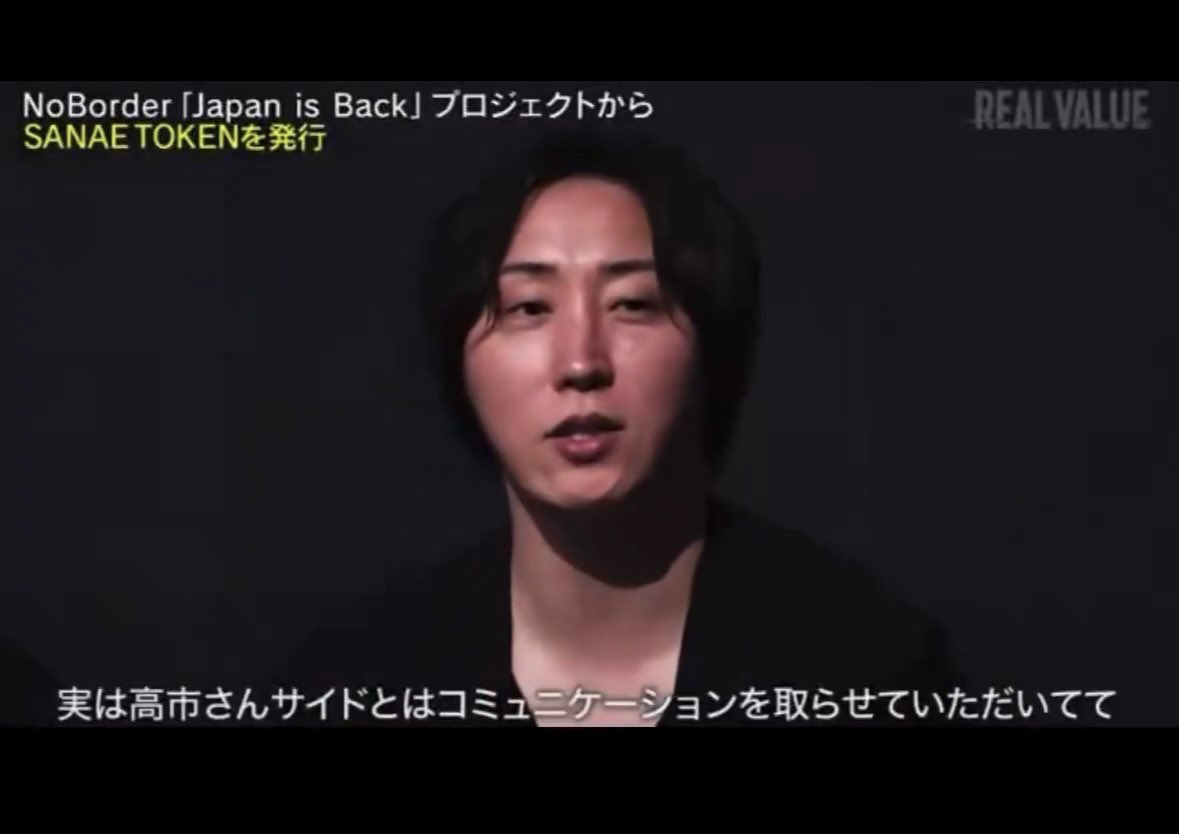 Mizoguchi states on the YouTube show “REAL VALUE” that he had been in communication with Takaichi’s side. The on-screen caption reads: “SANAE TOKEN issued from NoBorder’s Japan is Back project.” Source: X.com
On March 2, Takaichi posted on X to shut down the narrative. The post amassed over 63 million views. She said neither she nor her office knew anything about the token. She added that no approval had ever been granted.
The token’s price plunged from $0.0137 to $0.0058 almost immediately after her statement. By March 4, the market cap had cratered to roughly $62,000 with just $25,000 in liquidity.
FSA Launches Probe
Japan’s Financial Services Agency (FSA) is now investigating the token’s operators. The agency found that the issuing company lacks the required crypto exchange license.
Under Japan’s Payment Services Act, selling or exchanging crypto assets requires registration with the FSA. Violators face up to five years in prison or fines of ¥5 million.
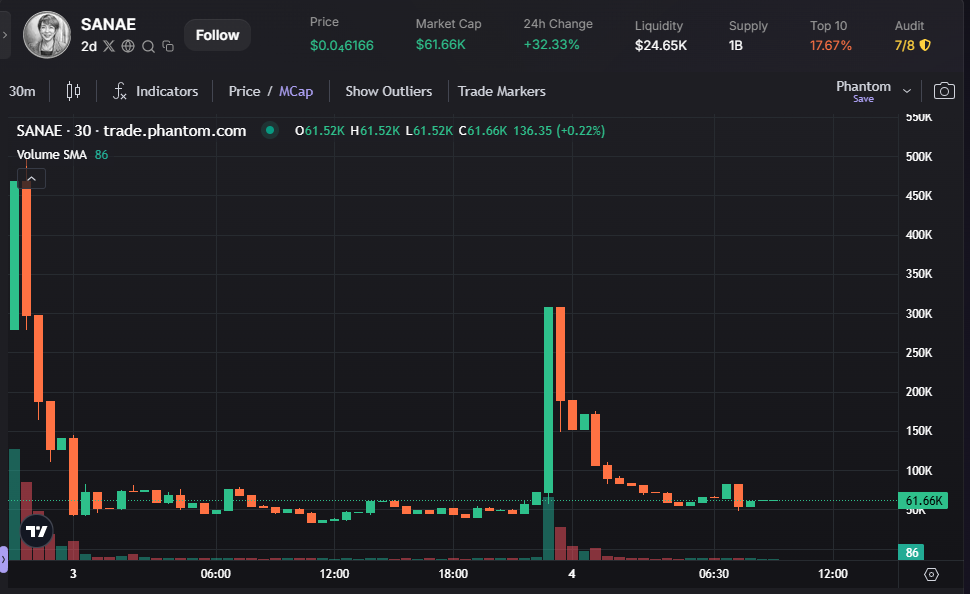 Source: phantom.com
A company called neu, led by CEO Ken Matsui, claimed responsibility for the token’s design. Matsui posted a public apology on X on March 3, saying they handled all operations.
Mizoguchi reposted Matsui’s statement and pledged cooperation with a media investigation. He wrote on X that he would not run from accountability or shift blame onto others. He said he intended to face the matter based on facts, not emotions.
Still, the gap between his earlier YouTube remarks and the prime minister’s flat denial remains unresolved.
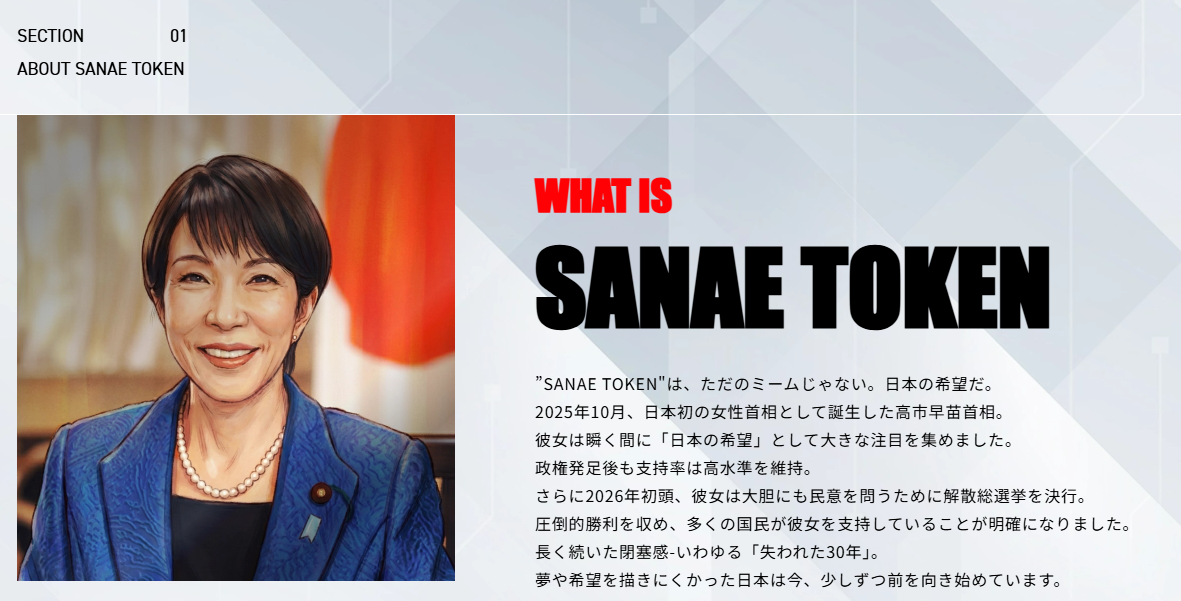 The SANAE TOKEN website describes the token as “not just a meme, but the hope of Japan,” alongside a portrait of Prime Minister Takaichi and a timeline of her political career. Source: japanisbacksanaet.jp
The FSA confirmed that neu was not on its registered exchange list as of January. No subsequent application had been filed either.
The token’s structure has drawn additional scrutiny. Sixty-five percent of the total supply was reserved for operators.
Political Memecoins Under Global Spotlight
Japan’s scandal mirrors a pattern now emerging across multiple countries.
In the US, President Donald Trump launched $TRUMP on Solana in January 2025. His family and partners retained 80% of the supply and earned over $350 million in fees.
Senator Chris Murphy introduced the MEME Act to ban officials from issuing financial assets. Trump’s crypto czar, David Sacks, countered that memecoins are collectibles, not securities.
In February 2025, Argentina’s President Javier Milei promoted the $LIBRA token. It surged to a $4.5 billion market cap before crashing 89% within three hours.
Insiders allegedly extracted roughly $100 million before the collapse. Milei now faces fraud investigations and impeachment calls.
Regulatory Gap Persists
Each case exploits a similar loophole. Memecoins typically fall outside the definitions of securities in most jurisdictions.
Japan’s framework may offer a stricter path. The Payment Services Act covers crypto exchange activity regardless of token type. The FSA can act against unlicensed operators without classifying tokens as securities.
In the US, the SEC under the Trump administration has narrowed its scope of crypto enforcement. Memecoins remain largely unregulated at the federal level.
No international framework currently addresses political memecoins specifically. The gap leaves retail investors exposed to hype-driven schemes tied to public figures.
Industry observers say the SANAE TOKEN case could set a precedent. Japan’s response may shape how other regulators approach the growing trend.
0
0


 Manage all your crypto, NFT and DeFi from one place
Securely connect the portfolio you’re using to start.

0
0


0
0

0
0