
Critical Alert: Smartphone Chipsets Vulnerable to Crypto Theft – Ledger Exposes EMFI Flaw

0
0

BitcoinWorld
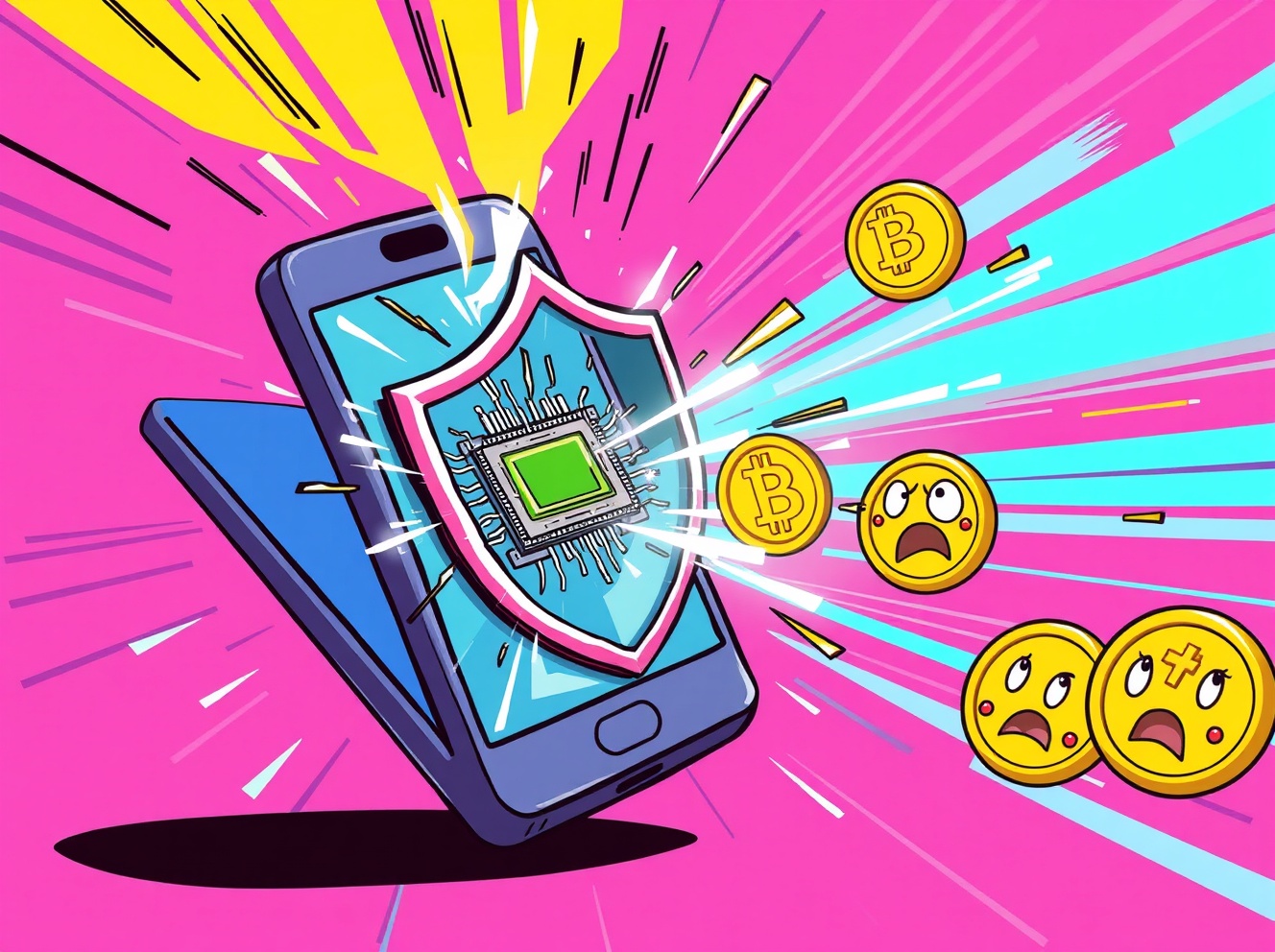
Critical Alert: Smartphone Chipsets Vulnerable to Crypto Theft – Ledger Exposes EMFI Flaw
Imagine your smartphone, the device you trust with messages, photos, and perhaps even your cryptocurrency wallet, harboring a secret flaw that could let hackers drain your funds completely. That’s the alarming reality Ledger, the renowned hardware wallet manufacturer, has just exposed. Their latest security research reveals that common smartphone chipsets vulnerable to a sophisticated attack could leave integrated crypto wallets wide open for theft.
What Makes These Smartphone Chipsets Vulnerable?
Ledger’s Donjon security team conducted tests focusing on a specific chip: MediaTek’s Dimensity 700, also known as the MT6878. This chipset is found in various consumer smartphones, including devices like the Solana Seeker. The attack method is called Electromagnetic Fault Injection (EMFI). In simple terms, attackers use precisely targeted electromagnetic pulses to disrupt and ultimately control the chip’s operation.
In their test, Ledger achieved what they call “full and absolute control” over the device. For a smartphone functioning as a crypto wallet, this level of access is catastrophic. It means an attacker could potentially extract the private keys securing your digital assets, leading to irreversible fund loss. The scariest part? This isn’t a bug that can be patched.
Why Can’t This Vulnerability Be Fixed?
This threat stems from a fundamental design flaw within the silicon itself, not a software error. Therefore, issuing a standard operating system update is useless against it. The vulnerability is baked into the hardware. MediaTek’s response clarifies the situation: the MT6878 chipset is designed for mainstream consumer products like phones and tablets. It was never engineered to meet the rigorous security standards required for financial applications or Hardware Security Modules (HSMs), which are built to withstand physical attacks like EMFI.
This revelation creates a clear divide:
- Consumer-Grade Chips: Optimized for performance and cost in everyday devices.
- Security-First Hardware: Like secure elements in dedicated hardware wallets, designed from the ground up to resist physical tampering.
Is Your Crypto Wallet at Risk? Key Takeaways
This news primarily affects smartphones with integrated or software-based cryptocurrency wallets. If your crypto holdings are secured on a dedicated hardware wallet from Ledger, Trezor, or similar, your private keys remain isolated in a secure chip designed to thwart such attacks. The risk is concentrated on devices that combine general-purpose computing with crypto storage.
Here are the immediate actionable insights for every crypto user:
- Understand Your Storage: Know where your private keys are actually stored. Is it on a general-purpose smartphone chip or a dedicated secure element?
- Prioritize Dedicated Hardware: For significant holdings, the use of a purpose-built hardware wallet remains the gold standard for security.
- Assess Mobile Wallets Carefully: If you use a mobile wallet, research the security model of the specific device and application.
The Bottom Line: A Stark Reminder on Security Fundamentals
Ledger’s disclosure serves as a crucial, if unsettling, reminder. In the relentless pursuit of convenience, we must not compromise on security fundamentals. While smartphones offer incredible utility, entrusting them with the “keys to your financial kingdom” carries inherent risks when the underlying hardware isn’t designed for that supreme level of protection. This discovery of smartphone chipsets vulnerable to physical attacks reinforces the critical importance of using the right tool for the job—especially when that job is safeguarding your digital wealth.
Frequently Asked Questions (FAQs)
Q1: Does this affect iPhones or Samsung Galaxy phones?
A1: Ledger’s specific test was on a MediaTek chip (MT6878). However, the broader principle applies: any smartphone using a general-purpose consumer chipset not specifically hardened against physical attacks could, in theory, be vulnerable to similar EMFI techniques. The security of Apple’s Secure Enclave or Samsung’s Knox hardware varies by model and design.
Q2: If I use MetaMask on my phone, am I at risk?
A2: Yes, if the MetaMask app is on a vulnerable device. The risk applies to any software wallet where the private keys are processed and stored on the main smartphone chipset, making them potentially accessible during an EMFI attack.
Q3: Can a software update protect my phone?
A3> No. Ledger and MediaTek confirm this is a hardware-level design flaw. Software updates cannot fix vulnerabilities in the physical silicon architecture.
Q4: What is the safest way to store cryptocurrency?
A4> For maximum security, use a dedicated hardware wallet. These devices store private keys in a separate, isolated secure element chip specifically designed to resist both remote and physical attacks, including EMFI.
Q5: Should I stop using my Solana Seeker phone?
A5> For general use, it’s fine. However, for storing non-trivial amounts of cryptocurrency, you should strongly consider moving those assets to a more secure storage solution, like a hardware wallet, and use the phone only for transactions, not long-term storage.
Found this deep dive into hardware security critical for protecting your crypto? Help others stay safe by sharing this article on your social media channels. Awareness is the first layer of defense in the digital asset space.
To learn more about the latest cryptocurrency security trends, explore our article on key developments shaping blockchain security and institutional adoption.
This post Critical Alert: Smartphone Chipsets Vulnerable to Crypto Theft – Ledger Exposes EMFI Flaw first appeared on BitcoinWorld.
0
0

 Manage all your crypto, NFT and DeFi from one place
Securely connect the portfolio you’re using to start.


0
0