
Gold Price Plummets as Easing Middle East Fears Fuel Dollar Rally, Crushing Haven Bids

0
0
BitcoinWorld
Gold Price Plummets as Easing Middle East Fears Fuel Dollar Rally, Crushing Haven Bids
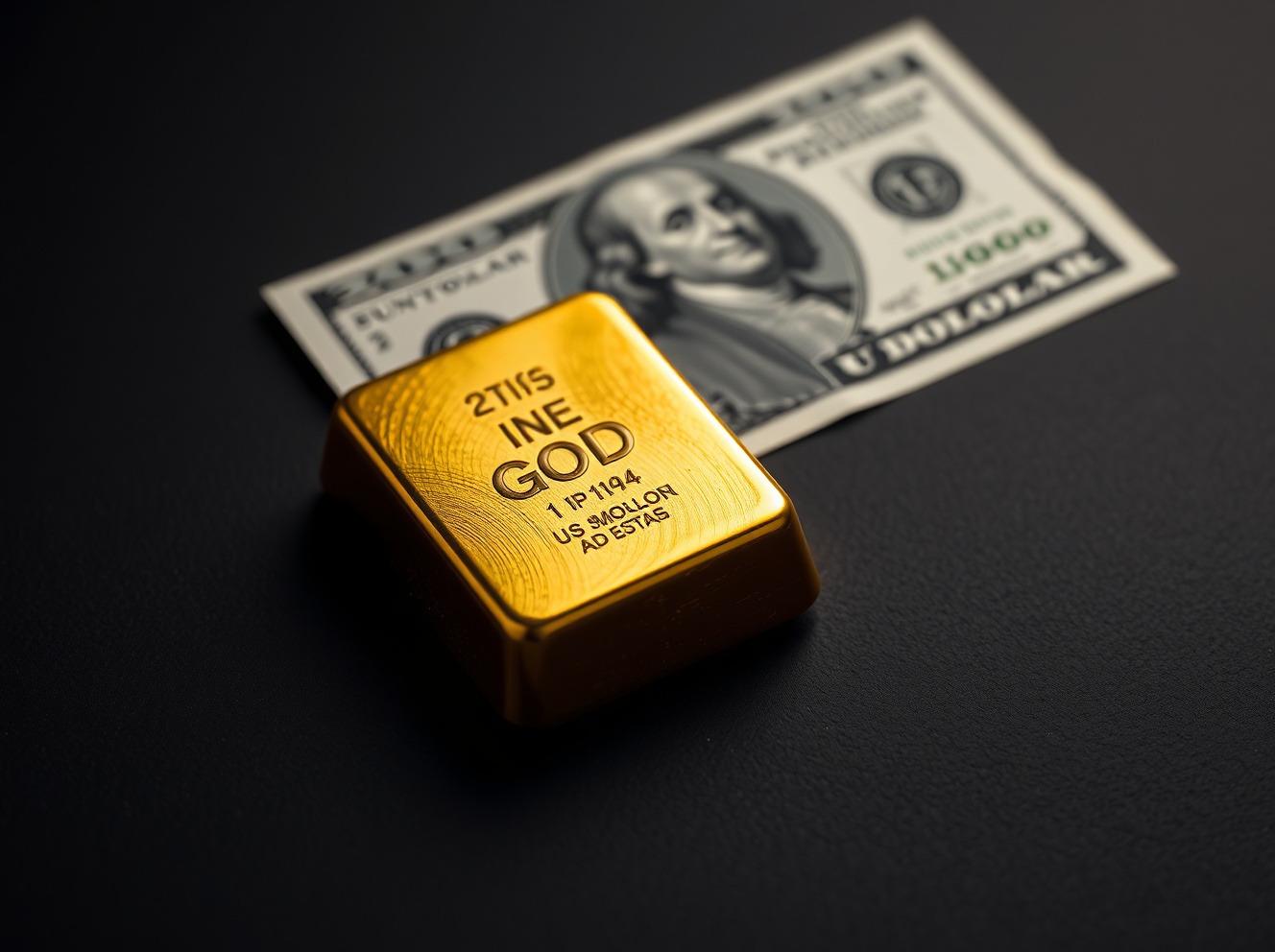
LONDON, April 2025 – The gold price experienced a significant downturn this week, shedding nearly 3% of its value as diplomatic progress in the Middle East weakened its traditional appeal as a safe-haven asset. Consequently, investors rapidly shifted capital toward the strengthening US Dollar, creating a powerful headwind for the precious metal. This movement highlights the fragile balance between geopolitical uncertainty and global currency flows.
Gold Price Decline Linked to Shifting Geopolitical Winds
Market analysts immediately pinpointed the catalyst for the sell-off. Reports of successful ceasefire negotiations between key Middle Eastern factions reduced the immediate risk of a broader regional conflict. Historically, gold thrives during periods of geopolitical instability. Therefore, the reduction in tension triggered a swift reassessment of risk. Traders began exiting long positions in gold, seeking higher-yielding opportunities elsewhere. This reaction is a classic example of market sentiment driving short-term price action.
Furthermore, the sell-off accelerated due to technical factors. The price broke below the critical 50-day moving average, triggering automated sell orders. Trading volume spiked to 40% above the monthly average, confirming the bearish momentum. Data from the Commodity Futures Trading Commission (CFTC) also showed speculators had built near-record net-long positions, making the market vulnerable to a sharp correction.
The US Dollar’s Powerful Rally and Its Impact
Simultaneously, the US Dollar Index (DXY), which measures the dollar against a basket of major currencies, surged to a three-month high. A stronger dollar makes dollar-denominated commodities like gold more expensive for holders of other currencies, dampening international demand. This inverse relationship is a fundamental pillar of global finance. The dollar’s strength stemmed from two primary sources beyond geopolitics.
First, recent US economic data, particularly robust retail sales and persistent service-sector inflation, reinforced expectations that the Federal Reserve will maintain higher interest rates for longer. Higher US rates increase the opportunity cost of holding non-yielding assets like gold. Second, comparative economic weakness in Europe and Asia fueled capital flight into US Treasury assets, further boosting the dollar. The following table illustrates key data points driving the divergence:
| Indicator | United States | Eurozone |
|---|---|---|
| Core Inflation (YoY) | 3.1% | 2.4% |
| 10-Year Bond Yield | 4.25% | 2.80% |
| Q1 GDP Growth | 2.8% | 0.3% |
Expert Analysis on Safe-Haven Demand Dynamics
Dr. Anya Sharma, Chief Commodities Strategist at Global Markets Insight, provided context. “The safe-haven demand for gold is highly elastic to geopolitical headlines,” she explained. “While physical holdings by central banks provide a long-term floor, short-term pricing is dominated by futures and ETF flows. The market was priced for perpetual crisis; any de-escalation was bound to cause a sharp adjustment.” Sharma noted that physical buying from key markets like China and India remained subdued due to local price premiums, offering no immediate support.
Additionally, other traditional havens saw mixed flows. The Japanese Yen gained modestly, while Swiss Franc movements were muted. This suggests the flight-to-quality trade specifically rotated out of commodities and into the US dollar and Treasury complex. The volatility index (VIX) also fell sharply, corroborating the overall decline in market fear.
Broader Market Implications and Sector Effects
The ripple effects extended beyond the spot gold market. Gold mining equities on major indices underperformed, with the NYSE Arca Gold BUGS Index dropping over 5%. Conversely, sectors that benefit from a stronger dollar and lower commodity input costs, such as industrials and certain technology segments, saw relative strength. The movement also impacted currency markets in commodity-exporting nations like Australia and Canada, putting downward pressure on the AUD and CAD.
For investors, the episode serves as a stark reminder of gold’s dual nature. It is both a:
- Financial asset: sensitive to real interest rates and dollar strength.
- Safe-haven asset: sensitive to geopolitical and systemic financial risk.
When these drivers align negatively, as they did this week, downward pressure intensifies. Market participants are now closely monitoring Federal Reserve commentary and incoming inflation data for clues on the duration of the high-rate environment.
Historical Context and Forward-Looking Indicators
This week’s drop, while notable, fits a historical pattern. For instance, similar sharp retreats followed de-escalation in Ukraine-related fears in late 2023 and after peak pandemic uncertainty in 2021. However, the long-term structural demand from central banks diversifying reserves away from the dollar remains intact. The World Gold Council reports that central banks added over 1,000 tonnes to reserves in 2024, a trend expected to continue.
Key indicators to watch now include:
- CFTC Commitment of Traders reports for signs of positioning extremes unwinding.
- Physical gold flows into major ETFs like SPDR Gold Shares (GLD).
- Real (inflation-adjusted) US Treasury yields, the primary competitor to gold.
Technical analysts highlight the $1,950 per ounce level as critical medium-term support. A sustained break below could signal a deeper correction toward $1,900.
Conclusion
The recent gold price decline underscores the metal’s acute sensitivity to the interplay between geopolitics and macroeconomics. The easing of Middle East risks acted as the trigger, but the potent rally in the US Dollar—fueled by resilient American economic data—provided the sustained downward pressure. While long-term supportive factors like central bank buying persist, the short-term path for gold remains heavily contingent on Federal Reserve policy and the durability of the current risk-on sentiment. Investors should prepare for continued volatility as these powerful forces remain in flux.
FAQs
Q1: Why does a stronger US Dollar cause gold prices to fall?
A stronger US Dollar makes gold more expensive for buyers using other currencies, which typically reduces international demand and puts downward pressure on its dollar-denominated price.
Q2: Is gold still a good safe-haven investment?
Gold remains a core portfolio diversifier and hedge against extreme market stress and currency devaluation. However, its short-term price can be volatile and negatively correlated with rising real interest rates and a strong dollar.
Q3: What are ‘haven bids’ in financial markets?
Haven bids refer to investment flows into assets perceived as preserving capital during times of geopolitical tension, economic uncertainty, or market turmoil. Traditional havens include gold, the US Dollar, Japanese Yen, Swiss Franc, and government bonds.
Q4: How do Middle East tensions typically affect global markets?
Escalation often increases oil prices, boosts demand for safe-haven assets, and heightens overall market volatility. De-escalation typically reverses these flows, strengthening risk assets and currencies like the US Dollar if the US is seen as a stable alternative.
Q5: What other factors influence gold prices besides geopolitics?
Key drivers include real interest rates (opportunity cost), central bank demand, mining supply, inflation expectations, and the strength of physical demand from key markets like India and China.
This post Gold Price Plummets as Easing Middle East Fears Fuel Dollar Rally, Crushing Haven Bids first appeared on BitcoinWorld.
0
0

 Manage all your crypto, NFT and DeFi from one place
Securely connect the portfolio you’re using to start.

0
0


0
0