
US Stocks Open Lower: Key Indices Slide as Investors Weigh Economic Signals

0
0
BitcoinWorld
US Stocks Open Lower: Key Indices Slide as Investors Weigh Economic Signals
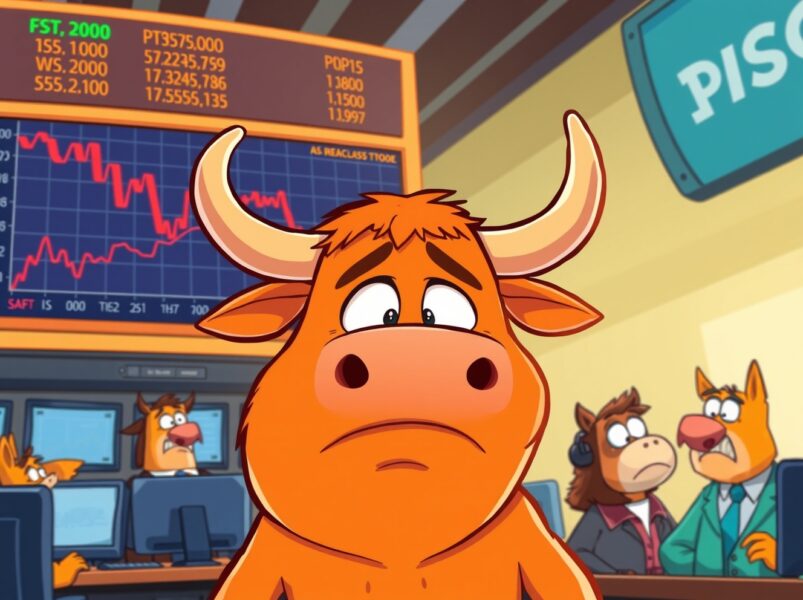
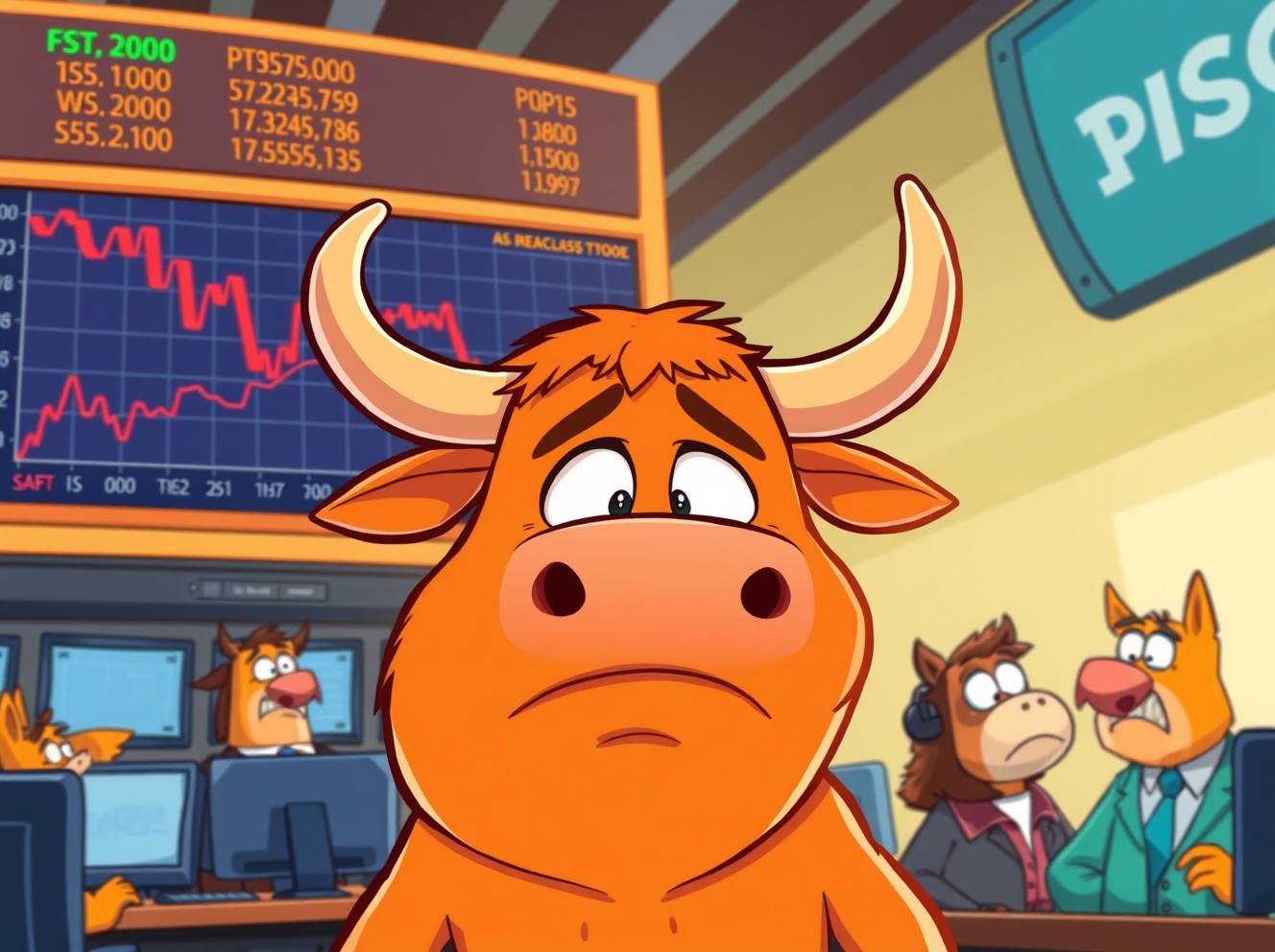
Major U.S. stock indices opened in negative territory on Tuesday, March 11, 2025, extending recent volatility as investors processed mixed economic data and corporate earnings. The S&P 500 fell 0.29%, the Nasdaq Composite dropped 0.47%, and the Dow Jones Industrial Average declined 0.26% at the opening bell in New York. This downward movement follows a period of cautious trading driven by inflation concerns and shifting Federal Reserve policy expectations. Market analysts immediately began scrutinizing sector performance and trading volumes for clues about the day’s trajectory.
US Stocks Open Lower: Analyzing the Morning Decline
The opening bell at 9:30 AM ET signaled a broad-based retreat across equity markets. Technology stocks, particularly within the Nasdaq, showed notable weakness. Conversely, defensive sectors like utilities and consumer staples demonstrated relative stability. Trading volume during the first thirty minutes exceeded the 20-day average, indicating heightened investor activity. This suggests institutional players actively repositioned portfolios rather than retail investors driving the movement. The VIX volatility index, often called the market’s “fear gauge,” rose 8% in pre-market trading, reflecting increased uncertainty.
Historical context provides crucial perspective for today’s movement. For instance, a 0.3% opening decline for the S&P 500 occurs approximately once every eight trading days based on five-year averages. Therefore, while noteworthy, today’s drop remains within normal market fluctuation ranges. The simultaneous decline across all three major indices, however, often signals a macro-driven event rather than sector-specific news. Market technicians immediately watched key support levels, particularly the 50-day moving average for the S&P 500, which held during early trading.
Economic Context and Market Drivers
Several interconnected factors contributed to the negative opening sentiment. First, the February Producer Price Index (PPI) report, released last week, showed persistent inflationary pressures in the supply chain. Second, recent commentary from Federal Reserve officials reinforced expectations for a slower pace of interest rate cuts in 2025 than previously anticipated. Third, corporate earnings season is concluding with several major retailers issuing cautious forward guidance, citing consumer spending concerns. These elements collectively created a risk-off environment at the open.
Expert Analysis of Market Mechanics
Financial institutions like JPMorgan Chase and Goldman Sachs publish daily market commentaries that highlight order flow and liquidity conditions. Their analysis often points to overseas market performance as a precursor to U.S. action. Asian and European markets traded mixed overnight, with European bourses particularly weak following industrial production data. Furthermore, the U.S. Treasury yield curve showed slight steepening, with the 10-year yield rising 4 basis points to 4.18%. This movement typically pressures growth-oriented technology stocks, explaining the Nasdaq’s underperformance. Bond market reactions frequently telegraph equity market moves.
The table below shows the precise opening data and key technical levels:
| Index | Open Price | Change (%) | Key Support Level |
|---|---|---|---|
| S&P 500 | 5,210.45 | -0.29% | 5,180.00 |
| Nasdaq Composite | 16,305.80 | -0.47% | 16,250.00 |
| Dow Jones Industrial Average | 39,150.75 | -0.26% | 39,000.00 |
Market microstructure reveals additional insights. The opening auction, which sets official prices, saw more sell-side imbalance orders than buy-side orders across all three indices. This imbalance directly pressures opening prices lower. High-frequency trading algorithms, which execute thousands of orders per second, amplified the initial move by following momentum signals. Regulatory filings also show that corporate buyback activity, a key source of market support, enters a blackout period for many companies ahead of earnings, reducing a natural source of demand.
Sector Performance and Investor Implications
Not all sectors moved in unison. A detailed breakdown shows clear winners and losers. The energy sector opened slightly higher, buoyed by rising crude oil prices. Healthcare stocks traded flat amid sector consolidation news. Conversely, consumer discretionary and information technology sectors led the declines. This pattern often emerges when investors anticipate slower economic growth. For long-term investors, such openings may present strategic entry points for dollar-cost averaging into quality companies. However, short-term traders monitor momentum indicators like the Relative Strength Index (RSI) for overbought or oversold signals.
Portfolio managers frequently use opening gaps to assess market sentiment. A gap down opening, where the price opens below the previous day’s close, often leads to one of three outcomes: a continued sell-off, a reversal and rally, or a sideways consolidation. Historical data from Bloomberg terminals indicates that gaps of this magnitude see a full reversal approximately 40% of the time by the market close. The direction often depends on mid-morning economic data releases or comments from key Federal Reserve speakers scheduled later in the day. Retail investors should avoid reactive decisions based solely on opening moves.
The Global Financial Landscape
U.S. markets do not operate in a vacuum. Currency fluctuations played a role, with the U.S. Dollar Index (DXY) strengthening by 0.2%. A stronger dollar pressures multinational corporate earnings by making exports more expensive. Overseas, the Bank of Japan maintained its ultra-loose monetary policy, creating yield differentials that affect capital flows. Geopolitical tensions in Eastern Europe and the Middle East continue influencing commodity prices and risk appetite. These global crosscurrents constantly inform the algorithms and human traders setting opening prices on Wall Street. Central bank balance sheet policies remain a critical watch item for institutional analysts.
Historical Precedents and Market Psychology
Examining similar market openings from recent history provides valuable context. In March 2023, markets opened lower following Silicon Valley Bank’s collapse but rallied strongly by the close. In October 2024, a weak opening preceded a month-long correction. The difference often lies in underlying liquidity conditions and credit market health. Currently, credit spreads remain narrow, indicating healthy corporate borrowing conditions. This factor typically prevents minor opening declines from cascading into broader panic. Market psychology, measured by surveys like the AAII Investor Sentiment Survey, recently shifted from bullish to neutral, reducing the likelihood of a sharp sentiment-driven sell-off.
Behavioral finance principles explain part of today’s action. The “recency bias” leads investors to overweight recent inflation data. The “herding instinct” causes automated systems to follow initial momentum. Professional traders watch for a change in the NYSE Tick index, which measures instantaneous buying versus selling pressure, to identify potential turning points. By 10:00 AM ET, the Tick showed signs of stabilization, suggesting the initial selling pressure may have been absorbed. This kind of real-time data analysis separates reactive trading from strategic investing.
Conclusion
U.S. stocks opened lower today, reflecting a cautious market digesting complex economic signals. The declines in the S&P 500, Nasdaq, and Dow Jones, while modest, highlight ongoing investor sensitivity to inflation and interest rate trajectories. Historical analysis suggests such openings are normal market phenomena within broader trends. The day’s ultimate direction will depend on incoming data, sector rotation, and global market developments. For investors, maintaining a disciplined, long-term perspective remains paramount, as single-session openings rarely alter fundamental investment theses. Monitoring volume and sector leadership will provide clearer signals than the opening price action alone.
FAQs
Q1: Why did US stocks open lower today?
The primary drivers include lingering inflation concerns, adjusted expectations for Federal Reserve interest rate policy, and cautious corporate earnings guidance, creating a risk-off sentiment among investors at the opening bell.
Q2: Which index fell the most at the open?
The Nasdaq Composite declined 0.47%, underperforming the S&P 500 (-0.29%) and Dow Jones (-0.26%), largely due to its heavier weighting in interest-rate-sensitive technology and growth stocks.
Q3: Is a lower opening a predictor of the entire trading day’s performance?
Not necessarily. Historical data shows opening gaps reverse by the market close approximately 40% of the time. The final direction depends on news flow, economic data releases, and afternoon trading dynamics.
Q4: How should long-term investors react to a lower market open?
Long-term investors should typically avoid making portfolio decisions based on short-term price movements. A lower open may represent a buying opportunity for dollar-cost averaging into a strategic asset allocation, but should not prompt a wholesale strategy change.
Q5: What economic indicators should I watch after a lower open?
Key indicators include intraday movements in the VIX volatility index, Treasury yields, sector rotation patterns, and the NYSE Tick index for buying/selling pressure. Scheduled speeches from Federal Reserve officials can also significantly impact afternoon trading.
This post US Stocks Open Lower: Key Indices Slide as Investors Weigh Economic Signals first appeared on BitcoinWorld.
0
0

 Manage all your crypto, NFT and DeFi from one place
Securely connect the portfolio you’re using to start.


