
Prediction Markets Enter Institutional Era After First Block Trade

0
0
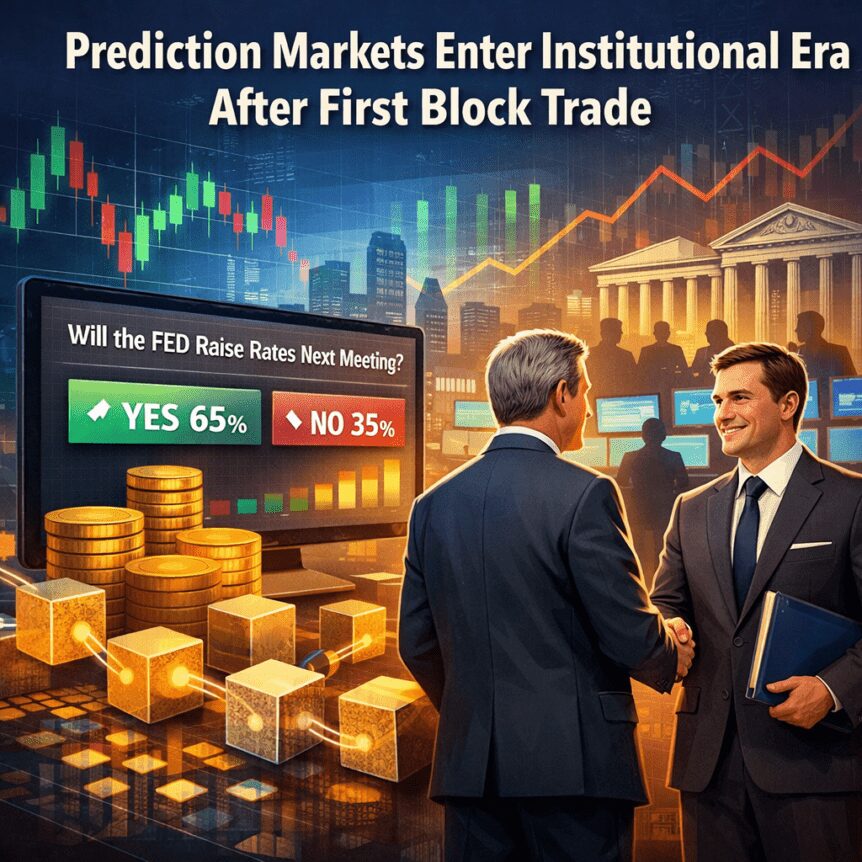
Prediction markets are transitioning from retail speculation platforms to institutional-grade financial instruments, driven by demand for precise macro hedging and clearly defined binary outcomes. A May 4 Bernstein report highlights how bespoke contracts and block trades are helping bridge the gap between retail-driven volatility and the risk management needs of institutions.
The report notes a notable milestone: the first bespoke institutional block trade executed on Kalshi last week. The privately negotiated transaction was arranged by Greenlight Commodities, with Jump Trading as the liquidity provider, and centered on the clearing price of California’s May carbon allowance auction. The example demonstrates how prediction markets can be tailored to meet specific client needs and risk appetites, beyond standard yes-or-no event contracts.
Bernstein analysts emphasize that the move toward block trading and bespoke contracts could broaden participation among investors seeking targeted exposure to event risks—ranging from tariffs and elections to geopolitical developments—while preserving the binary resolution structure that characterizes these markets.
Separately, Bernstein notes that institutional access to prediction markets is aided by infrastructure partnerships, such as Clear Street’s collaboration with Kalshi, which gives qualified investors a regulated pathway to trade these contracts alongside traditional asset classes like stocks and futures.
Key takeaways
- Bespoke contracts and large, privately negotiated block trades are unlocking institutional participation in prediction markets.
- Regulated access channels are maturing, with Kalshi operating under the Commodity Futures Trading Commission and Polymarket moving toward US-enabled, regulated trading through conditional approvals.
- Retail activity still dominates volume, but institutional demand could accelerate market growth and product innovation.
- Real-world hedging applications are emerging, including contracts tied to specific regulatory events such as carbon allowance auctions.
Block trades and bespoke contracts open institutional doors
The California carbon allowance example demonstrates how tailor-made contracts can provide targeted risk hedging for institutions managing exposure to policy-driven events. The Kalshi block trade brokered by Greenlight Commodities linked to the May auction price illustrates how buyers can structure settlements around precise, verifiable outcomes rather than generic event bets. Bernstein’s analysis envisions a broader adoption curve where bespoke structures serve as a bridge between traditional risk management tools and emerging digital markets. As one analyst note from Bernstein states, “We believe the introduction of block trading and bespoke contracts could expand participation from institutional investors seeking targeted exposure to event risks.”
In parallel, the market is seeing infrastructure-backed paths to access. Bernstein highlights the partnership between Kalshi and Clear Street as a key development that could enable institutions to trade these contracts in a regulated, broker-dealer framework, integrating them into the broader suite of tradable assets available to professional desks.
Retail leads prediction markets as institutional interest grows
Despite growing institutional interest, retail activity continues to drive the sector’s scale. A Bitget Wallet and Polymarket report found that retail users accounted for more than 80% of the $25.7 billion in prediction-market volumes recorded in March, underscoring the sector’s retail-first dynamic despite signs of deeper liquidity support from professional traders.
Market watchers see the developing institutional framework as a potential accelerant for growth. Bernstein’s broader market outlook cites a potential expansion toward a trillion-dollar sector by the end of the decade, a view that CNBC coverage has echoed in recent reporting on the forecast for prediction markets.
Regulatory momentum in the United States continues to shape the trajectory, even as the landscape remains uneven. Kalshi operates as a federally regulated exchange under the Commodity Futures Trading Commission, while Polymarket has secured conditional approval to offer event contracts in the US through regulated channels.
Despite the progress, the path forward will hinge on how regulators balance innovation with consumer protection and market integrity. The evolving ecosystem also faces questions about liquidity depth, price discovery, and risk controls as more institutions participate.
What comes next for the ecosystem
As institutions begin to test bespoke exposure and block-trade workflows, market participants will be watching for additional evidence of durable liquidity, robust hedging performance, and clearer regulatory guidelines across jurisdictions. The emergence of tailored contracts tied to concrete policy outcomes—such as carbon markets or electoral events—could concretize the usefulness of prediction markets for risk management. However, investors should remain mindful of evolving regulatory scrutiny and potential limitations on cross-border access, which could influence adoption pace and product design.
For readers tracking the sector, the next milestones to watch include more institutional block trades, broader access through regulated venues, and any shifts in US policy or international regulation that could impact how these markets price and settle event outcomes.
In the near term, the trajectory suggests a cautious but deliberate shift: retail volume remains the engine of growth, while institutional demand quietly shapes the next generation of prediction-market products and the platforms that host them.
This article was originally published as Prediction Markets Enter Institutional Era After First Block Trade on Crypto Breaking News – your trusted source for crypto news, Bitcoin news, and blockchain updates.
0
0

 Manage all your crypto, NFT and DeFi from one place
Securely connect the portfolio you’re using to start.

0
0


0
0

0
0