
What Is DeFi? A Beginner’s Guide to Decentralized Finance

0
0

Chances are, you’ve probably asked someone or Googled “what is DeFi?” after hearing the term pop up in crypto conversations. Decentralized finance is changing how people think about money by removing banks and putting financial control directly in your hands. As opposed to paperwork, long approvals, or middlemen, DeFi lets you send, borrow, lend, and manage digital assets online through simple apps.
Read on as we go in-depth into how decentralized finance works, why it’s growing so quickly, the benefits and risks involved, and how you can start exploring the DeFi ecosystem, even if you’re completely new to crypto.
What is Decentralized Finance (DeFi)?

Decentralized finance, often called DeFi, is a system of financial services built on blockchain networks instead of traditional financial institutions.
It allows people to move, trade, save, and grow money without using a bank. There’s no central company controlling your funds. Instead, the system runs through code and community-driven networks.
The DeFi ecosystem includes decentralized apps that let you swap tokens, earn interest, take out loans, and even buy digital collectibles. Everything happens online and is recorded publicly on a blockchain, which helps keep things transparent.
Unlike banks, DeFi platforms are open 24/7 and usually don’t require credit checks, lengthy approvals, or physical branches.
How Does DeFi Work?
DeFi works by using blockchain networks to record and verify financial transactions. It achieves this through automated programs that follow predefined rules and carry out actions independently.
What Is the Technology Behind DeFi?
At the heart of DeFi is blockchain technology. A blockchain is a digital ledger that records transactions in a secure and public manner.
Popular networks like Ethereum allow developers to build DeFi protocols, which are online platforms that offer services like lending, trading, and investing. These protocols operate without a central authority.
Because everything is recorded on-chain, users can see how funds move. This openness builds trust without relying on a bank or company.
How Smart Contracts Execute Transactions
Smart contracts are simple programs stored on a blockchain. They automatically carry out actions when certain conditions are met.
For example, if you lend digital assets on a DeFi platform, a smart contract holds your funds and releases interest payments based on preset rules. There’s no employee manually approving the transfer.
This automation reduces delays and removes the need for middlemen. Once conditions are met, the transaction happens instantly and cannot be altered.
Benefits of Using DeFi
DeFi offers several advantages over traditional finance:
- Full control: You keep control of your funds through your own crypto wallet. No bank can freeze your account or limit access to your money.
- Global access & inclusion: Anyone with an internet connection can participate in DeFi. You don’t need a credit history, a minimum balance, or access to a physical bank branch.
- Lower costs & faster transactions: By removing banks and brokers from the process, DeFi eliminates many of the fees associated with traditional financial systems. Transactions often happen within minutes and are available 24/7, even across borders.
- Transparency: DeFi transactions are recorded on public blockchains, making them easier to verify.
- Flexibility & innovation: Many DeFi protocols are open-source, which allows developers to create new financial products, such as decentralized exchanges.
- Earning opportunities: Users can put their digital assets to work by lending, staking, or providing liquidity to earn passive income and grow their funds beyond a regular savings account.
Drawbacks & Risks of DeFi
DeFi offers exciting opportunities, but it comes with several risks:
- High volatility: Crypto prices can swing dramatically in short periods. This means investments can gain or lose value very quickly.
- Smart contract risks: Hackers can exploit bugs or errors in code. Funds locked in faulty contracts could be lost permanently.
- Scams & fraud: Some projects may be poorly designed or intentionally malicious. Users need to research platforms carefully before committing funds.
- Regulatory uncertainty: Laws around decentralized finance are still evolving. Future financial regulations could affect the access, legality, or operations of DeFi platforms.
- User responsibility: You control your wallet and private keys. Losing access or making mistakes can result in irrecoverable funds.
- Technical complexity: DeFi interfaces can be confusing for beginners. Errors, such as sending funds to the wrong address, are permanent and can be costly.
- Limited consumer protection: Unlike banks, DeFi lacks insurance or a central authority to reverse fraudulent or accidental transactions.
DeFi vs CeFi: Key Differences
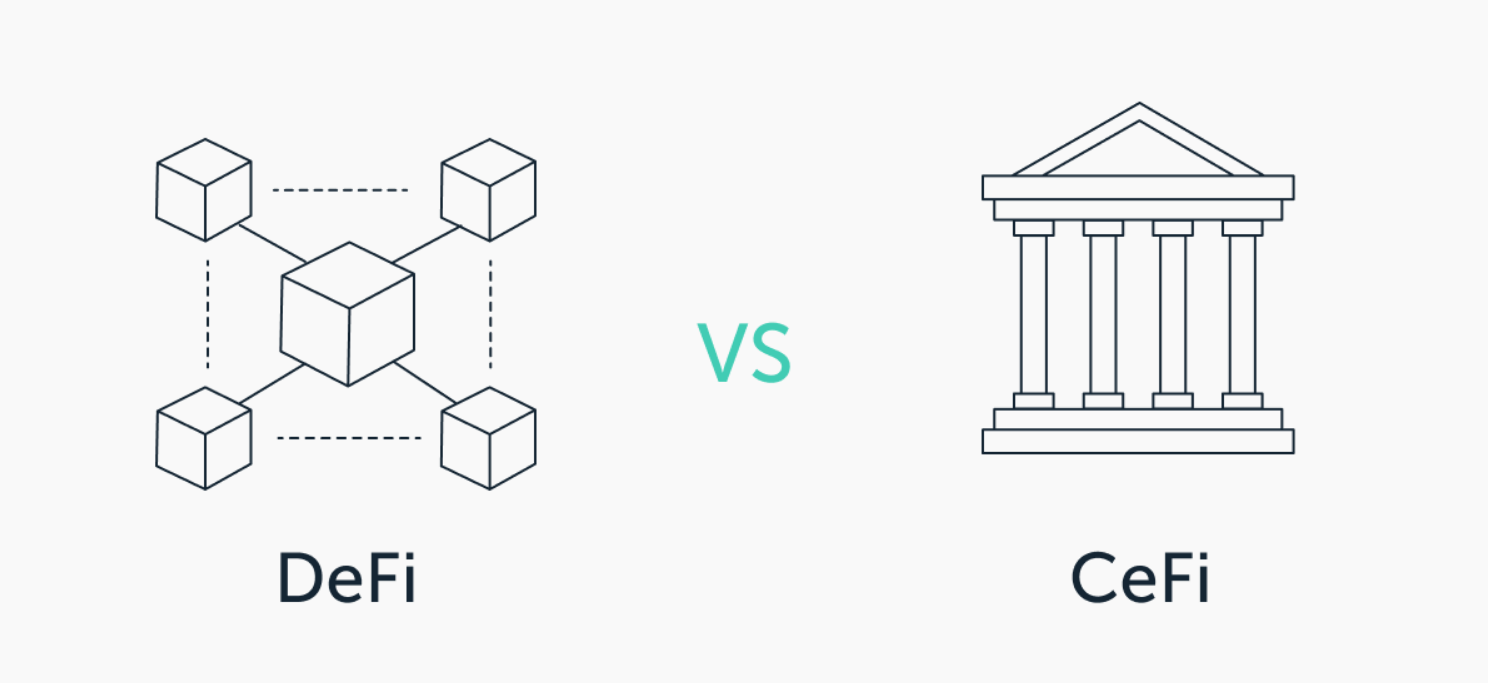
CeFi stands for centralized finance. It includes banks, exchanges, and other financial institutions that manage users’ funds. The table below shows how they compare:
| Feature | DeFi | CeFi |
| Control | You retain full control of funds via personal wallets | Institutions control your funds |
| Interest rates | High and more volatile (5% to 50%+) | Lower and more stable (1% to 8%) |
| Fees | Typically 0.1–0.5% per transaction | $1–$30 per bank transfer |
| Accessibility | Anyone with an internet connection and a crypto wallet | Restricted by account approval, KYC, and geographic regulations |
| Censorship and restrictions | Hardly any, as no single central authority can block transactions | Financial institutions can freeze accounts, block transactions, or deny services |
| Transparency | Fully transparent, as all transactions are on-chain and auditable | Limited transparency. You can only rely on institutional statements and reports |
| Speed | Near instant, available 24/7 | International transfers may take 1 to 5 days, and services are limited to business hours |
Real-World DeFi Use Cases
DeFi isn’t just a concept. It’s already powering real financial services that people use every day. Here are some of the most common ways DeFi is being used today:
1. Decentralized Exchanges (DEXs)
DEXs let users trade cryptocurrencies directly with each other without a central company controlling the funds. Smart contracts handle trades automatically, removing the need for an intermediary. Popular DEXs include Uniswap, SushiSwap, and PancakeSwap, which allow users to swap tokens quickly while keeping full control of their assets.
2. Stablecoins
Stablecoins are digital tokens designed to maintain a steady value, often pegged to a currency like the US dollar. They help users store value or move money within DeFi without worrying about price swings. Stablecoins such as USDT (Tether), USDC (USD Coin), and DAI see widespread use across payments, savings, and trading across various DeFi platforms. These coins make it easier to interact with crypto while avoiding the volatility of typical digital assets.
3. Real-World Asset Tokenization (RWA)
Tokenization converts physical assets, like real estate, gold, or art, into digital tokens on a blockchain. Fractional ownership becomes possible, allowing investors to buy a portion of an asset instead of the whole. This approach opens new investment opportunities that were previously hard to access.
4. Yield Farming & Staking
Yield farming and staking allow users to lock their tokens in DeFi platforms to earn rewards. Platforms pay interest or extra tokens depending on the program. These methods let your crypto generate income while you continue holding it.
5. Lending & Borrowing
DeFi lending platforms let people earn interest by lending their digital assets. Borrowers can access loans by providing collateral, often without lengthy credit checks. Loans become faster and more accessible for anyone with crypto holdings.
6. Non-Fungible Tokens (NFTs)
NFTs represent ownership of unique digital items, like art, music, or collectibles. Users can buy, sell, or trade them on blockchain marketplaces. DeFi adds tools for NFTs, such as lending against them or fractional ownership, to provide more flexibility.
Steps to Get Started With DeFi
Starting with DeFi is easier than you might think, even if you’re new to crypto:
- Set up a crypto wallet: Download a trusted wallet like MetaMask, Trust Wallet, or Coinbase Wallet and follow the steps to create your account. Keep your recovery phrase safe. It’s the only way to restore your wallet.
- Buy digital assets: Purchase a small amount of a major coin like ETH, SOL, or BNB from an exchange such as Coinbase, Binance, or Kraken, then transfer it to your wallet.
- Connect to a DeFi protocol: Link your wallet to platforms like Uniswap or Sushiswap for trading, Aave or Compound for lending, or Yearn Finance for yield farming. Always double-check the website and connection to avoid scams.
- Start small and explore: Begin with a modest amount to test features like token staking, swapping, or staking. This helps you understand how each platform works without risking too much.
- Do your own research: Knowledge is the best way to avoid mistakes and protect your assets. Always read reviews and check community feedback for the latest insights.
Taking these steps lets you start using DeFi confidently while minimizing risks and making the most of what the ecosystem has to offer.
How Does DeFi Make Money?
DeFi makes money in multiple ways:
- Transaction fees: Platforms like Uniswap and PancakeSwap charge a small fee for each trade. A portion goes to the platform to cover operations and development.
- Lending and borrowing interest: Protocols such as Aave and Compound earn revenue from the interest borrowers pay. The platform keeps a cut of the interest while the rest goes to lenders.
- Liquidity provider incentives: DeFi apps offer rewards to those who supply liquidity to trading or lending pools. Fees collected from trades or loans contribute to these incentives, encouraging ongoing participation.
- Staking and protocol rewards: Platforms may require users to lock tokens for network operations or governance. A share of the fees or newly issued tokens flows back to the protocol’s treasury, supporting growth and security.
- Protocol treasury & governance fees: Some platforms take a portion of fees and allocate them to a central treasury. These funds can finance development, security audits, or ecosystem expansion.
- Token appreciation: Platforms often hold their own tokens. As the platform grows and usage increases, the value of these tokens can rise, indirectly generating revenue for the project.
Users can also make money by earning rewards, collecting interest, or benefiting from price increases in digital assets. However, profits are never guaranteed.
The Future of DeFi
The DeFi market is projected to hit over $351.75 billion by 2031, showing how quickly this space is growing. More banks and institutions are exploring DeFi to deliver fast, 24/7 financial services that comply with regulatory requirements. Tokenizing real-world assets such as stocks, bonds, and real estate could unlock more value, making DeFi more closely aligned with everyday finance. On top of that, AI is helping automate trades and provide smarter tools for users, while platforms focus on safer, more sustainable yield models. The future points to a DeFi ecosystem that’s bigger, smarter, and more accessible worldwide.
Conclusion
Decentralized finance is changing the way people think about money. By removing middlemen and using smart contracts, DeFi protocols allow users to manage transactions directly and securely.
While risks exist, the opportunities for access, transparency, and innovation are significant. Understanding what DeFi is and how it works is the first step toward deciding whether it fits your financial goals.
FAQs
DeFi can offer strong opportunities, but it comes with risk. The prices of digital assets can change rapidly, which is why it’s essential to evaluate a project carefully before investing.
Yes, you can earn money with DeFi through lending, staking, or trading digital assets. However, returns are not guaranteed, and losses are possible.
DeFi isn’t explicitly illegal, but it exists in a complex regulatory “grey area.” Users and developers must comply with rules such as tax reporting and anti-money laundering (AML) requirements. Regulations are evolving, so it’s important to stay informed before participating.
DeFi can be secure when used carefully, but risks such as smart contract bugs, scams, and lost wallet keys are real. Always stick to trusted platforms such as Uniswap, Aave, or Compound. Protect your wallet information and double-check transactions before confirming.
DeFi primarily runs on Ethereum, the open-source blockchain that powers most protocols and smart contracts. Other networks, such as Solana, Polkadot, and layer-2 solutions, also support DeFi apps. The choice of blockchain can affect transaction speed, fees, and overall user experience.
The post What Is DeFi? A Beginner’s Guide to Decentralized Finance appeared first on NFT Plazas.
0
0


 Manage all your crypto, NFT and DeFi from one place
Securely connect the portfolio you’re using to start.

0
0

0
0

0
0
