
South African rand slides as US military action against Iran rattles markets

0
0
BitcoinWorld
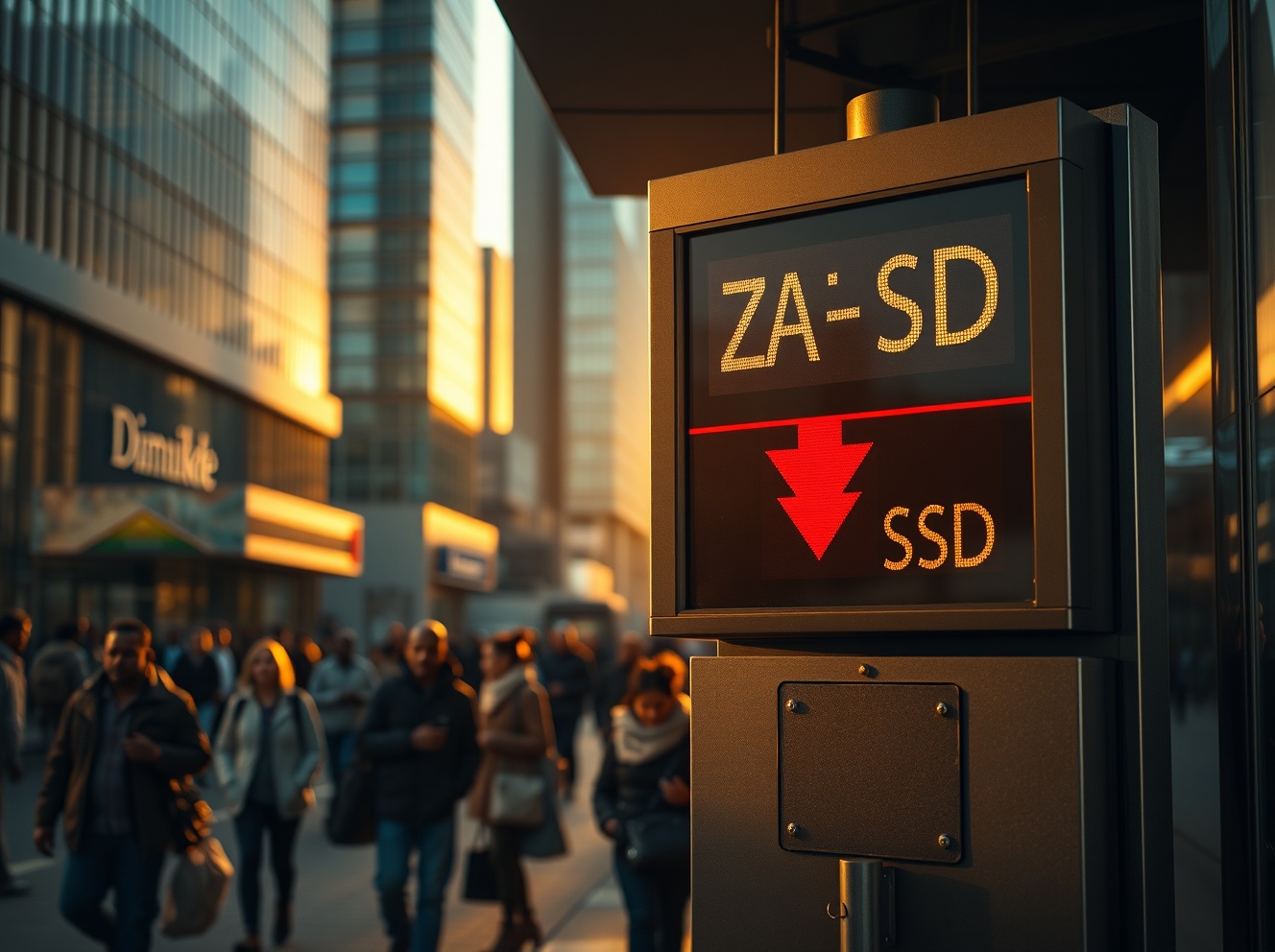
South African rand slides as US military action against Iran rattles markets
The South African rand weakened sharply on Tuesday as the United States launched military strikes against Iranian targets, escalating tensions in the Middle East just as international mediators were attempting to revive nuclear negotiations. The currency, already sensitive to global risk sentiment, fell more than 1.5% against the US dollar in early trade, touching a session low of R18.45 before stabilizing.
Geopolitical shock hits emerging markets
The strikes, which targeted Iranian military infrastructure near the Strait of Hormuz, were confirmed by the Pentagon as a response to recent attacks on US-linked shipping in the region. The timing coincides with diplomatic efforts in Vienna aimed at restarting the 2015 Joint Comprehensive Plan of Action (JCPOA) talks, which had shown tentative signs of progress earlier this month.
For emerging-market currencies like the rand, the immediate effect is a flight to safety. Investors typically sell riskier assets and buy US dollars, gold, and other safe havens during geopolitical crises. The rand is particularly vulnerable because South Africa runs a current account deficit, meaning it relies on foreign capital inflows to finance its economy. When global risk appetite evaporates, those inflows dry up quickly.
Market reaction and trading context
The rand’s decline was broad-based. Against the euro, the currency fell to R20.12, and against the British pound, it dropped to R23.40. The Johannesburg Stock Exchange (JSE) also opened lower, with the All-Share Index shedding 0.8% in early trading, led by losses in banking and retail stocks.
Brent crude oil prices surged more than 4% to above $85 per barrel on fears of supply disruptions in the Persian Gulf. For South Africa, a net importer of oil, higher crude prices add upward pressure on inflation and the country’s fuel levy, which could further dampen consumer spending and economic growth.
Bond markets also felt the strain. The yield on South Africa’s benchmark 10-year government bond rose 12 basis points to 10.45%, reflecting higher perceived risk. Credit default swaps (CDS) for South African sovereign debt widened by 8 basis points, signaling increased investor caution.
Why this matters for South African consumers and businesses
A weaker rand has immediate real-world consequences. Imported goods—from electronics to machinery—become more expensive, feeding into consumer price inflation. South Africans planning overseas travel will find their purchasing power reduced. For businesses that rely on imported raw materials or components, profit margins come under pressure unless they can pass costs on to customers.
On the positive side, export-oriented sectors such as mining and agriculture benefit from a weaker currency, as their products become cheaper for foreign buyers. However, the overall economic impact of the rand’s decline is generally negative for a consumption-driven economy like South Africa’s.
Diplomatic uncertainty adds to volatility
The US administration has stated that the strikes are “limited and proportionate,” but has not ruled out further action if Iranian provocations continue. Iran’s foreign ministry condemned the strikes as “a violation of international law” and warned of retaliation. The situation remains fluid, and diplomatic channels are reportedly still open, though the immediate outlook for the nuclear talks is uncertain.
Analysts at Standard Bank noted in a morning briefing that the rand could test the R18.50 level if tensions escalate further, with a potential move toward R19.00 in a worst-case scenario involving a broader conflict. Conversely, a rapid de-escalation could see the rand recover to R18.00 or stronger.
Conclusion
The South African rand’s weakness reflects the broader market reality that geopolitical shocks—especially those involving major oil-producing regions—can rapidly alter the risk landscape for emerging economies. While the currency has shown resilience in recent months, the combination of military action and diplomatic uncertainty creates a challenging environment for traders, importers, and policymakers alike. The coming days will be critical in determining whether the conflict remains contained or escalates into a more prolonged crisis.
FAQs
Q1: Why does the rand weaken when geopolitical tensions rise?
The rand is considered a risk-sensitive emerging-market currency. During geopolitical crises, global investors sell riskier assets and move capital into safe havens like the US dollar, gold, or Swiss franc. This capital outflow reduces demand for the rand, causing its value to fall.
Q2: How do US strikes on Iran affect South Africa directly?
South Africa is a net importer of oil, and the Middle East is a key source of global crude supply. Military action near the Strait of Hormuz—a critical shipping chokepoint—can disrupt oil shipments, pushing up fuel prices in South Africa and adding to inflationary pressure.
Q3: What level could the rand reach if the situation worsens?
Market analysts suggest the rand could test R18.50 to R19.00 against the US dollar if the conflict escalates or if oil prices spike significantly. However, any rapid de-escalation or positive diplomatic developments could trigger a swift recovery back toward R18.00.
This post South African rand slides as US military action against Iran rattles markets first appeared on BitcoinWorld.
0
0
 Manage all your crypto, NFT and DeFi from one place
Securely connect the portfolio you’re using to start.