
Ethereum Layer 2 Fees: Why Transaction Costs Fell 95%

0
0
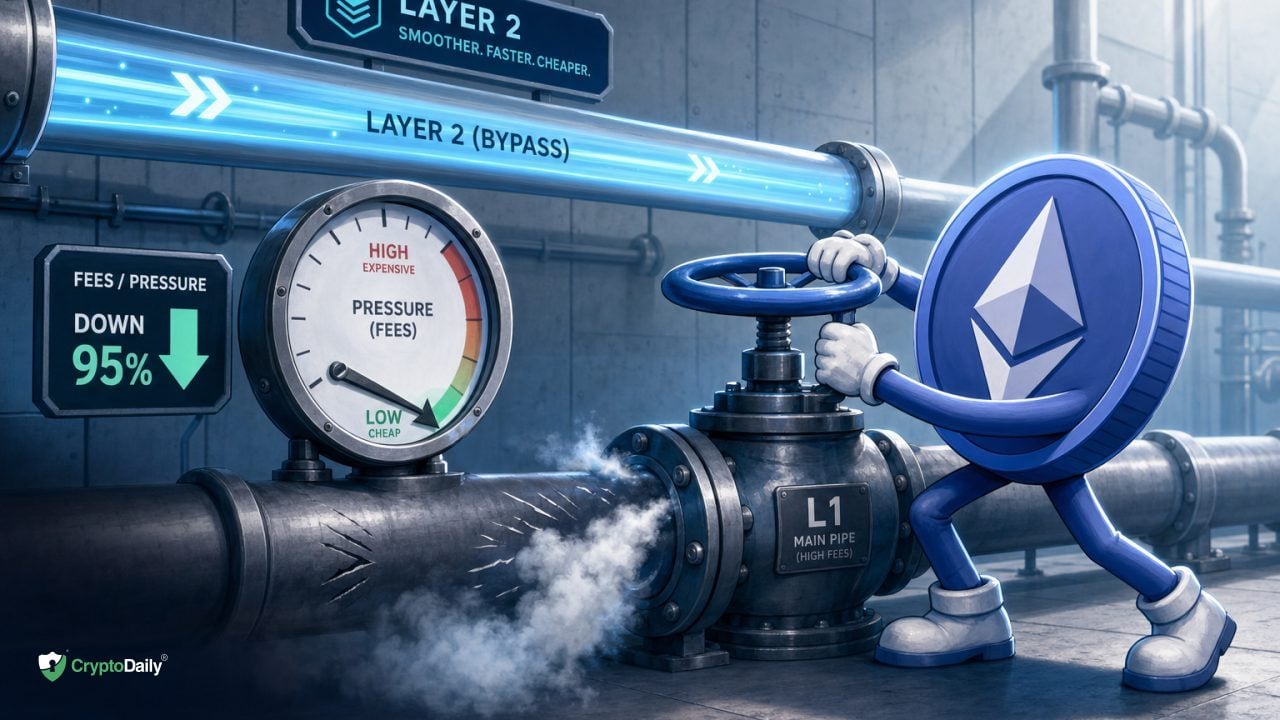
Ethereum gas used to sting, even on Layer 2. Then, almost overnight, many L2s started charging pennies or less for simple transfers. Swaps got meaningfully cheaper too. So what actually happened, and can it last?
This piece breaks down the mechanics behind the fee crash, why it varies by chain and time of day, and what could push costs up again. If you just want the short answer, it comes down to blob space from EIP-4844, smarter batching, and a lot more competition among rollups.
Ethereum Layer 2 fees fell roughly 90 to 95 percent because the Dencun upgrade added EIP-4844 “blob” space that is far cheaper for rollups to store data than legacy calldata. Most major L2s switched their batch posting to blobs and doubled down on compression and batching. Add sequencer competition and a better UX stack, and the result is meaningfully lower end-user fees. The drop isn’t uniform though. Fees still jump during congestion, complex swaps cost more than transfers, and blob prices can spike.
- EIP-4844 created a separate, cheaper market for rollup data, cutting a major cost line item (Ethereum Foundation, EIP-4844).
- Wallets and sequencers now batch more transactions with heavier compression, lowering per-user cost.
- Some L2s subsidize or optimize fees to attract activity, further tightening spreads.
- Prices still vary by app type, time of day, and demand for limited blob space.
What actually changed under the hood after EIP-4844?
Before March 2024, most rollups posted their transaction data to Ethereum as calldata. That worked, but it was pricey because calldata competes with everything else in the main gas market. With the Dencun upgrade, Ethereum added EIP-4844. Instead of stuffing rollup batches into calldata, L2s can use temporary data blobs. Blobs are cheaper because they’re separate from normal gas, optimized for rollup data, and pruned after a fixed period. That alone removed a huge cost driver for L2s.
As L2s moved from calldata to blobs, the per-transaction data posting bill plunged. Users didn’t have to do anything special; the sequencer handles it behind the scenes. Wallets simply started showing lower fees because the batch posting part got cheaper. The core details are public in Ethereum’s own documentation if you want to go deeper into blob pricing and mechanics (EIP-4844, Ethereum Foundation).
One more subtle change: a separate market for blob space means rollups don’t have to fight with DeFi traders on L1 for the same gas. When demand for L1 blocks spikes, L2s feel it less than before. Not zero, but less. That decoupling is a big deal.
How do rollups turn blob space into cheaper transactions for me?
Rollups bundle lots of user transactions into a batch, compress that batch, then post the compressed data to Ethereum for data availability. With blobs, the posting step is much less expensive. The more users a sequencer packs into a single blob, the lower the per-user share. This is why fees can drop further during busy periods on a given L2. Ironically, more activity can lower your cost if the sequencer is good at batching.
Compression also got better. Teams tweaked how they encode state diffs and calldata, cutting the bytes per transaction before that data ever hits a blob. Little engineering wins compound. The output is a materially slimmer batch, and your share of the bill shrinks again.
Finally, competition matters. Multiple L2s are vying for the same users and devs. They’re not just shipping cheaper data posting. They’re improving mempool filters, batcher timing, and fee estimators that avoid overpaying for blob space. Some even run promotions or subsidize certain flows. You feel that as lower fees, even if the underlying ETH price is up.
What’s the difference between calldata, blobs, and alternative data layers?
The way a rollup stores its data drives costs and security assumptions. Here’s a quick comparison to keep the moving parts straight.
Data path Cost profile Availability window Security model Who uses it Tradeoffs to note Calldata on L1 Highest of the three Permanent on Ethereum inherits L1 security fully Pre-4844 rollups, niche cases Simple, but competes with all L1 demand, expensive at scale EIP-4844 blobs Significantly cheaper than calldata Temporary, pruned after a period Validated by Ethereum consensus with dedicated pricing Most major L2s post batches to blobs post-Dencun Costs can spike if blob space is congested Alt DA (e.g., Celestia, EigenDA) Often competitive, varies by network Varies by provider External DA assumptions, not purely L1 Used by some rollup designs and app-chains Cheaper or more flexible, but adds trust and operational differences (Celestia, EigenDA)
Most general-purpose Ethereum L2s embraced blobs soon after Dencun because it kept them inside the Ethereum security umbrella while unlocking big savings. Some ecosystems also experiment with external data availability to push costs even lower or to scale specific workloads. Those choices explain fee differences you see across chains and apps today.
If blobs are cheaper, why do fees still vary so much between L2s and apps?
Not every transaction weighs the same. A simple transfer is tiny. A DEX swap touches multiple contracts and state slots. That extra state access and computation inside the rollup makes swaps pricier even if data posting to Ethereum is the same. Your wallet will reflect this: transfers are the cheapest, mints and multi-hop swaps cost more.
Each L2 also has its own software stack and proof system. Optimistic rollups and ZK rollups differ in how they compress and submit proofs. Some sequencers have more polished batchers. Some share infrastructure via OP Stack, which helps standardize cost curves, while others maintain unique pipelines. The result is real variance. To sanity check quotes, it helps to glance at a live aggregator like L2Fees, which tracks common actions across major L2s.
There’s a timing element too. Blob space has its own base fee that rises and falls with demand. Around popular NFT mints, airdrops, or market spikes, blob prices can jump. When that happens, fee estimates on all blob-using rollups tick up together for a bit, then glide back down as demand cools.
Pro tip: if your fee quote suddenly doubles, wait a minute or two. Blob base fees update block by block. A short pause often saves more than it costs in time.
Besides EIP-4844, what else pushed costs down?
Engineering work piled up. Many teams shipped more efficient state diffs, better compression dictionaries, and smarter batcher timing. If you can fit five to ten percent more transactions into the same blob, that’s an instant rebate to users.
Wallets and account abstraction improved real-world costs too. With ERC-4337-style tooling and paymasters, some apps sponsor gas or let you pay in the token you already hold. You still consume resources, but the out-of-pocket feels lower and fragmented signature calls get bundled into a single action.
And let’s be honest: growth tactics matter. Sequencers compete. A few L2s temporarily subsidize certain flows or keep minimums low to attract devs and users. That can show up as consistently cheaper quotes on day-to-day actions. It’s not guaranteed to last, but while the race is on, users win.
Could L2 fees climb again? What should I watch for?
Yes. Blobs aren’t a magic free lunch. They’re just a bigger, separate dining hall. If demand overwhelms blob capacity for long stretches, prices lift until usage cools. You’ll see it during major on-chain events.
ETH’s dollar price matters too. Even if a fee is tiny in ETH terms, a rising ETH price makes the dollar amount feel larger. Likewise, if a rollup hasn’t fully migrated to blobs or falls back to calldata during incidents, costs can pop.
There’s a competitive risk. If one L2 dominates and dials back subsidies, you could see a small upward drift. And on the roadmap side, full danksharding is meant to expand data capacity far beyond blobs. If that slips or arrives later than hoped, the system could run hotter for longer. The Ethereum roadmap posts are the best place to track that directionally (Ethereum Foundation).
How should I pick an L2 for my next transfer or swap?
Fees are only one part of the story. Here’s a quick checklist you can run through in under a minute.
- Open a fee board like L2Fees and check current quotes for your action.
- Confirm the app you need actually lives on that L2 and has liquidity there.
- Check withdrawal times and bridge routes. Native bridges are safest but slower; third-party bridges can be fast but add extra risk.
- Glance at the L2’s status page or social feed for incidents or upgrades.
- Run a tiny test transaction first, especially if you’re bridging for the first time.
If you’re deploying a contract, widen the lens. Look at proof type, data path, and ecosystem support. ZK rollups may have faster finality for proofs, while optimistic rollups often offer mature tooling and shared standards through frameworks like OP Stack. Your cost curve depends on throughput and batching at your expected traffic, not just the quote right now.
Common Mistakes
- Bridging to chase a tiny fee difference. You’ll pay bridge costs and time. Make sure the app and liquidity you need exist on the target L2 before moving.
- Ignoring blob congestion. If a mint is raging, quotes spike. Wait a few minutes, or schedule off-peak. Your wallet’s estimator can be wrong during surges.
- Using L1 for small transfers out of habit. Check L2 first. Post-4844, many day-to-day transfers are far cheaper on L2 without losing Ethereum security.
- Signing swaps without checking approvals. Extra approvals add calls and cost. Reuse allowances when safe, or batch actions inside the app if supported.
- Trusting unknown bridges or RPCs. Stick to official links and reputable providers. Fake bridges are a leading cause of loss.
If you prefer straight-talk coverage of fee mechanics, market structure, and what devs are actually shipping, Crypto Daily tracks the moving parts without the noise.
Frequently Asked Questions
Did the Dencun upgrade also cut Ethereum L1 fees?
Not directly. Dencun’s big user-facing win was EIP-4844 blob space for L2 data. That moved most rollup posting off calldata and out of the main gas market. L1 fees still depend on L1 demand. You may notice fewer knock-on spikes from rollup activity, but general L1 usage patterns still rule L1 prices.
Are ZK rollups always cheaper than optimistic rollups?
No blanket rule. ZK proofs can reduce some costs and improve finality, but total fees depend on batch sizes, compression, sequencer policy, and demand for blob space. Optimistic rollups using efficient stacks and blobs can match or beat ZK rollups for everyday use at times. Always check live quotes.
Why does my L2 swap still cost more than a simple transfer?
Swaps touch more contracts and change more state. That adds bytes to the batch and more work for the rollup, which the sequencer passes through as a higher fee. Transfers are light and cheap. Mints, multi-hop swaps, and NFT listings predictably sit at the higher end.
How low can fees realistically go before full danksharding?
Blobs have already taken a big bite out of costs. From here, further gains come from better compression, fuller blobs, and smarter scheduling. You’ll see incremental improvement, not another 95 percent cliff, unless data capacity expands again at the protocol level.
Do alternative DA layers make my transactions less secure?
They introduce different trust and operational assumptions. Posting data to Ethereum, whether calldata or blobs, leans on L1 security. External DA systems can be cheaper or more flexible but rely on their own validator sets or restaked security. Decide based on your risk tolerance and the application’s needs.
My wallet shows a tiny base fee but a big “network” line item. What’s that?
Wallets break fees into parts. On L2, you often see the execution cost plus a share of the data posting cost. During blob congestion, that data share gets larger. If it looks off, try another wallet or wait a couple of blocks and refresh the quote.
Can I pay gas in stablecoins on L2?
Some apps on certain L2s use paymasters or sponsored transactions to let you cover fees in tokens you already hold. It’s not universal, and there may be limits or higher effective costs. When available, it’s a convenient way to avoid topping up native gas for small actions.
Disclaimer: This article is provided for informational purposes only. It is not offered or intended to be used as legal, tax, investment, financial, or other advice.
0
0

 Manage all your crypto, NFT and DeFi from one place
Securely connect the portfolio you’re using to start.

0
0


0
0
