
Ethereum Blob Fees: Why Cheaper L2s Can Reduce ETH Burn

0
0
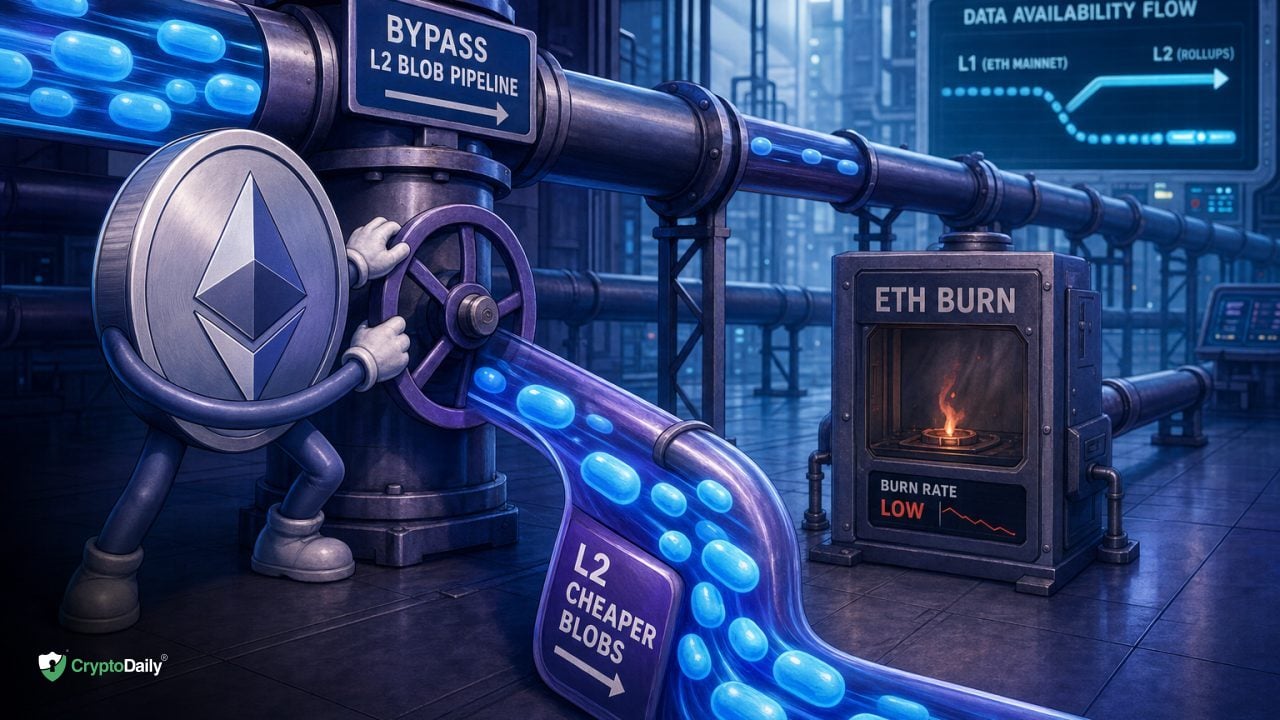
Ethereum finally got blobs. Fees dropped on the rollups. And then a bunch of people looked at the ETH burn chart and asked the obvious question: if activity is moving to L2, why isn’t burn surging with it?
The short version: blobs have their own fee market and the blob base fee is burned. But cheaper L2s can keep that base fee low. When blob space isn’t scarce, the burn meter doesn’t move much, even if usage is up.
This piece breaks down why that happens, what to watch on-chain, and how to think about ETH supply in a post‑EIP‑4844 world without getting lost in jargon.
Aspect What to Know What blobs changed EIP‑4844 created cheap data space for rollups. It shifted a lot of L2 costs into a separate blob fee market whose base fee is burned when paid. Why burn can dip If blob space is plentiful or L2s compress data better, blob base fees stay low. Low base fees mean less ETH burned per rollup batch. Who drives demand A handful of big L2s now dominate usage. In mid‑July 2026, rollup TVS was about $35B, with Base near $11B and Arbitrum around $10.4B post‑adjustment (Defi‑Intel). What’s actually burned Two burn lanes: L1 base fees for normal gas and the blob base fee for blob space. Blob base fees are burned when blobs are used (CryptosEyes). Current fee backdrop Recent snapshots show Ethereum L1 around $227k/day in fees and ~$55.7k/day in chain revenue, which is modest versus ecosystem scale (DefiLlama via analysis). Supply context ETH supply hovered near 121.88M in mid‑July 2026, shaped by issuance minus burn (ultrasound.money).
Blobs are the data cargo that rollups post to Ethereum so users can verify what happened on L2. EIP‑4844 carved out cheap, temporary data space that doesn’t sit in the execution gas lane. The effect was immediate: rollup transactions got cheaper because they no longer competed with swaps and NFT mints on the same fee market.
Crucially, blob‑carrying transactions pay a blob base fee that floats with demand. That blob base fee is burned by the protocol. So yes, L2s can directly contribute to ETH burn through blobs. The catch is that burn only gets chunky when blob space gets tight. If there’s plenty of room, the base fee stays tame and not a lot of ETH gets torched. Recent technical commentary has emphasized exactly this point: blobs have a separate fee market, and blob base fees are indeed burned, but total burn depends on usage and that base fee level (CryptosEyes).
There’s also the regular L1 burn from normal gas. With more activity offloaded to L2s, L1 often feels quieter. One July snapshot had Ethereum at roughly $227,098 per day in chain fees and about $55,704 per day in chain revenue, signaling a light fee environment relative to the broader ecosystem’s scale (DefiLlama via analysis). Against that backdrop, the live ETH supply was around 121,877,240 ETH when I checked (ultrasound.money), which is driven by issuance minus whatever gets burned across both lanes.
Quick glossary
- EIP‑4844: An upgrade that introduced blob‑carrying transactions to lower L2 data costs and created a separate blob fee market.
- Blob: Temporary data space used by rollups to publish batches; it’s cheaper than execution gas but has its own base fee.
- Blob base fee: The per‑blob fee determined by network demand for blob space; it’s burned when paid.
- Execution gas: The L1 fee lane for standard transactions and smart contract execution; its base fee is also burned.
- TVS: Total value secured on a rollup, a rough gauge of capital parked on or bridged to that L2; not a direct measure of bandwidth use.
- Sequencer: The rollup component that orders transactions and posts data batches to L1 via blobs.
Step‑by‑Step Playbook
- Track the blob base fee daily. Make it a habit like checking gas. When blob base fees stay near the floor, ETH burn from blobs will be muted.
- Watch batch sizes and cadence on big L2s. Larger batches with better compression reduce blobs per user action, which can lower aggregate burn even as usage rises.
- Compare cost per transaction across L2s. If one L2 undercuts peers, others often follow. Cheaper L2s usually mean less pressure in the blob fee market.
- Separate TVS from throughput. A chain can post a large TVS without driving heavy blob demand. Look for real transaction counts and posting frequency, not just capital parked.
- Note external DA choices. If a rollup stores data off Ethereum, it reduces on‑chain blob demand, and in turn reduces ETH burn tied to data availability.
- Overlay L1 gas trends. Even with cheap blobs, L1 congestion can still spike and add to burn. Keep an eye on execution gas patterns around hot launches.
- Check for seasonal effects. Airdrops, farm seasons, and L2 incentive waves can temporarily push blob fees up. Sustained burn needs sustained scarcity.
How cheaper L2s change the burn math
Think of blob space like a special lane on the highway. EIP‑4844 widened that lane. As L2 competition heats up, teams get better at packing more cars into fewer buses. More compression, fewer blobs, cheaper fees. The system is working as designed for users, but it also keeps the blob base fee near the floor when capacity outpaces demand.
That’s the paradox. More activity can coincide with lower ETH burn if the cost per unit of data keeps falling. Unless the blob market gets crowded, the protocol burns very little per batch. And because lots of retail activity has moved off L1, you don’t always get offsetting burn from execution gas either.
Driver Typical effect on ETH burn Blob scarcity (high demand vs capacity) Blob base fee rises; more ETH burned per batch. Blob surplus (ample capacity, good compression) Blob base fee hugs the floor; burn remains light. L2 competition cutting fees Cheaper posting and better compression reduce pressure on blob fees; burn softens. L1 congestion from big launches Execution gas base fee increases; L1 burn can temporarily offset low blob burn. External DA adoption by rollups Fewer blobs posted on Ethereum; blob-related burn declines. Sustained throughput growth without capacity boosts Blob base fee may trend up; burn increases if demand outpaces optimizations.
One more subtlety: rollups are getting smarter about posting strategies. Some aggregate more aggressively, post less frequently during quiet periods, or share data availability layers. Each of those optimizations nudges blob demand down relative to user activity, which keeps the burn meter relaxed.
Which L2s actually move the needle
Most of the blob demand comes from a few big players. In mid‑July 2026, aggregate rollup TVS was around $35 billion, with Base at roughly $11B and Arbitrum near $10.4B after a data clean‑up on a controversial token line item (Defi‑Intel). That cleanup mattered. On July 13, 2026, L2BEAT removed about $7B of non‑circulating RAIN tokens from Arbitrum’s totals, which pulled its reported TVS down and forced dashboards to refresh their figures (CryptoTimes).
Two takeaways. First, Base and Arbitrum together make up a large chunk of the L2 landscape, so their posting strategies and user growth patterns carry outsized weight for blob fees. Second, TVS can be noisy. It’s useful for mindshare and liquidity gravity, but it’s not a direct proxy for how many blobs get posted.
If you care about future ETH burn, focus on the practical levers: batch frequency, bytes per batch, and how often those networks hit blob capacity ceilings. Snapshots of L1 fee capture meanwhile remind us the base layer’s burn can be light for long stretches. July data putting L1 fees near $227k/day and chain revenue around $55.7k/day underlines how far usage has shifted off L1 (DefiLlama via analysis).
External DA, future upgrades, and what could flip the script
There’s a bigger strategic variable here: not every rollup will keep storing data on Ethereum forever. Some already experiment with external data availability layers or dual‑posting models. If that trend spreads, ETH burn from blobs could soften even if L2 usage grows.
The other side of the coin is supply. If throughput climbs faster than capacity improvements and external DA adoption, blob space could run tighter, pushing the base fee up. Or a future upgrade might raise the number of blobs per block, which would reset the scarcity mix. These are design levers that directly touch the burn rate path.
Pro tip: Track the blob base fee alongside an L2’s batch cadence. Rising cadence with a flat base fee means optimizations are winning. If cadence rises and the base fee starts trending up, you’re finally seeing real scarcity bite.
All of this lives inside the broader ETH supply picture. As of mid‑July 2026, live supply sat around 121.88M ETH (ultrasound.money). Issuance, staking participation, and both fee markets decide where that number goes. Cheaper L2s help adoption, but they also dampen the most direct burn channel created by EIP‑4844.
Pitfalls & Red Flags
- Conflating TVS with throughput. Big TVS does not guarantee lots of blobs. Always check batch data and posting frequency.
- Ignoring external DA usage. If a rollup moves data off Ethereum, blob burn falls regardless of user counts.
- Reading fee floors as permanent. Fee floors can jump during incentive waves or market mania. A calm week isn’t a trend.
- Overlooking validator economics. Low execution fees mean less immediate L1 burn. Don’t assume blob burn will backfill that gap.
- Dashboard artifacts. As the RAIN adjustment showed, dataset quirks can swing high‑level metrics overnight (CryptoTimes).
- Smart contract and sequencer risk. Outages or bugs can cut posting cadence and distort short‑term blob fee signals.
If you want a clean daily rundown without the noise, Crypto Daily covers Ethereum fee markets, L2 metrics, and upgrade timelines in plain language. You can find recent features and data explainers at cryptodaily.co.uk.
Frequently Asked Questions
Do blobs actually burn ETH?
Yes. Blob‑carrying transactions pay a blob base fee, and that base fee is burned by the protocol. The total burn from blobs depends on how many blobs get posted and where the blob base fee settles in the separate blob market (CryptosEyes).
If L2 usage is way up, why isn’t ETH more deflationary?
Because the new lane created by EIP‑4844 is still roomy most of the time. When blob space isn’t scarce, the blob base fee hugs the floor, so burn stays modest. Meanwhile, a lot of activity moved off L1, so you don’t always get big execution‑gas burn either.
How do Base and Arbitrum affect blob fees?
They’re two of the largest rollups by TVS. In mid‑July 2026, Base was around $11B and Arbitrum near $10.4B after revisions, together making up a big slice of rollup TVS (~$35B total) (Defi‑Intel). Their batching strategies and traffic can meaningfully influence blob demand.
Did the RAIN token adjustment on Arbitrum change burn?
Not directly. The L2BEAT cleanup removed about $7B of non‑circulating RAIN from Arbitrum’s TVS, which changed headline numbers but doesn’t automatically alter blob posting or fees (CryptoTimes).
Where can I see whether L1 fees are light or heavy?
Public dashboards publish daily fee snapshots. A July reading put Ethereum near $227k/day in fees and about $55.7k/day in chain revenue, a calm backdrop compared to peak cycles (DefiLlama via analysis).
Will ETH burn accelerate again?
It could, but it needs pressure in one of two places: blob scarcity that lifts blob base fees, or L1 congestion that drives up execution gas. External DA adoption or further compression would push the other way. Treat it as a moving target, not a promise.
What should I actually monitor week to week?
Blob base fee trends, batch size and cadence on top L2s, any switch to external DA, and L1 gas spikes around major launches. Those signals tell you whether burn is likely to drift up, flatline, or fade.
Disclaimer: This article is provided for informational purposes only. It is not offered or intended to be used as legal, tax, investment, financial, or other advice.
0
0


 Manage all your crypto, NFT and DeFi from one place
Securely connect the portfolio you’re using to start.


0
0

0
0