
First Crypto PR Campaign: 7 Common Mistakes to Avoid

0
0
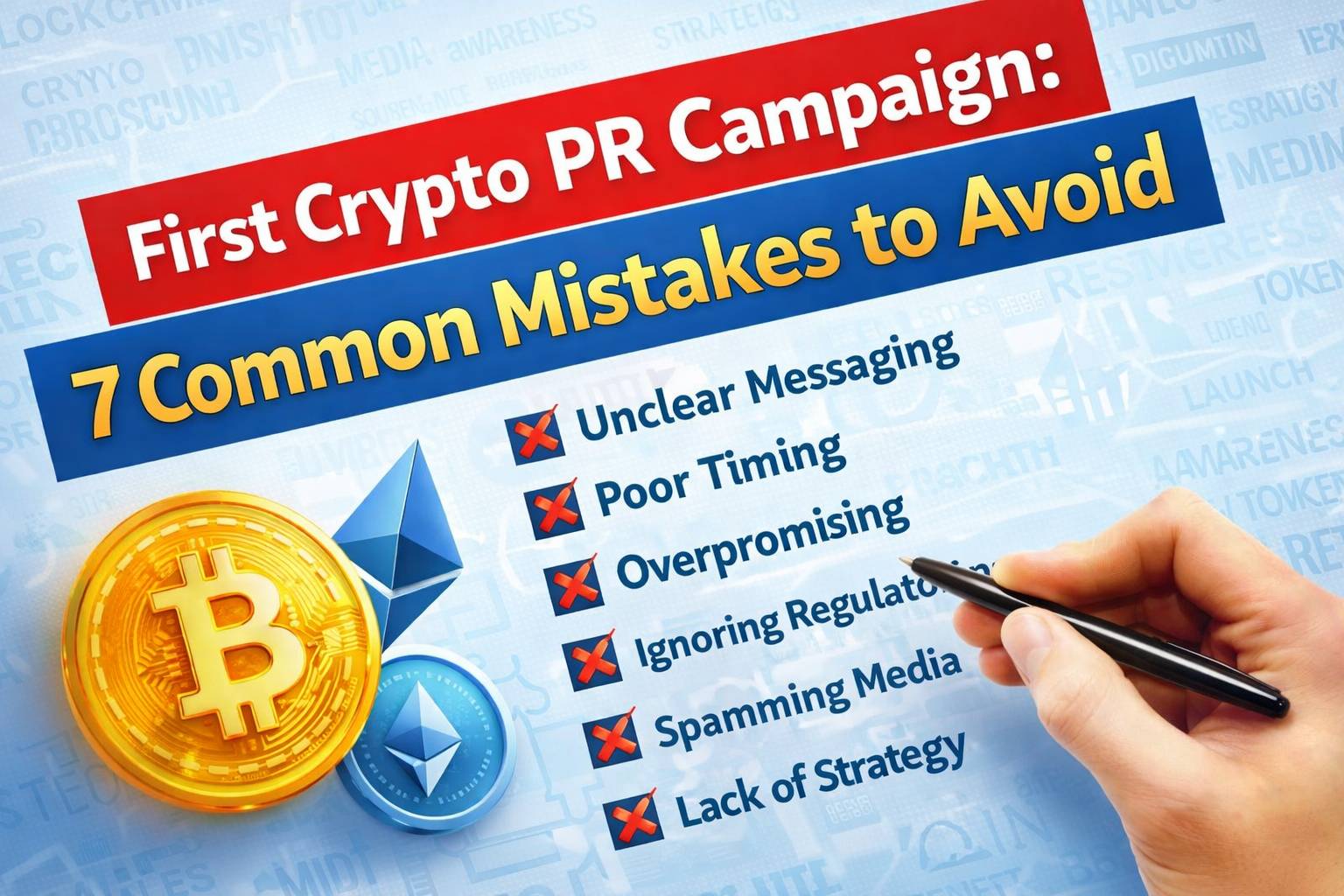
Running your first crypto PR campaign is where most projects waste the most budget. Not because PR doesn't work, but because first-timers make predictable errors that kill results before the campaign has a chance to gain traction.
These mistakes show up in campaign after campaign. The projects that avoid them early get significantly more value from every placement.
Mistake 1: No Clear Audience Segmentation
A crypto project doesn't have one audience. It has several, and each needs different messaging. Failing to define who the PR is written for is one of the most common reasons campaigns fail before a single article goes live.
At minimum, separate your messaging for these groups:
-
Crypto-native users who understand the tech and want specifics
-
Mainstream-curious users who need the product explained in plain language
-
Institutional investors who need compliance signals and financial viability
-
Media outlets, each with their own editorial voice and reader expectations
A press release that tries to speak to everyone ends up reaching no one.
Mistake 2: Publishing on the Wrong Outlets
Outlet selection matters as much as content quality. Publishing on an irrelevant site, whether it has the wrong readership size or the wrong demographics, wastes the placement entirely.
Even Meta's own ad policy requires crypto advertisers to prove their activities are licensed before running promotions, reflecting how seriously platforms treat credibility in this space.
Cheap distribution services place articles on low-authority sites that don't reach the target audience. The article technically exists, but it generates no traffic, no backlinks worth having, and no credibility lift.
What to do instead: select outlets by traffic quality, domain authority, syndication potential, and audience fit. Data should drive the selection, not convenience or familiarity with a brand name.
Mistake 3: The One-and-Done Approach
One press release is not a PR campaign. Your message needs structure, context, and repetition to build recognition. Front-loading spend on launch and cutting to zero afterward is one of the most common budget mistakes in crypto marketing.
PR works through compounding: launch coverage leads to organic mentions, which lead to syndication, which leads to search visibility, which leads to more organic mentions.
As Outset PR explains in their breakdown of how press releases actually work in Web3, a single press release rarely delivers meaningful visibility on its own, but as part of a broader campaign architecture, it can activate news cycles and strengthen credibility over time.
A minimum viable campaign involves multiple placements over weeks, not a single drop.
Mistake 4: Overhyping or Making Unverifiable Claims
Crypto audiences are driven by logic, incentives, and credibility, not hype. Flashy promises usually fail to deliver sustainable results because users spend more time researching and validating claims than most marketers expect.
In 2026, this is also a compliance issue. The SEC scrutinizes marketing that could imply investment returns. The EU's MiCA framework requires specific disclosures in crypto promotions. The UK's FCA has its own advertising rules for crypto assets.
Stick to verifiable facts: audit results, on-chain metrics, partnership confirmations, team credentials. Let the data make the case.
Mistake 5: Ignoring Timing and Market Conditions
Publishing during a market crash or when a bigger story is dominating headlines buries your message. The placement goes live, but nobody's paying attention because the entire market is watching something else.
Timing in crypto PR isn't about finding the perfect hour, it's about relevance. If the story doesn't connect to what the market is currently paying attention to, it won't travel. Direct traffic accounts for 44% of visits to crypto-native outlets, meaning audiences return to trusted sources out of habit.
Best practices for timing:
-
Publish early in the week, during morning news hours
-
Align with industry events or trending topics when possible
-
Avoid competing with major protocol launches, regulatory announcements, or market volatility spikes
Mistake 6: No Crisis Communication Plan
First-time projects almost never prepare for negative coverage or FUD. Then something goes wrong, a smart contract bug, a community backlash, a misinterpreted comment, and there's no protocol for responding.
Having a crisis plan before you need it takes minimal effort. Building one during a crisis is expensive and slow. At minimum, prepare:
-
Pre-approved messaging templates for common scenarios (security incidents, delays, FUD)
-
A clear chain of command for who approves public statements
-
Relationships with journalists who will give you a fair hearing when things go sideways
Mistake 7: Not Measuring Anything
Many projects can't tell whether their PR worked because they set no baselines before the campaign started.
Here are the metrics that matter from day one.
Metric
What it tells you
Media mentions (before vs. after)
Did the campaign actually increase your visibility?
Referral traffic from placements
Are readers clicking through to your site?
Branded search volume
Are more people googling your project by name?
Community growth during campaign
Is coverage bringing in new followers?
Syndication count
Did articles get picked up beyond the original outlet?
Without these baselines, you can't justify the next campaign, optimize outlet selection, or hold your agency accountable.
How Outset PR Helps Projects Avoid These Mistakes
Outset PR addresses several of these problems structurally rather than leaving them to chance. They've also published their own detailed breakdown of six common crypto PR mistakes, which covers cross-departmental alignment, audience research, and budget planning in more depth.
On outlet selection, the agency analyses outlets by traffic quality, domain authority, syndication depth, and discoverability. That solves the "wrong outlets" problem with data instead of guesswork.
The Press Office model tackles the one-and-done problem directly. It creates sustained media presence through a combination of proactive pitching and reactive commentary.
Coverage keeps flowing between major announcements, which is what allows syndication to compound over time.
For measurement, the agency tracks where articles get republished and how far they spread. That gives clients the data they need to analyse what worked and what to adjust for the next campaign.
Conclusion
Every mistake on this list comes from the same root cause: treating PR as a one-time expense rather than a structured process.
The projects that get results from their first campaign are the ones that define their audience, select outlets with data, sustain coverage long enough for compounding to work, and measure everything.
That requires planning before the first article goes live. But the planning itself is straightforward. Avoid these seven mistakes and your first campaign starts in a fundamentally stronger position than most.
Disclaimer: This article is provided for informational purposes only. It is not offered or intended to be used as legal, tax, investment, financial, or other advice.
0
0
 Manage all your crypto, NFT and DeFi from one place
Securely connect the portfolio you’re using to start.