
European Banks Roll Out RL1 Cooperative Blockchain Network

0
0
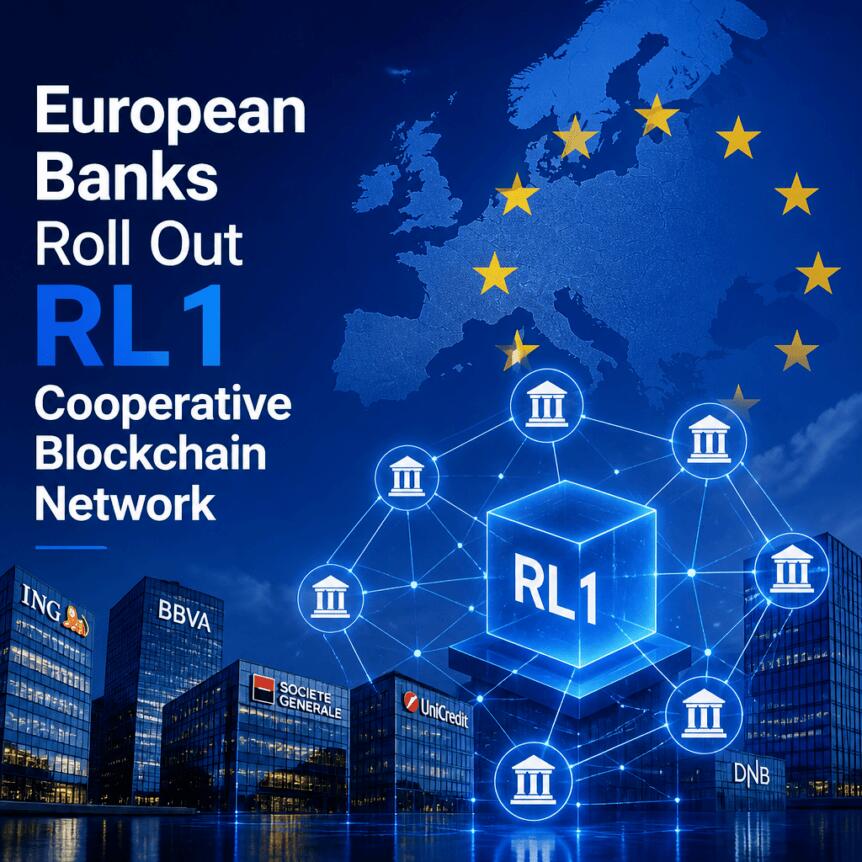
Ten European financial institutions have formed a new jointly owned blockchain cooperative called Regulated Layer One (RL1), positioning it as a permissioned network for tokenized assets and regulated market infrastructure.
RL1 announced that it has been established as a European Cooperative Society in Luxembourg and has started operations with founding members including ABN AMRO, Cecabank, Chartered Investment, Crédit Mutuel Alliance Fédérale, DekaBank, DZ BANK, LBBW, Natixis CIB, SC Ventures and Seturion. The group says governance will be shared, with each member holding equal decision-making rights over the network’s development.
Key takeaways
- RL1 is launching as a Luxembourg-based European Cooperative Society with 10 founding financial institutions.
- The network is permissioned and aimed at institutional use cases such as tokenized bonds, collateral, and settlement.
- RL1 is built on infrastructure originally developed by German fintech Secure Worldwide Interbank Asset Transfer (SWIAT), now transferred to the cooperative.
- SWIAT reports more than 50 transactions worth over €700 million during three years of production use.
- Additional institutions are being discussed for membership, including NatWest, as RL1 begins operations.
A cooperative model for regulated blockchain infrastructure
RL1’s launch reflects a broader push among banks and other regulated players to build shared blockchain rails that can integrate with existing compliance and oversight frameworks. By organizing the network as a cooperative, RL1 is attempting to shift control away from single-operator models and toward governance shared across member institutions.
The founding structure matters for investors and market participants because governance can directly affect roadmap priorities—such as which tokenized asset standards are supported, how settlement workflows are designed, and how risk controls are maintained. RL1 says each member will have equal decision-making rights, signaling that the network is meant to evolve through collective agreement rather than unilateral changes.
From SWIAT-built infrastructure to RL1 ownership
RL1’s technical foundation traces back to infrastructure developed by German fintech Secure Worldwide Interbank Asset Transfer (SWIAT). According to the cooperative, SWIAT has transferred ownership of the network to RL1, marking a clear step from an originating build phase into an operator-and-governance phase under the cooperative structure.
SWIAT also provided performance context from its production use period, stating that the platform processed more than 50 transactions totaling over €700 million (about $808 million) across three years. While that figure is not presented as a measure of network scale in terms of daily volume or active users, it does frame the initiative as having moved beyond prototypes into live transaction processing before the cooperative launch.
Use cases designed for tokenization and settlement
RL1 says the blockchain is intended to support institutional workflows tied to digital money and tokenized financial instruments. The cooperative highlighted use cases including tokenized bonds, collateral management, and blockchain-based settlement.
One theme RL1 emphasizes is reducing fragmentation in distributed ledger efforts. Financial institutions have historically pursued separate DLT systems, often leading to interoperability challenges and duplication of integration work. RL1 argues that a shared network among regulated participants can mitigate those issues by giving members a common infrastructure layer for tokenized settlement-related activities.
For market participants, that framing matters because interoperability and shared settlement are frequently cited barriers to wider adoption of tokenized assets. A network that centralizes governance and standards among a defined group of regulated institutions can shorten the path to operational alignment—though it cannot eliminate the need for external integrations where assets or counterparties sit outside the network.
Leadership and expansion plans
RL1 named Henning Vollbehr, formerly Managing Director at SWIAT, as its leader. The cooperative also said that KfW and L-Bank will continue supporting the initiative, indicating the project retains institutional backing as it transitions into ongoing operations.
RL1 is also looking outward: the group said it is in discussions with additional institutions about joining the network, including NatWest. That expansion effort will likely be a key indicator of whether RL1 can grow beyond the initial consortium and increase its usefulness as a settlement and tokenization venue for more participants.
Going forward, readers should watch how RL1’s cooperative governance translates into concrete product decisions—especially around asset types, settlement rules, and interoperability with external systems—alongside whether the membership talks broaden participation beyond the founding banks.
This article was originally published as European Banks Roll Out RL1 Cooperative Blockchain Network on Crypto Breaking News – your trusted source for crypto news, Bitcoin news, and blockchain updates.
0
0
 Manage all your crypto, NFT and DeFi from one place
Securely connect the portfolio you’re using to start.