
How Abu Dhabi Global Market (ADGM) Plans to Make the UAE the Crypto Capital of the World

0
0

The Abu Dhabi Global Market (ADGM) has been making continuous strategic efforts to position the UAE as the crypto and blockchain capital of the world. The region’s regulatory clarity, streamlined process, and strategic position as a global financial hub have contributed to its success.
BeInCrypto spoke with Dmitry Fedotov, the Head of DLT Foundations at ADGM, to understand how its blockchain-friendly regulations have driven crypto giants to open offices in Abu Dhabi.
ADGM Poised to Accelerate Blockchain Adoption
Over the past few years, the UAE has emerged as a global leader in blockchain and Web3 adoption, creating a favorable environment for innovation and growth. The ADGM, a financial-free zone on Al Maryah Island in Abu Dhabi, has gained particular recognition for its blockchain-friendly regulatory framework.
The ADGM was established in 2013 by a Federal Decree. It functions as the city’s financial center and responds to an independent legal and regulatory framework. Its approach to Web3 innovation has attracted major players in the industry.
“ADGM positions itself as a global leader by taking such innovative steps, inspiring other jurisdictions to adopt forward-thinking solutions that redefine governance and engagement in emerging technologies,” Fedotov told BeInCrypto.
The UAE at large is experiencing a surge in crypto adoption as more businesses and users have adopted digital assets for transactions and investments.
According to Statista, the number of users participating in the country’s crypto market will reach 3.78m users by 2025. Consequently, revenue rates are expected to remain high this year.
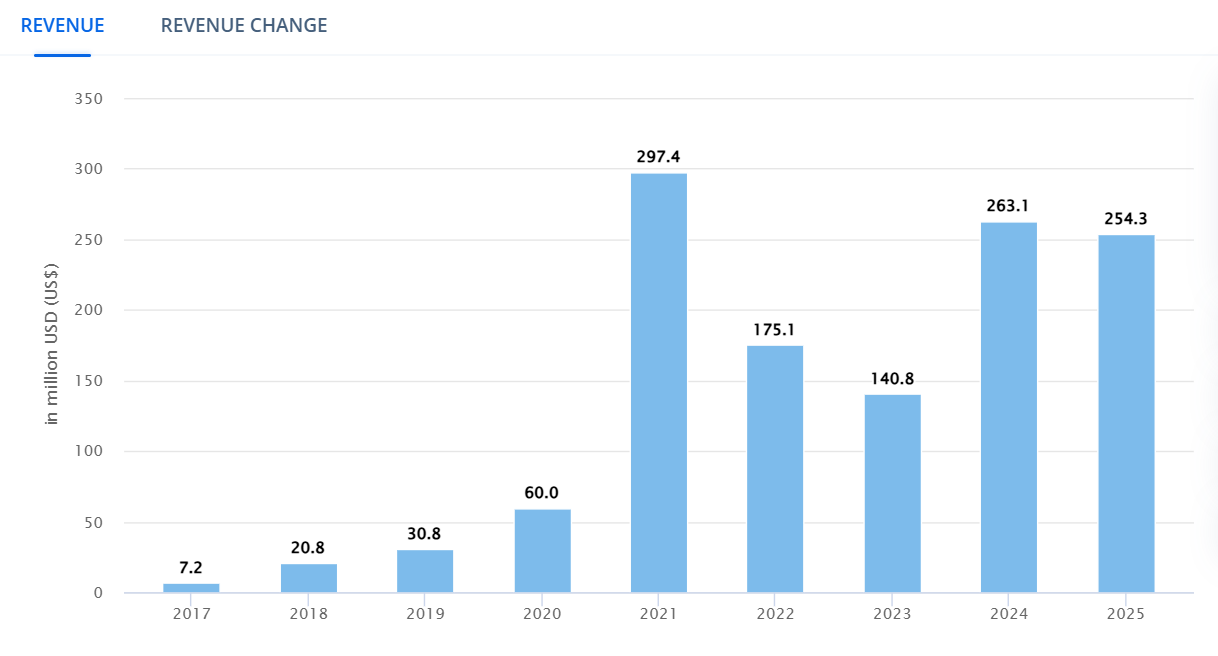 UAE’s Crypto Market Revenue is Projected to Reach $254.3m in 2025. Source: Statista.
Meanwhile, the Aptos Foundation, a leading global blockchain entity, announced last month the opening of its new office in the ADGM.
The strategic move aims to drive regional partnerships, accelerate blockchain adoption, and expand the Aptos ecosystem. It also reinforces the UAE’s status as a hub for blockchain and Web3 innovation.
“Partnerships with industry leaders enhance our ecosystem’s credibility, while streamlined licensing processes make ADGM stand out compared to other financial hubs. These measures create a unique balance of growth opportunities and regulatory clarity,” Fedotov said.
Beyond Aptos, Chainlink Labs, TON, and Polygon Labs established their presence in ADGM to accelerate adoption in the Middle East.
However, for any crypto entity to pursue business endeavors in ADGM, it must first undergo a series of evaluations to determine whether it is eligible for operation.
Regulation of Virtual Asset Activities in ADGM
Over the years, the UAE has established notable regulatory clarity for the crypto industry. Before offering virtual asset services in the region, an entity must first gain an operating license from ADGM’s Financial Services Regulatory Authority (FSRA).
The FSRA defines a virtual asset as “a digital representation of value that can be digitally traded and functions as a medium of exchange, a unit of account, or a store of value, but does not have legal tender status in any jurisdiction.”
Virtual assets do not require a third party to create or interact with them. Because of this, they present a series of unique challenges for regulators worldwide.
In response, the FSRA considers seven key factors in determining whether a virtual asset meets these requirements. The factors include asset maturity, security, traceability and monitoring, exchange connectivity, type of distributed ledger, innovation and efficiency, and practical application.
More specifically, the FSRA evaluates whether there is sufficient client demand for the virtual asset. It also monitors whether controls are in place to manage its volatility and if the asset can withstand or respond to its specific risks and vulnerabilities.
Applicants also need to demonstrate whether the virtual assets help to solve a fundamental problem. Examples include meeting an unmet market need and determining whether they possess real-world, quantifiable functionality.
“This pioneering spirit ensures ADGM remains at the forefront of shaping the future of how regulators approach ever-evolving regulatory needs,” Fedotov said.
Tether’s USDT was one of the first companies to receive approval from Abu Dhabi’s FSRA to operate its stablecoin as an Accepted Virtual Asset on the ADGM. The approval reflects compliance with the region’s regulatory standards, paving the way for USDT’s inclusion in licensed financial services.
However, the Virtual Assets Framework is not the only one the ADGM has implemented to ensure regulatory compliance.
ADGM’s DLT Framework
In 2023, the ADGM established a framework to develop a worldwide standard for blockchain foundations, decentralized autonomous organizations (DAOs), and other Web3 entities.
Known as the Distributed Ledger Technology (DLT) Foundations Framework, this legislation allows the issuance of tokens and enables entities to employ diverse token governance strategies.
“ADGM offers regulatory clarity in a highly respectable jurisdiction based on the direct application of English Common Law with a supportive environment for innovation,” Fedotov said.
Before receiving approval, DLT Foundations must ensure compliance with all applicable laws, requirements, rules, and regulations set forth by the UAE, the Emirate of Abu Dhabi, and the ADGM.
To register a DLT Foundation in ADGM, applicants must provide a written charter signed by all of the founders and additionally sign a declaration of compliance. Applicants must also pay a series of initial registration fees and provide a copy of the whitepaper and tokenomics paper.
DLT Foundations must always have a registered office in the ADGM. They also need to demonstrate that they have substantial resources, experience, and personnel in the UAE.
“Initiatives like the DLT Foundations framework give blockchain-based organisations the opportunity to issue utility tokens and apply smart contracts for decentralised governance models,” Fedotov added.
Last month, ADGM registered TON as a DLT Foundation under its legal framework. This enabled a smoother operation and governance support for the decentralized organization.
TON aims to drive the adoption of its blockchain in the Middle East. ADGM’s comprehensive regulatory framework provides a supportive environment for the blockchain to do so via its DLT Foundation.
Balancing Innovation with Consumer Protection
To maintain its DLT Foundation status, the TON blockchain needs to continuously comply with a series of regulations, particularly developed to safeguard consumer security.
“ADGM’s DLT/blockchain framework aligns closely with global standards, focusing on key areas like combating financial crime, ensuring user protection, and promoting market integrity,” Fedotov told BeInCrypto.
The framework discloses that before granting a registration license, entities must provide evidence that they comply with laws related to anti-money laundering, anti-bribery, sanctions, export controls, consumer and data protection, and cybercrime prevention.
DLT Foundations must also conduct specific security audits on its data protection and security systems at least once per calendar year. Copies of the audits’ results must be sent to the registrar within two weeks of completion.
Like the DLT Foundations Framework, the Virtual Asset Framework requires the same degree of exhaustiveness to ensure user protection.
According to the legislation, “given the increased use of Virtual Assets as a medium for financial transactions, and their connectivity to the mainstream financial system through Virtual Asset and derivative exchanges and intermediaries, there is the increased potential of contagion risks impacting the stability of the financial sector.”
Consequently, the FSRA outlines in the virtual asset framework that applicants must mitigate risks related to anti-money laundering (AML), consumer protection, technology governance, ‘exchange-type’ activities, and custody.
Applicants also need to comply with FSRA’s AML rulebook and place controls regarding virtual asset wallets, private keys, risk management, and systems recovery.
Collaboration with the Financial Action Task Force
The ADGM and the different jurisdictions that comprise the UAE have also collaborated with the Financial Action Task Force (FATF) in developing its regulatory framework. This intergovernmental organization serves as a global anti-money laundering watchdog.
“Through partnerships with leading blockchain security companies, ADGM integrates international best practices. Collaborations with global regulatory bodies, and adoption of recommendations issued by the Financial Action Task Force (FATF), help establish benchmarks for the industry,” Fedotov said.
In February, the FATF announced that the UAE had been removed from its list of jurisdictions subject to enhanced due diligence or increased monitoring.
This action recognizes the UAE’s significant progress in addressing the FATF’s concerns regarding anti-money laundering and counter-terrorism financing measures.
“ADGM achieves this balance through a principle-based approach that establishes robust security and governance standards while granting companies the flexibility to innovate,” Fedotov added.
While ADGM welcomes responsible innovation within the digital asset sector, it is not intended to serve as a haven for entities that do not have a genuine commitment to regulatory compliance.
For instance, in October 2023, ADGM’s FSRA fined licensed money service provider Pyypl $486,000 for inadequate compliance with AML requirements.
Also, beyond an inclusive yet responsible framework, the ADGM has developed other pioneering initiatives that prioritize a forward-thinking approach to innovation.
Initiatives in Cutting-Edge Fields
Part of ADGM’s appeal to Web3 developers is its proactive approach to innovation.
“ADGM’s initiatives reflect its boldness and willingness to lead by being the first to explore uncharted territories,” Fedotov said.
Over the years, ADGM has launched several pilots that reflect this motivation.
“’Mediation in the Metaverse’ is a prime example, showcasing a groundbreaking approach to resolving disputes in virtual environments and highlighting ADGM’s ability to adapt to the rapidly evolving digital landscape,” he added.
In November 2022, the ADGM Arbitration Centre launched the Mediation in the Metaverse initiative. This pilot project leverages Web3 technology to create a virtual environment replicating the physical ADGM Arbitration Centre.
The immersive experience is accessible via desktop or mobile devices and aims to enhance participant engagement and improve the mediation process.
Since then, ADGM has broadened its endeavors.
“We are closely researching advancements in areas such as quantum computing, AI, autonomous transportation, robotics, and space technology to ensure our regulations support innovation in these cutting-edge fields,” Fedotov told BeInCrypto.
These efforts have already begun to materialize, attracting greater participation in ADGM’s crypto market and in the UAE at large.
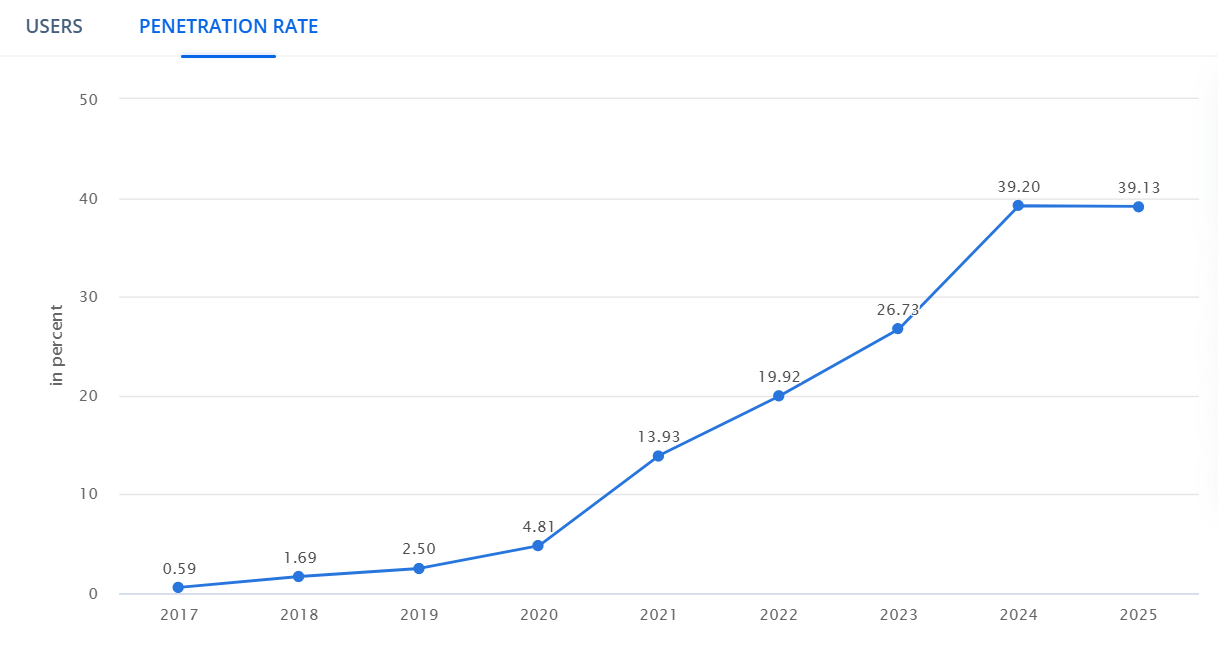 The User Penetration Rate in the UAE is Projected to be 39.13% in 2025. Source: Statista.
According to Statista, the country’s penetration rate will reach 39.13 in 2025. This calculation is based on key market indicators, such as GDP, consumer spending, population, internet penetration, smartphone penetration, credit card penetration, and online banking penetration.
Last month, the Hashgraph Group of the Hedera ecosystem announced that it had secured a fund management license from ADGM.
With its newly attained license, the Swiss-based technology and investment firm announced the launch of a $100 million global venture fund. The funding will go toward promising startups and enterprises leveraging artificial intelligence, blockchain/DLT, robotics, and quantum computing.
This forward-thinking approach is not only limited to the ADGM, however. Other cities in the UAE are also taking a similar road.
ADGM Mirrors Broader UAE Approach to Web3 Innovation
Overall, the UAE’s crypto and blockchain developments have been nothing short of surprising. The country is always looking to set a new benchmark for other global markets.
Last week, Dubai announced plans to construct a 17-story Crypto Tower by 2027, reflecting the city’s commitment to supporting the growth of the blockchain and Web3 sectors. This initiative will provide 150,000 square feet of leasable space for blockchain and digital asset firms.
According to local reports, the Crypto Tower itself will integrate blockchain technology, enabling features such as on-chain voting, shared resource management, and smart contract-based operations to automate bureaucratic processes.
The tower will provide nine floors of office space for crypto companies and allocate three floors to incubators, venture capital firms, and investment groups. There will also be one floor dedicated exclusively to AI initiatives.
“This forward-thinking approach ensures ADGM remains a secure, adaptable, and innovation-friendly hub,” said Fedotov.
With its supportive policies and a growing community of blockchain pioneers, ADGM’s vision of becoming a global leader in blockchain innovation seems well within reach.
0
0


 Manage all your crypto, NFT and DeFi from one place
Securely connect the portfolio you’re using to start.


