
TRON Pyrrho Upgrade: Everything Node Operators Must Know

0
0
TRON Pyrrho Upgrade Deadline, Features and Migration Steps
TRON's latest release is out, and it's officially called GreatVoyage-v4.8.2, though most people are just calling it Pyrrho.
The project says this update is all about protocol hardening, tighter Ethereum alignment, and better tools for running a node.
If you operate a TRON node, or just follow the network closely, this one's worth your attention, even if you're not neck-deep in the technical side of things.
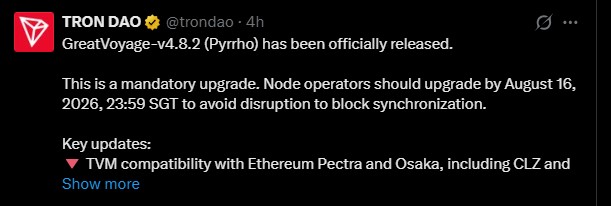
Source: X post
What Is Pyrrho, Exactly
TRON runs on thousands of nodes working together to keep the network alive. Every so often, the team ships a new version of the core software (java-tron), and this time it's Pyrrho. It's not a minor patch.
The update touches how nodes communicate, how they store data, and how they report their health.
Here's the important bit: this isn't optional. TRON has labeled it a mandatory upgrade, so node operators don't really get to sit this one out.
Why the Upgrade Happened
A lot of blockchain projects try to stay in step with Ethereum, since so many developer tools are built to work across both chains. That's a big part of what's driving this release.
Ethereum recently pushed out two major upgrades of its own, Pectra and Osaka, and TRON wanted its virtual machine (the TVM) to keep pace with some of those changes.
One example: a new signature verification method called secp256r1. In plain English, it makes it easier for the network to work with modern hardware, like phones and secure wallets, that kind of thing, which already rely on this method.
There's also a small but useful addition, a faster calculation shortcut inside the TVM known as the CLZ opcode, which should help certain smart contracts run a bit more efficiently.
Key Changes Worth Knowing
Beyond the Ethereum-related updates, a few other shifts stand out in the official release notes:
Change | What It Means |
API migration to Jackson | The network swapped out an older data-formatting library for Jackson, mostly a backend move that cuts down on security risk from outdated code |
Monitoring switch to Prometheus | InfluxDB support has been dropped entirely; anyone running dashboards needs to be on Prometheus now |
CLZ opcode added | A native shortcut for certain calculations inside the TVM, reducing computation overhead |
secp256r1 verification | Enables compatibility with modern secure hardware and devices |
These aren't isolated tweaks either. They're part of a bigger cleanup effort where older, riskier components get replaced with more current alternatives.
The Deadline (and Why It Matters)
Here's the part that really matters if you run a node: August 16, 2026, 11:59 PM SGT. That's the cutoff.
Miss it, and according to the announcement, your node risks falling out of sync with block production on the network. In practice, that means the node could stop reflecting the actual, current state of the chain, which is a real headache if other services depend on that node for data.
So what actually happens if you don't upgrade in time? Based on what's been published, expect synchronization problems first, and from there, things only get messier the longer it's left unaddressed.
Upgrade Steps for Node Operators
The official path forward points to the java-tron GitHub repository, where the updated release is published. Operators are expected to pull the latest version and swap it in before the deadline hits.
One thing that's easy to miss: if you're running the TRON Event Plugin, it needs a separate upgrade first. Specifically:
The event plugin must be bumped to version 3.0.0 or higher
This has to happen before applying the main Pyrrho update
Skipping this step can cause the node to fail on startup, since older plugin versions won't play nice with the new system
It's a small detail, but it's the kind of thing that trips people up during upgrade weekends.
What This Means for Developers and the Wider Ecosystem
For regular TRX holders, honestly, most of this happens quietly in the background. Wallets won't change. Sending a transaction won't look any different.
But if you're building on TRON, especially anything touching smart contracts or node infrastructure, it's a different story.
The added compatibility with Ethereum's TVM standards suggests the team wants to keep TRON an easy option for developers who also build on Ethereum.
Keeping both ecosystems behaving similarly makes it simpler to port projects back and forth, which is probably the point.
Final Thoughts
At its core, this release follows a pattern a lot of blockchain projects are leaning into these days: keep pace with Ethereum's standards while quietly tightening up internal security and performance.
Whether everyday users will notice any real difference is hard to say. But for node operators, the deadline is set, the requirements are laid out, and there's not much reason to wait until the last minute.
Disclaimer
This article is for educational and informational purposes only and should not be considered financial or investment advice. Always conduct your own research before making investment decisions.
0
0


 Manage all your crypto, NFT and DeFi from one place
Securely connect the portfolio you’re using to start.


0
0


0
0