
Harmony ONE Surges After Bloom Hard Fork, but On-Chain Activity Tells a Different Story

0
0
Between July 21 and July 22, 2026, Harmony’s native token, ONE, climbed more than 20%, while trading volume jumped by over 2,500%. The move came about a week after the Bloom hard fork went live on July 13, bringing upgrades to the network’s consensus mechanism, security, and Ethereum Virtual Machine (EVM) compatibility.
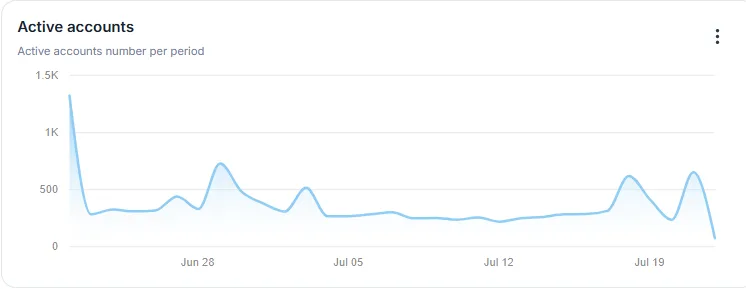
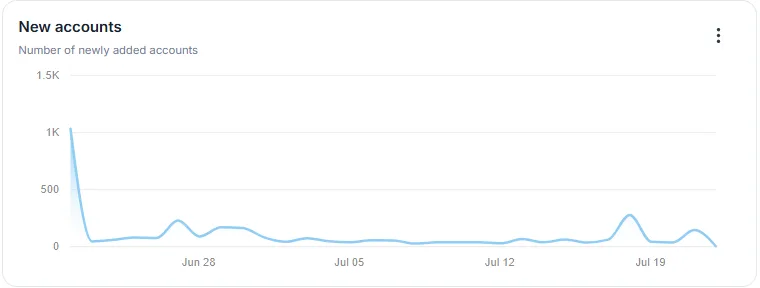
But the activity on the blockchain tells a different story. Protocol explorer data shows active accounts fell by more than 88% over the same period. New account creation almost disappeared, dropping by nearly 100%, while new transactions declined by 86%.
That leaves Harmony with an interesting disconnect. The market responded positively after the upgrade, yet the network has not seen the kind of pickup in user activity that would normally accompany sustained adoption. For now, the price action appears to be running ahead of the underlying on-chain activity.
What the Bloom Hard Fork Changed
Harmony is an Ethereum-compatible layer-1 blockchain built to support fast, low-cost transactions and scalable decentralized applications through sharding.
The network rolled out its Bloom hard fork on July 13, 2026, at epoch 2964. It wasn’t a flashy upgrade aimed at users; instead, it focused on the network’s core infrastructure.
The upgrade introduced Leader Rotation V2, tighter timestamp validation, better cross-link handling, slashing integrity fixes, and a batch of Ethereum Virtual Machine (EVM) improvements through several Ethereum Improvement Proposals (EIPs). Those changes included support for features such as transient storage, memory copy operations, PUSH0, updates to SELFDESTRUCT, and BLS12-381 cryptographic precompiles.
In practical terms, Bloom was designed to make the network more secure, improve how consensus works, and bring Harmony closer to Ethereum’s latest standards. About a week later, ONE’s price and trading volume surged. Whether that move reflected optimism around the upgrade or other market forces, the blockchain itself had yet to show a comparable rise in user activity.
Market Reacts to the Upgrade
ONE climbed more than 20% during the reporting period, reaching $0.0014 before easing slightly.
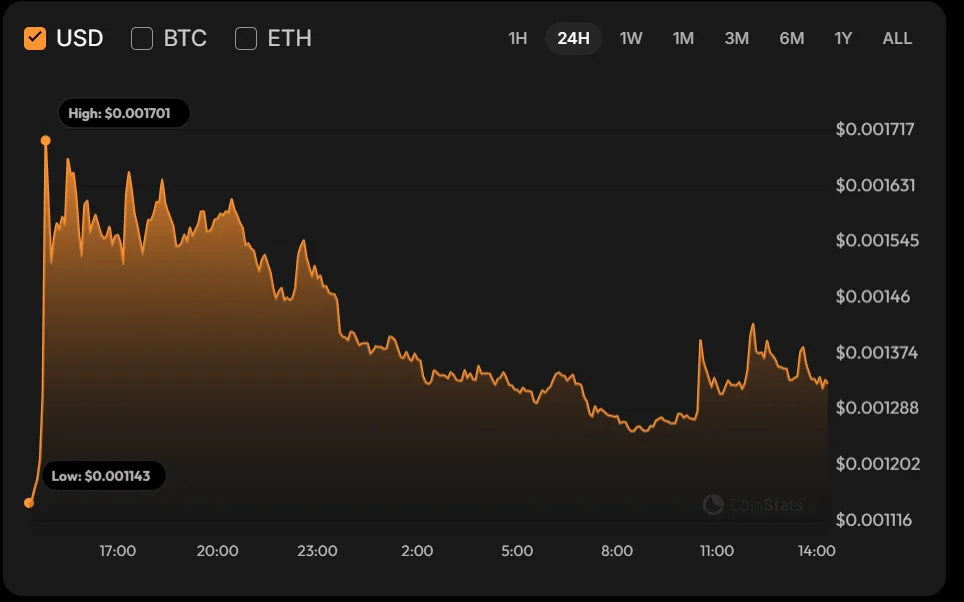
The token is also up more than 15% over the past seven days. Trading volume exploded as well, jumping more than 2,500% over the last day to about $42 million as activity picked up across major exchanges.
The spike in volume shows just how quickly attention shifted to Harmony. That’s not unusual for smaller cryptocurrencies, where news such as a major network upgrade can spark a wave of buying in a short period. What stands out here is that the surge in market activity wasn’t reflected on the blockchain, where user activity and transaction counts continued to fall.
On-Chain Activity Tells a Different Story
The on-chain data tells a very different story.
According to Harmony’s protocol explorer, active accounts fell from 651 to 74, an 88.6% decline.
New account creation dropped from 145 to just three addresses, down 97.9%.
And new transactions fell from 10,995 to 1,512, a decline of 86.2%.
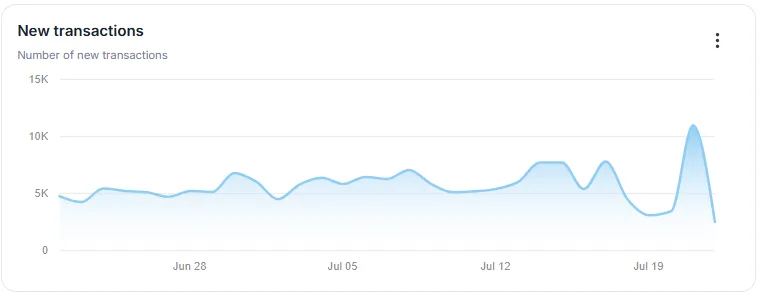
These metrics track some of the network’s most important indicators of activity, including user participation, new user onboarding, and transaction throughput. Instead of moving higher alongside ONE’s price, they all weakened during the reporting period.
That divergence is difficult to ignore. While the token rallied sharply, the blockchain processed fewer transactions, attracted fewer new users, and recorded far less address activity. The disconnect suggests the market’s enthusiasm had yet to translate into stronger network usage.
What the Divergence Could Mean
The gap between ONE’s price action and its on-chain activity is not unusual. In crypto markets, prices often move ahead of the data as traders react to expectations rather than immediate changes in network usage.
That may be the case with Harmony. The Bloom hard fork focused on strengthening the network’s infrastructure instead of introducing features that users would notice right away. Those upgrades still need time to be adopted by developers and incorporated into applications before they can influence user activity.
For now, the data suggests the market reacted faster than the network itself. Trading volume surged as ONE rallied, but on-chain activity continued to weaken, indicating that optimism around the upgrade had yet to translate into higher blockchain usage.
Final Thoughts
Harmony’s market performance and on-chain activity moved in opposite directions during the July 21–22 reporting period. While ONE gained more than 20% and trading volume surged following the Bloom hard fork, protocol data showed steep declines in active accounts, new account creation, and transaction volume. The rally therefore was not accompanied by a comparable increase in network usage.
The findings suggest the market responded more quickly than the blockchain itself. Although the Bloom hard fork introduced important infrastructure improvements, such upgrades typically take time to influence developer activity and user adoption. Continued monitoring of on-chain metrics will be important to determine whether the recent optimism develops into sustained growth across the Harmony ecosystem.
The post Harmony ONE Surges After Bloom Hard Fork, but On-Chain Activity Tells a Different Story appeared first on CoinTab News.
0
0
 Manage all your crypto, NFT and DeFi from one place
Securely connect the portfolio you’re using to start.