0
0
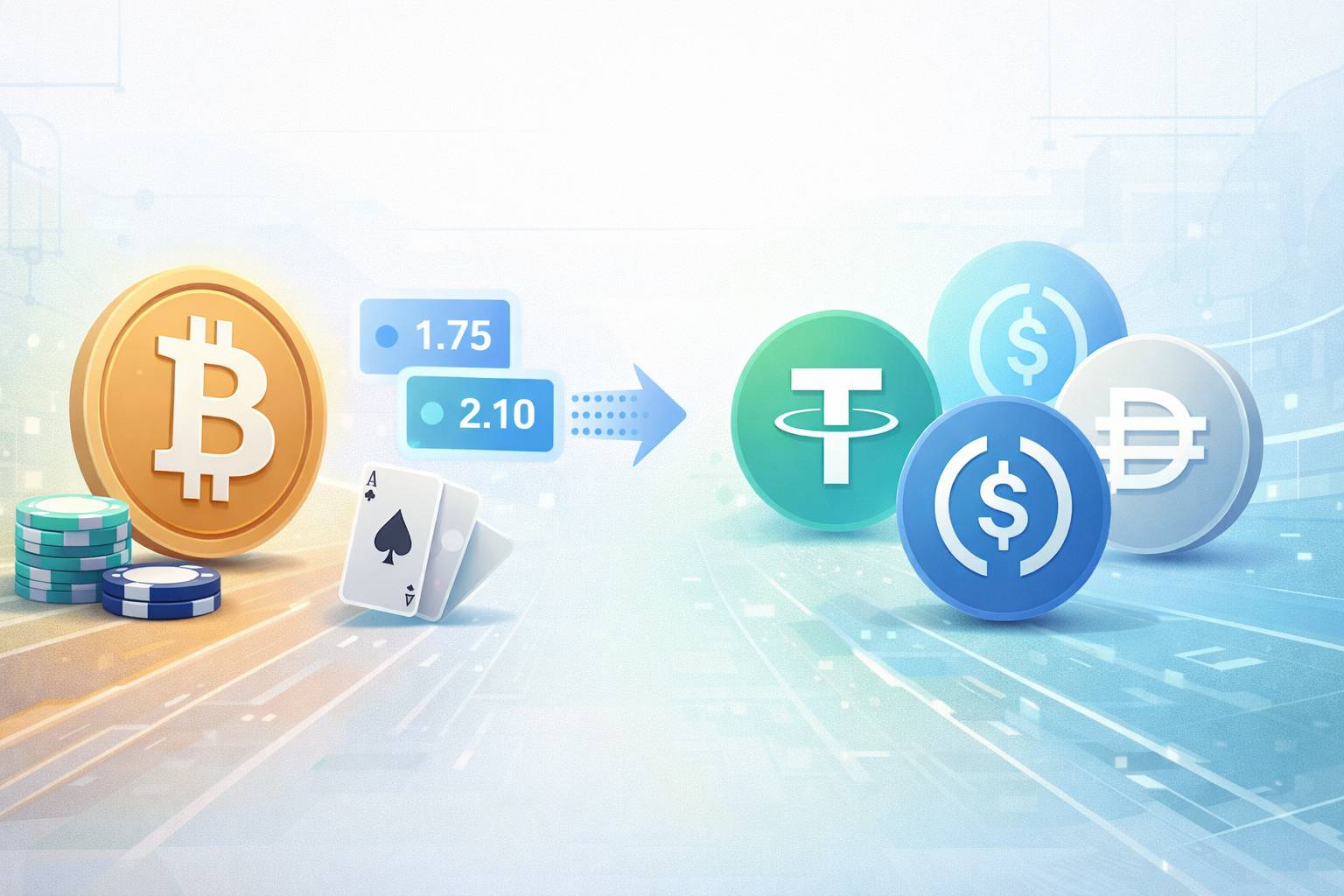
Crypto gambling has moved far beyond its early Bitcoin-only phase. What started as a niche alternative to traditional online casinos has evolved into a full betting ecosystem that now includes sportsbooks, live betting, and multi-asset wagering. Players are no longer choosing platforms based solely on whether they accept crypto — they’re looking at speed, stability, asset flexibility, and overall usability.
As crypto betting matures, a clear shift is taking place: from volatile, single-coin gambling toward platforms that support Bitcoin and stablecoins, optimized for live play and real-time decision-making. Understanding these trends is key to seeing where the market is heading — and which platforms are already aligned with that direction.
The earliest crypto gambling platforms were simple by today’s standards. Most accepted only Bitcoin, offered limited betting products, and focused almost entirely on casino-style games.
Over time, several structural changes reshaped the market:
Bitcoin became widely accepted but exposed bankrolls to volatility
Live betting gained popularity, demanding faster execution
Players began switching between casino games and sports betting
UX expectations increased alongside mainstream adoption
This evolution pushed crypto gambling away from experimental setups toward more refined platforms. Users started to value reliability just as much as decentralization, especially when placing live bets where timing matters.
As a result, modern crypto gambling platforms are no longer defined by what coin they accept, but by how well they integrate crypto into the betting experience.
Dexsport illustrates how crypto gambling platforms are adapting to these new expectations. Rather than focusing on a single asset or a single product, Dexsport is built around flexibility — supporting multiple cryptocurrencies while offering casino games, sports betting, and live wagering within one environment.
What makes Dexsport relevant as a trend indicator is not any single feature, but the combination of choices it reflects:
Support for Bitcoin alongside stablecoins
Emphasis on live betting and real-time interaction
Crypto-first access without unnecessary friction
A unified platform instead of separate betting silos
This structure aligns closely with where crypto gambling demand is moving. Players increasingly want to shift between assets depending on risk preference, switch between casino and sports betting without barriers, and manage bankrolls efficiently during live sessions.
Modern crypto gambling isn’t about choosing Bitcoin over everything else — it’s about choosing the right asset for the right moment.
Dexsport’s approach shows how platforms are responding to that mindset, positioning themselves for a market that values adaptability over ideology.
Bitcoin remains a core pillar of crypto gambling sites. It’s widely recognized, highly liquid, and still preferred by experienced bettors who are comfortable with volatility. For some players, BTC is part of the strategy — not just a payment method, but a high-risk, high-reward asset.
In crypto gambling, Bitcoin is often used when:
Players expect short sessions rather than long bankroll management
Volatility is seen as an upside, not a drawback
Bets are placed pre-match rather than live
Large wagers are made by high-volume users
That said, Bitcoin is no longer the default choice for everyone. As crypto betting has become more mainstream, the limitations of volatility have become more visible — especially during live betting.
When odds change rapidly and decisions must be made in seconds, unpredictable balance swings can work against the bettor. This has gradually shifted user behavior toward assets that offer more control.
Bitcoin hasn’t disappeared from crypto gambling. Its role has simply become more selective.
Stablecoins have quietly transformed how many players approach crypto gambling. Assets like USDT and USDC remove price fluctuation from the equation, allowing bettors to focus entirely on odds, timing, and strategy.
This shift is particularly noticeable in live betting environments.
Stablecoin-based betting offers several practical advantages:
Bankroll value stays predictable
Risk is tied to betting decisions, not market swings
Easier session planning and stake sizing
Clearer win/loss tracking
For users who treat crypto gambling as entertainment or structured betting rather than speculation, stablecoins feel more intuitive.
Live betting rewards quick decisions and consistent stake management. Stablecoins support this by removing an extra variable from the process.
During live sessions:
Bettors can scale stakes confidently
Odds movement is easier to evaluate
Loss control becomes more disciplined
This is why many modern platforms now see higher live betting volume in stablecoins than in Bitcoin. The asset choice matches the tempo of the betting environment.
As live betting grows, stability becomes a feature — not a compromise.
Another major trend shaping crypto gambling is consolidation. Early platforms focused on a single product — usually casino games or basic sports betting. Today, users expect more from fewer platforms.
Modern crypto gambling ecosystems typically combine:
Casino games
Live casino tables
Sports betting
In-play and live markets
This shift reflects changing user behavior. Players don’t want to manage multiple accounts or move funds between platforms. They want flexibility inside a single interface, with crypto acting as the common layer across all products.
Platforms that support multiple assets, betting formats, and live interaction are better positioned to retain users long-term.
As crypto gambling matures, trust is no longer built on promises alone. Players increasingly expect verifiable systems, clearer rules, and fewer opaque processes — especially when real money is involved.
This is where decentralization and transparency come into play.
Modern crypto gambling platforms are gradually adopting:
Provably fair mechanics for selected games
On-chain transaction visibility
Clear bonus and withdrawal rules
Reduced reliance on manual intervention
While full decentralization is still rare in gambling, the direction is clear. Platforms are moving away from black-box operations toward systems that allow users to verify outcomes, track funds, and understand how bets are processed.
For players, this doesn’t necessarily mean “fully decentralized casinos.” It means less blind trust and more structural confidence.
Rather than expanding endlessly, the crypto gambling market appears to be consolidating around a few core ideas.
Based on current trends, the next phase is likely to include:
Wider use of stablecoins for live betting
Faster, cleaner interfaces focused on usability
Fewer platforms, but with deeper functionality
Less friction between casino, sportsbook, and live betting
Speculation-driven gambling is gradually giving way to experience-driven betting. Players care less about novelty and more about consistency — how a platform performs during real sessions, not how many features it advertises.
In this environment, flexibility becomes a competitive advantage. Platforms that support multiple assets, adapt to different betting styles, and reduce operational friction are better positioned for long-term relevance.
Crypto gambling is moving away from a Bitcoin-only mindset toward flexibility and control. While BTC remains important, stablecoins are increasingly shaping live betting, bankroll management, and overall user behavior.
Platforms that support multiple assets, fast execution, and seamless movement between casino and betting products are better aligned with this shift. Dexsport reflects these trends by combining Bitcoin and stablecoin betting within a single, crypto-native ecosystem.
The future of crypto gambling isn’t about choosing one coin — it’s about choosing platforms that adapt to how players actually bet.
0
0
 Manage all your crypto, NFT and DeFi from one place
Securely connect the portfolio you’re using to start.

0
0

0
0

0
0