
World Liberty AI partnership routes USD1 payments through 43 Chinese AI models

0
0
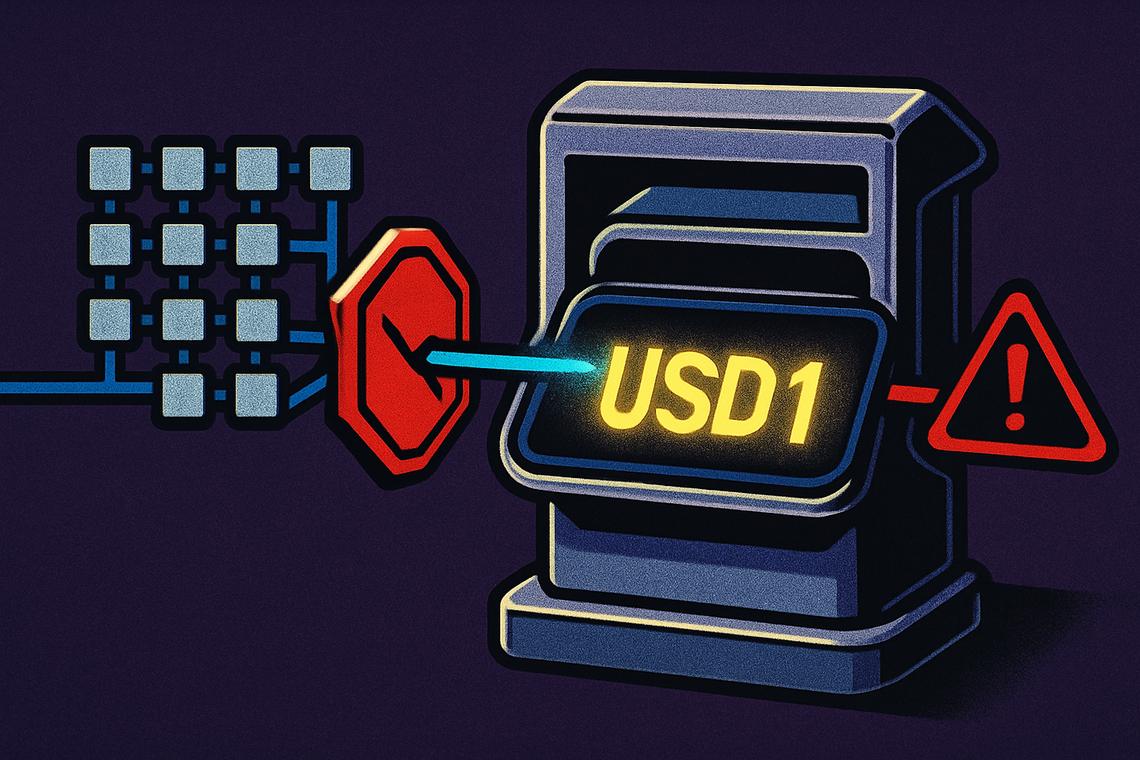
World Liberty Financial, the cryptocurrency venture backed by the Trump family, has struck a partnership that puts it squarely in the middle of Washington’s ongoing tech standoff with Beijing. The deal links the World Liberty AI partnership to WorldClaw, a Hong Kong-based artificial intelligence aggregator that gives users access to dozens of AI models — including several built by Chinese firms currently flagged by US regulators for national security concerns.
Key takeaways
- World Liberty Financial has partnered with Hong Kong-based AI aggregator WorldClaw, whose WorldRouter platform connects to roughly 90 AI models.
- Of those models, 43 come from Chinese developers such as Alibaba, Baidu and Z.ai, all of which face some form of US restriction.
- Users can pay for WorldClaw services with World Liberty’s USD1 stablecoin, tying the partnership directly to the Trump family’s crypto project.
- The Trump family owns 38% of World Liberty Financial and has earned more than $1.4 billion from token transactions tied to the platform.
- WorldRouter already serves more than 10,000 active users and processes over 50 million computational tasks daily.
World Liberty and WorldClaw Forge an AI Partnership Built on USD1
The arrangement gives World Liberty users a direct line into WorldClaw’s WorldRouter platform, which aggregates close to 90 different AI models under one roof. That lineup mixes American systems from companies like OpenAI and Anthropic with a sizable batch of Chinese-built alternatives — 43 models in total, according to details tied to the partnership.
What sets this deal apart from a typical fintech tie-up is the payment layer. Transactions for WorldClaw’s services run through World Liberty’s USD1 stablecoin, meaning every query routed through the platform effectively feeds transaction volume back into the Trump-linked crypto ecosystem. That’s not a small detail — it turns AI usage into a revenue driver for a token the Trump family has a direct financial interest in, since the family holds interest income generated by the reserves backing USD1.
Ryan Fang occupies an unusual dual position in the arrangement: he serves as World Liberty’s head of growth while also acting as an outside consultant to WorldClaw. His stated focus is expanding USD1 adoption and building out strategic partnerships — which makes the WorldClaw deal look less like a one-off collaboration and more like a deliberate push to plug the stablecoin into new markets.
US Restrictions Shadow the Chinese AI Models Inside WorldClaw
The presence of Chinese AI models inside WorldClaw’s catalog isn’t just a technical footnote — it puts the platform in direct contact with a web of US restrictions on Chinese AI that have been building for years. Several of the developers whose models are available through WorldRouter are already under some form of federal scrutiny.
Alibaba, Baidu and Z.ai Face Federal Limits
The US Department of Defense has designated both Alibaba and Baidu as companies with ties to the Chinese military, a classification that bars American defense contractors from doing business with either firm. Z.ai, meanwhile, sits on the US Commerce Department’s Entity List, a designation that sharply limits its ability to access American technology or strike partnerships with US companies.
IP Theft Allegations Against DeepSeek and Moonshot
Two more names inside the WorldClaw lineup — DeepSeek and Moonshot — carry their own baggage. US officials have publicly accused both companies of stealing intellectual property from American AI firms, allegations that Beijing has firmly denied. Their inclusion in WorldClaw’s model list means users tapping into the World Liberty AI partnership are, whether they realize it or not, routing queries through systems tied to some of the most contentious names in the US-China tech rivalry.
Is It Legal to Use These Models?
Despite all that regulatory baggage, using these AI models remains generally lawful for American individuals and businesses. The restrictions target commercial relationships — contracts, partnerships, technology transfers — not everyday access to a chatbot or API. That distinction matters: it’s the reason WorldClaw can legally offer these tools to US-based users even while the underlying companies face federal blacklisting on the corporate side.
Trump Family’s Stake and Promotion of World Liberty
The financial and political weight behind this deal traces straight back to the Trump family. World Liberty Financial’s ownership structure gives the family a 38% stake in the venture, and that stake has already paid off handsomely — Reuters reported in June that the family’s cryptocurrency earnings totaled $2.3 billion, with more than $1.4 billion of that coming from World Liberty token transactions alone.
Ownership and Crypto Earnings
That revenue picture helps explain why Donald Trump Jr. and Eric Trump, both co-founders of World Liberty Financial, have been so visible in promoting WorldClaw on social media. Trump Jr. offered exclusive Mar-a-Lago meeting opportunities to winners of a WorldClaw competition, while Eric Trump called the partnership representative of “the future of finance.” The family’s cryptocurrency involvement isn’t passive — it’s actively marketed, with real perks attached to drive engagement.
WorldClaw, for its part, has tried to draw a line between itself and World Liberty. A company spokesperson said offering access to a model doesn’t amount to endorsing its creator. World Liberty spokesperson David Wachsman echoed that logic, arguing that major American tech firms already offer Chinese AI models to their users. “This is a common and widely accepted approach,” he said. The White House has separately stated there are “no conflicts of interest” tied to the arrangement, though it hasn’t elaborated on what that assessment was based on.
Cybersecurity Questions and WorldRouter’s Scale
Adoption numbers for WorldRouter are already substantial. The platform supports more than 10,000 active users and handles over 50 million computational tasks every day — a scale that turns any security or content concern from a theoretical risk into something with real reach.
Surveillance and Censorship Risks
Cybersecurity researchers have flagged two recurring concerns with Chinese-built AI models: the possibility of surveillance by Chinese government entities, and the risk that responses could be censored or manipulated before reaching the end user. WorldClaw says it has privacy and security protocols in place, but it has also acknowledged that user queries may still be transmitted to the original developers of each model — meaning a prompt sent through WorldRouter could, in some cases, end up on servers controlled by the very companies under US scrutiny.
That tension is really the crux of the whole story. On one hand, accessing these tools is legal, widely practiced across the tech industry, and arguably just reflects how competitive the Chinese AI sector has become. On the other, a politically connected crypto venture is now routing its stablecoin payments through a platform built partly on models tied to Pentagon restrictions and IP theft allegations — a combination that’s bound to draw continued attention from regulators and critics alike as the World Liberty AI partnership expands its user base.
FAQ
What is the partnership between World Liberty Financial and WorldClaw about?
World Liberty Financial has partnered with Hong Kong-based AI aggregator WorldClaw to provide access to around 90 AI models, including many from Chinese firms under US regulatory scrutiny.
Are American users legally allowed to access the Chinese AI models on WorldClaw?
Yes, accessing these Chinese AI models is generally legal for American citizens and enterprises, as the restrictions mainly target direct commercial dealings between US companies and restricted Chinese firms.
What is the Trump family’s involvement in World Liberty Financial?
The Trump family owns 38% of World Liberty Financial, has generated over $1.4 billion through token transactions, and actively promotes the WorldClaw partnership.
What cybersecurity risks are associated with using Chinese AI models via WorldClaw?
Cybersecurity experts have raised concerns about possible surveillance by Chinese government agencies and potential censorship or manipulation of AI outputs, despite WorldClaw’s privacy and security measures.
Article produced with the assistance of artificial intelligence and reviewed by the editorial team.
0
0


 Manage all your crypto, NFT and DeFi from one place
Securely connect the portfolio you’re using to start.