
Strait of Hormuz: Iran’s Military Declares Critical Control Over Global Oil Artery

0
0
BitcoinWorld

Strait of Hormuz: Iran’s Military Declares Critical Control Over Global Oil Artery
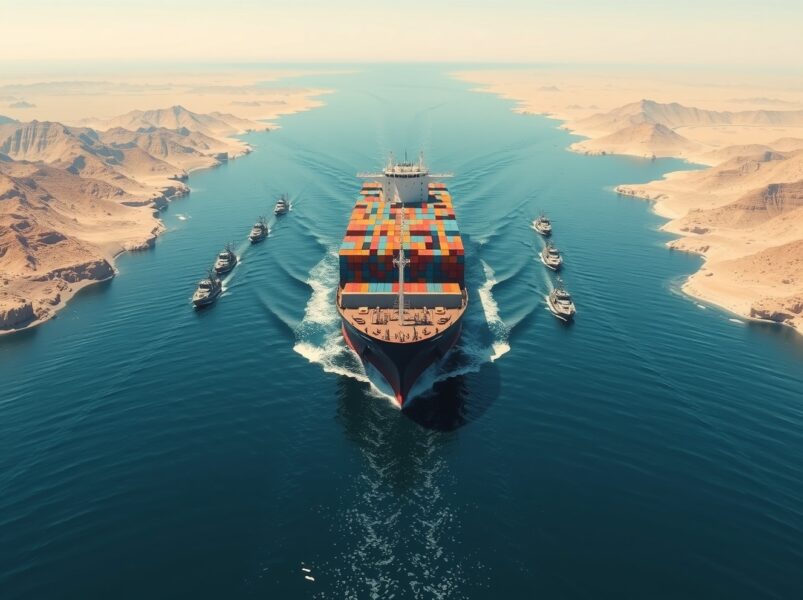
TEHRAN, Iran – The Iranian military announced today it has restored complete operational control over the Strait of Hormuz, a critical development for global energy markets and Middle Eastern security. A military spokesperson stated this decisive action responds directly to what Iran characterizes as repeated violations of commitments by the United States. Consequently, the strategic waterway now operates under strict Iranian military management, potentially affecting 20% of the world’s oil shipments.
Strait of Hormuz Control: Iran’s Strategic Announcement
Iranian military officials made their declaration during a press briefing in Tehran. They emphasized their restored authority over the maritime chokepoint. Furthermore, the spokesperson detailed enhanced monitoring and patrol protocols. The Iranian Revolutionary Guard Corps Navy now commands the primary enforcement role. Additionally, regular naval exercises will demonstrate this renewed capability. The announcement follows months of escalating regional tensions. Meanwhile, international observers monitor the situation closely.
Historically, Iran has maintained significant influence over the strait. However, today’s statement represents a formal escalation. The military specifically cited security concerns as justification. They referenced recent U.S. naval movements in the Persian Gulf. Moreover, they pointed to American sanctions against Iranian oil exports. Consequently, Iran frames its action as defensive and necessary. The timing coincides with ongoing nuclear negotiations. Therefore, analysts view this as strategic positioning.
Geopolitical Context and Historical Background
The Strait of Hormuz represents one of the world’s most vital maritime passages. Approximately 21 million barrels of oil transit daily through this narrow channel. That volume represents about one-fifth of global petroleum consumption. The waterway connects the Persian Gulf with the Gulf of Oman. It measures only 21 nautical miles at its narrowest point. Importantly, the shipping lanes fall within Iranian territorial waters.
Iran has previously threatened to close the strait during conflicts. For instance, tensions peaked during the 2019 tanker attacks. Similarly, the 2021 seizure of a South Korean tanker demonstrated Iranian capabilities. The table below outlines key historical incidents:
| Year | Incident | Impact |
|---|---|---|
| 2019 | Attacks on oil tankers | Insurance rates spiked 300% |
| 2021 | Seizure of South Korean vessel | Diplomatic crisis with Seoul |
| 2023 | U.S.-Iran naval standoff | Brief oil price increase |
International law governs transit passage through such straits. The United Nations Convention on the Law of the Sea (UNCLOS) guarantees innocent passage. However, Iran is not a signatory to UNCLOS. Instead, it follows its own interpretation of maritime law. This legal ambiguity creates persistent friction. Regional powers like Saudi Arabia and the UAE depend on free navigation. Therefore, they typically coordinate security with Western navies.
Expert Analysis: Energy Market Implications
Energy analysts immediately assessed potential market impacts. First, oil prices typically react to Hormuz disruptions. Second, shipping companies may reroute vessels. Third, insurance premiums for Gulf shipments could increase substantially. Dr. Fatima Al-Sayed, a Middle East energy security expert, provided context. “Iran’s announcement creates immediate uncertainty,” she explained. “However, actual closure remains unlikely due to mutual economic harm.”
Global energy infrastructure relies on Hormuz stability. Key facts include:
- Oil Exports: Saudi Arabia, Iraq, UAE, Kuwait, and Qatar export through Hormuz
- LNG Traffic: Qatar ships 80% of its liquefied natural gas via the strait
- Alternative Routes: Limited pipeline capacity exists bypassing Hormuz
- Strategic Reserves: IEA members hold 1.5 billion barrels for emergencies
Market reactions remained measured initially. Brent crude futures increased by 2.3% following the announcement. Meanwhile, shipping companies contacted their vessels for status updates. The International Chamber of Shipping issued a cautionary bulletin. They advised members to maintain strict compliance with Iranian authorities.
Military Capabilities and Regional Security
Iran possesses significant asymmetric naval capabilities around Hormuz. These include:
- Fast attack craft armed with missiles
- Coastal defense batteries with anti-ship missiles
- Naval mines that could be deployed rapidly
- Submarines capable of disrupting shipping
- Drone surveillance and attack systems
The U.S. Fifth Fleet maintains a permanent presence in Bahrain. It typically includes an aircraft carrier strike group. Additionally, allied nations contribute to maritime security operations. The Combined Maritime Forces coordinate patrols. However, Iranian forces exercise in the same waters regularly. This creates constant potential for miscalculation.
Regional powers responded cautiously to Iran’s announcement. Saudi Arabia increased readiness of its Eastern Fleet. The United Arab Emirates conducted emergency security consultations. Oman, which shares control of the strait, called for calm dialogue. Meanwhile, the United Kingdom deployed additional surveillance assets. These developments suggest heightened alert levels across the region.
International Reactions and Diplomatic Channels
The United States Department of Defense issued a measured response. A Pentagon spokesperson reaffirmed commitment to freedom of navigation. “We monitor all developments closely,” the statement read. “Our naval forces will continue lawful operations.” However, the statement avoided direct confrontation language. This suggests diplomatic channels remain active.
European Union foreign policy chiefs expressed concern. They emphasized the importance of unimpeded energy flows. China, a major Iranian oil customer, called for peaceful resolution. Japan and South Korea, both dependent on Middle Eastern oil, initiated contingency planning. The United Nations Secretary-General offered mediation assistance. These responses indicate broad international interest in stability.
Economic Consequences and Global Trade
Beyond energy markets, global trade faces potential disruption. The Strait of Hormuz carries approximately one-third of the world’s seaborne oil. Additionally, container ships transport goods between Asia and Europe. Any significant interruption would have cascading effects. Supply chains already strained by recent global events remain vulnerable.
Insurance markets provide early indicators of risk assessment. Lloyd’s of London immediately convened a special committee. They evaluate war risk premiums for the region. Historically, premiums have increased tenfold during crises. Shipping companies might absorb these costs initially. However, consumers ultimately pay through higher prices.
Conclusion
Iran’s declaration of restored control over the Strait of Hormuz represents a significant geopolitical development. The announcement reflects ongoing tensions between Iran and the United States. Moreover, it highlights the fragility of global energy security. While immediate disruption appears limited, the situation requires careful monitoring. International diplomacy will likely intensify behind the scenes. Ultimately, the Strait of Hormuz remains the world’s most critical oil chokepoint. Therefore, its stability concerns every nation dependent on global energy markets.
FAQs
Q1: Why is the Strait of Hormuz so important?
The Strait of Hormuz is a narrow maritime passage connecting the Persian Gulf to the open ocean. Approximately 21 million barrels of oil pass through daily, representing 20% of global petroleum consumption and 30% of seaborne traded oil.
Q2: What does “restored control” mean practically?
Iranian military forces will increase patrols, monitoring, and potentially enforcement activities within their territorial waters. Commercial shipping may face additional inspections or regulations when transiting the strait.
Q3: Can Iran completely close the Strait of Hormuz?
While Iran possesses military capabilities to disrupt shipping significantly, complete closure would be challenging and would harm Iran’s own economy. More likely scenarios involve harassment of shipping or selective interdiction.
Q4: How are other countries responding?
The United States maintains its naval presence while calling for freedom of navigation. Regional Gulf states have increased military readiness. International organizations emphasize diplomatic solutions to maintain open passage.
Q5: What happens to oil prices if shipping is disrupted?
Historical precedent suggests oil prices could increase 15-30% following significant Hormuz disruptions. However, strategic petroleum reserves and alternative shipping routes might mitigate extreme price spikes.
This post Strait of Hormuz: Iran’s Military Declares Critical Control Over Global Oil Artery first appeared on BitcoinWorld.
0
0

 Manage all your crypto, NFT and DeFi from one place
Securely connect the portfolio you’re using to start.

0
0

0
0

0
0

0
0