
Validator Client Diversity: Why One Bug Can Threaten a Network

0
0
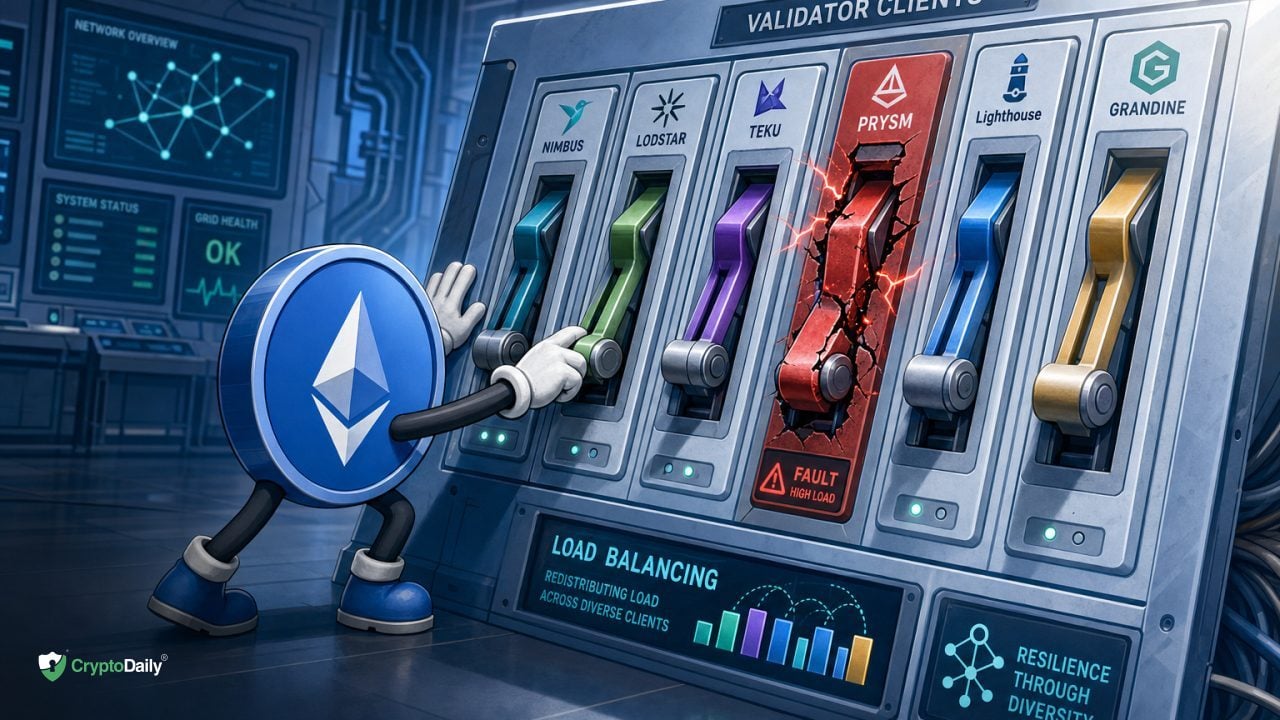
Blockchains love redundancy. Multiple nodes, multiple copies of the ledger, lots of geographic spread. But all that redundancy can be undone if everyone runs the same validator client. One subtle bug, shared by a supermajority of nodes, is enough to stall finality or split a chain.
This is why client diversity is one of the least flashy but most important pieces of network health. It’s not about ideology. It’s about basic operational risk.
If you run validators, or delegate to a staking service, the mix of clients under the hood affects your uptime and your slashing exposure. Let’s talk about how a single bug can ripple through a network and what to do about it.
Point Details Monoculture risk When one client dominates, a single bug can halt finality or cause consensus splits across a large chunk of validators. Correlated slashing Client-specific failures can trigger mass equivocations or downtime, turning one bug into many slashes. Diversity targets Researchers often aim for no single client above rough safety lines like 33%, keeping any one bug from controlling quorum. Operational playbook Run a deliberate mix, stagger upgrades, isolate faults, and test rollbacks. Document and rehearse failover. Due diligence for stakers Ask providers for client mix, upgrade cadence, and incident history. Diversify across operators and clients. Proof in incidents Past Ethereum finality issues and Solana outages show how implementation concentration magnifies software errors.
What client diversity actually means
On networks like Ethereum, there are two layers of software to care about: consensus clients that handle the beacon chain logic and attestations, and execution clients that run the EVM and process transactions. Validators pair one of each. Diversity exists on both sides.
Client diversity means lots of independent implementations securing the same network rules. Different teams, different codebases, same protocol. The ideal is that a bug in one implementation looks like a speed bump, not a pileup.
If you’re visual, clientdiversity.org is a longstanding dashboard tracking how much of Ethereum’s validator set runs each client. The simple takeaway over the years: distribution changes, but monocultures keep trying to creep back in unless operators actively fight it.
Pro tip: Ask yourself this: if the client you’re running suddenly refused to produce valid blocks for six hours, would your validators still be safe? If that question makes you sweat, you need more diversity or stronger failover.
How one bug can ripple across a network
Consensus is a numbers game. If a supermajority of validators share a client and that client misbehaves in the same way at the same time, a few things can happen:
- Finality gaps: Not enough honest votes to finalize. Liveness drops. The chain keeps proposing blocks but can’t commit.
- Consensus split: Some validators follow one view of the world, others another. You get forks. If the big cohort is wrong, you risk reorgs when it’s fixed.
- Correlated downtime: Everyone on the buggy client goes dark or stalls, missing attestations and proposals together.
- Slashing cascades: In the worst case, a client bug causes equivocation. If enough validators double-sign, many could be slashed in one wave.
That last one is why this is not just theoretical. In proof of stake, the cost of correlated failure is not evenly spread. It can become very real, very fast.
Close calls that proved the point
Medalla testnet, 2020: a preview of the risk
Before Ethereum’s proof of stake mainnet went live, the Medalla testnet hit a rough patch when a time sync issue affected many validators concentrated on a single client implementation. Participation cratered and the network struggled for hours. The takeaway was simple: monoculture is brittle. The postmortem from core researchers captured the lesson clearly on the Ethereum Foundation blog.
Beacon Chain finality gaps, May 2023
In May 2023, Ethereum saw two periods of impaired finality triggered by exceptional load and a bug that hit some consensus clients harder than others. Diversity did its job. The chain recovered as unaffected clients kept voting and teams shipped patches quickly. The Foundation summarized the episode and fixes on its blog (Ethereum Foundation).
Execution client hiccups and fast patches
Over the years, individual execution clients have shipped occasional releases that inadvertently caused nodes to stall or fall out of sync. In each case, the key factor was that no single execution client controlled everything. Operators upgraded, the network kept moving, and the bug became a footnote instead of a headline.
Solana mainnet-beta outage, February 2024
Solana experienced a multi-hour outage in early February 2024 that required validator coordination and restarts to restore service. While Solana has more than one validator client, the codebase diversity is still relatively narrow compared with Ethereum, and operational concentration amplifies the blast radius of a shared bug. You can see incident reports on the public status page (Solana Status).
Different networks, same pattern: when most of the network behaves the same way at the same time, small software issues become large system events.
How to measure client concentration risk
There’s no single magic threshold that turns a network from safe to unsafe, but operators and researchers often use rough guide rails when thinking about quorum and correlated failure.
- 33% guideline: In many PoS designs, finality needs two thirds participation. If any one client has more than one third, a bug that stalls that client could make finality impossible until it’s fixed.
- 50%+ danger zone: If a single client dominates a majority, a consensus bug can create chain splits where the majority follows an invalid view, then suffers painful reorgs later.
- Paired risk: On Ethereum, you have execution and consensus clients. It’s not enough to diversify one and ignore the other. Correlated pairs matter.
- Geography and infra: Client diversity doesn’t help if everyone runs the same cloud region or the same MEV stack. Spread those out too.
Public dashboards like clientdiversity.org make it easy to monitor big picture distribution. When a client creeps up toward one third or more, that’s a nudge for operators to rebalance.
Rules of thumb are just that. Use them as guard rails, not as guarantees. Real risk depends on code paths, bug classes, and how upgrades roll out in practice.
Operator playbook: building a resilient fleet
Pick a deliberate mix
- Run at least two consensus clients and two execution clients across your validators. Aim so no single pair controls more than a third of your active keys.
- Consider diversity in MEV components too. A single relay or builder feed adds correlated risk.
Stagger everything
- Stage upgrades through canary nodes first. Soak for a few hours before fleet rollout.
- Use maintenance windows. Don’t align rollouts across the entire fleet at once.
- Document which keys live on which client-pair so you can pause the right subset fast.
Isolate faults
- Containerize clients and keep strict resource limits. A memory leak in one client shouldn’t starve others.
- Separate network segments. Don’t let a gossip storm on one client swamp the rest of your infra.
- Run local time sync checks and alarms. Time drift can cause client-specific chaos.
Practice rollbacks
- Keep old binaries handy and documented. If the latest build misbehaves, you should be able to drop back in minutes.
- Automate health gates: halt rollout if missed attestation rate or CPU spikes cross a threshold.
Instrument and alert like you mean it
- Track per-client metrics: missed slots, attestation inclusion, peer counts, memory, disk IO, and orphaned blocks.
- Alert on divergence between client cohorts. If Client A starts missing 10 times more attestations than Client B, you’ve got smoke.
Pro tip: Keep a dry-run environment that mirrors your production mix. Rehearse a realistic client failure once a quarter. Your runbook will get sharper each time.
If you delegate: questions to ask your staking provider
Most ETH holders don’t run validators. That’s fine. But if you stake through a service or a liquid staking token, your exposure still depends on client diversity. Ask for specifics, not vibes.
- What’s your client mix? Name the consensus and execution clients and their shares. Bonus points for publishing this regularly.
- How do you handle upgrades? Canary nodes, staged rollouts, and rollback drills. Ask for examples from recent hard forks.
- What’s your slashing insurance? Is there a cap, a pool, or a policy? How does it treat correlated events?
- Do you diversify MEV paths? Which relays and builders? How do you monitor relay reliability?
- What’s your incident history? Share past downtime or client-related issues and what changed afterward.
- How do you avoid cloud monoculture? Regions, providers, bare metal vs cloud. Even the best client mix can’t save you from a single cloud region outage.
For liquid staking protocols, look for operator sets that are truly heterogeneous. A dozen operators running the same client on the same cloud is still one big correlated bet.
The incentives that actually move the needle
Everyone agrees diversity is good in theory. In practice, operators optimize for predictability and tooling, which can make the most polished client run away with market share. Incentives help realign behavior.
- Protocol nudges: Soft limits in validator churn or queue priority that favor underrepresented client pairs can rebalance risk without picking favorites.
- Attestation scoring tweaks: Research exists on giving slightly higher rewards for improving network liveness during partial failures. This is tricky, but worth exploring.
- Insurance pricing: Slashing cover that charges more for concentrated client exposure creates a cost signal operators can’t ignore.
- Transparency dashboards: Public client-mix disclosures by big staking pools keep pressure on to avoid monoculture.
None of this requires naming winners. The point is to value resilience in the places operators feel it the most: queues, yields, and insurance costs.
What institutional desks and regulators look for
In talks with institutional teams, I keep hearing the same thing: show us operational resilience like you would in any other critical system. That includes client diversity.
- Documented diversity policy: A target mix, limits per client, and clear upgrade procedures.
- Independent recovery paths: Runbooks for client-specific failures, including actions that do not rely on the failing vendor.
- Third-party audits: External reviews of node ops, not just smart contracts. SOC 2 and ISO controls that cover change management.
- Incident reporting: Plain-English postmortems with timelines and corrective actions. Don’t bury the lede.
This isn’t about box-ticking. It’s about making the case that one software defect won’t cascade into a systemic event that hits customers.
Common traps operators still fall into
- One-click comfort: Picking the client with the best docs and stopping there. Great UX is not a risk policy.
- Upgrade synchronicity: Rolling out the same new version to every validator at once. If it’s bad, you’ve just time-bombed your fleet.
- Hidden coupling: Same log aggregation, same metrics pipeline, same NTP source. A shared outage in those layers looks like a client problem and takes down multiple clients together.
- MEV monoculture: One relay. One builder. One strategy. If it fails, your block proposal quality falls off a cliff.
- Ignoring testnets: Mainnet is not a staging environment. Canary on testnets, then canary on mainnet.
Pro tip: Write down your client exit strategy. If you had to replace a client this week, exactly which keys, hosts, and pipelines change hands? If the answer is hand-wavy, fix it.
Signals that your risk is changing
- Client share drifts toward one third: If the market starts piling into a single implementation, expect correlated risk to rise.
- Rapid, complex upgrades: Feature-packed releases across multiple clients in short windows increase the chance of latent bugs.
- New MEV dynamics: Changes in builder or relay markets can create silent coupling across operators.
- Outages in adjacent stacks: CDN, DNS, or time service incidents can expose hidden common-mode dependencies.
Keep a short, living memo in your ops repo that tracks these signals and how you’re responding.
If you want more coverage on validator operations and network health, we track these themes closely at Crypto Daily. No hype, just what actually moved the needles this week.
Frequently Asked Questions
What’s the simplest definition of client diversity?
It’s running a healthy mix of independent software implementations across validators so that one codebase can’t break finality or slash a big cohort by itself.
Is 33% a hard safety number for client share?
No. It’s a rule of thumb tied to common finality thresholds. The real risk depends on the bug, the protocol, and how validators respond. Lower is generally safer.
Does client diversity matter on proof of work chains?
Yes. Multiple independent implementations reduce the chance of a bug causing consensus splits. That said, PoS adds slashing and tighter timing, which raises the stakes.
How do I diversify if my team only knows one client well?
Start small. Add a second client for a subset of validators, build tooling parity, and grow from there. The learning curve pays for itself the first time something breaks.
What about performance differences between clients?
They exist and they change over time. Measure in your environment. Diversity doesn’t mean ignoring performance, it means avoiding single points of failure.
Could protocol-level incentives fix this completely?
They can help, but they won’t replace good ops. You still need staged rollouts, monitoring, and a plan for when your favorite client has a bad day.
Is this financial advice?
No. This is operational guidance. Staking carries market, technical, and regulatory risks. Evaluate your setup carefully and consider independent audits.
Disclaimer: This article is provided for informational purposes only. It is not offered or intended to be used as legal, tax, investment, financial, or other advice.
0
0


 Manage all your crypto, NFT and DeFi from one place
Securely connect the portfolio you’re using to start.

0
0

0
0

