
Crypto Market Rally Faces New Test as Trump’s EU Tariffs Threaten Inflation Comeback

0
0

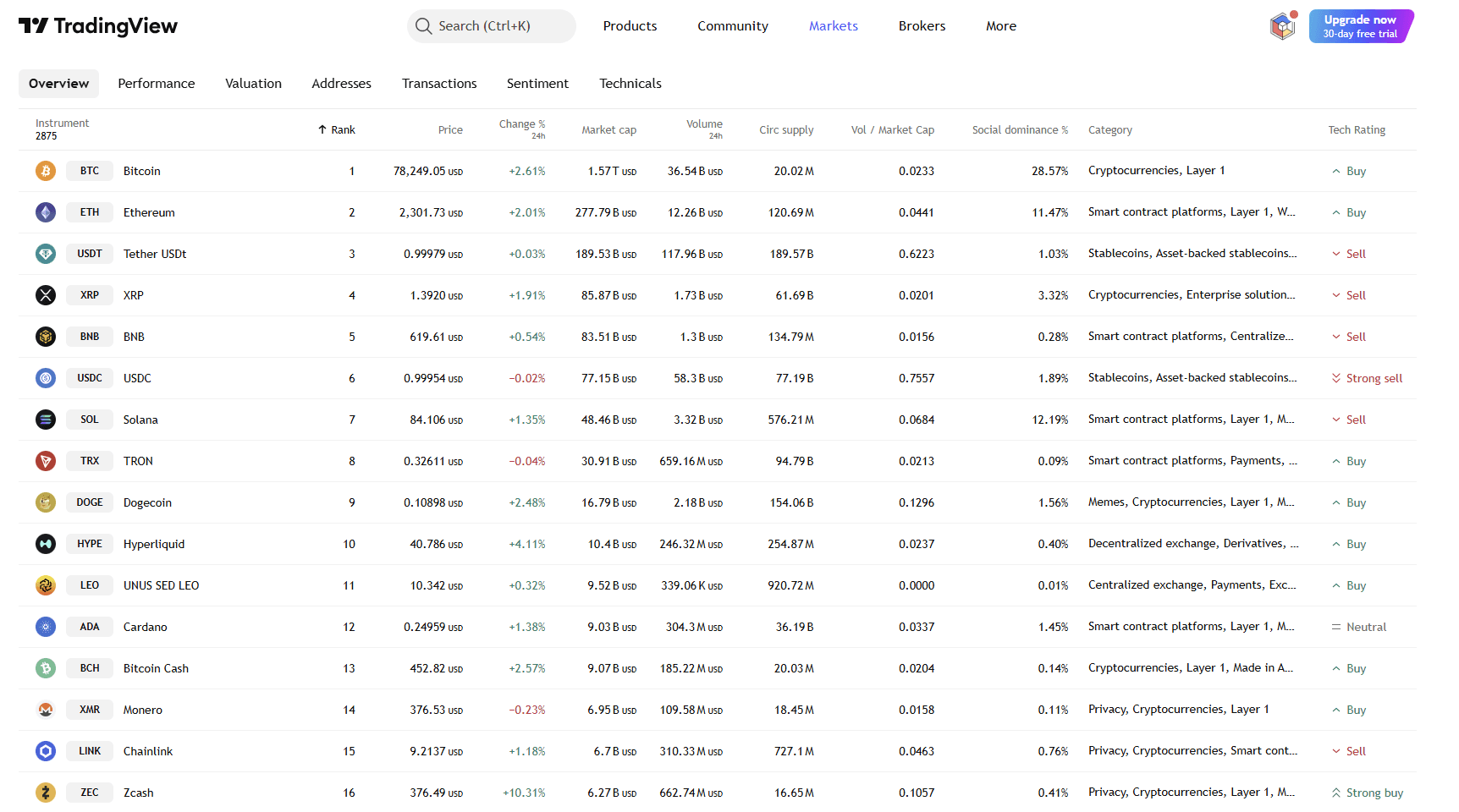
Bitcoin is once again trading in bullish territory, with the crypto market following the broader risk-on mood across global assets. Bitcoin climbed above $78,000, Ethereum moved near $2,300, and several major altcoins turned green as stocks continued to show strength. The rally came alongside strong performance in the S&P 500 and Nasdaq, both of which recently pushed into record-high territory as markets reacted positively to easing geopolitical concerns and renewed risk appetite.
But the next test for crypto may not come from the chart. It may come from Washington.
President Donald Trump announced that tariffs on European Union cars and trucks entering the United States will rise to 25% next week, arguing that the EU is not complying with a previous trade agreement. Vehicles produced by European automakers inside the United States would reportedly avoid the tariff.
For crypto traders, this matters because tariffs can quickly bring inflation fears back into the market. Bitcoin may be rallying now, but if investors start pricing in higher import costs, renewed trade tensions, and delayed Fed rate cuts, the current crypto market rally could face a serious macro test.
Why is the crypto market rallying today?
The crypto market is benefiting from a stronger risk-on environment. Bitcoin is holding above $78,000, Ethereum is trading near $2,300, and several large-cap tokens such as Dogecoin, Hyperliquid, and Bitcoin Cash are showing solid gains.
Part of this move is linked to stronger stock market momentum. When the S&P 500 and Nasdaq push higher, crypto often benefits because traders become more willing to take risk. In this environment, Bitcoin is being treated less like a defensive asset and more like a high-liquidity risk asset.
The latest U.S. manufacturing data also added to the picture. The ISM Manufacturing PMI stayed at 52.7 in April, above the 50 level that signals expansion, although it came in slightly below expectations. New orders improved, while employment weakened and prices continued rising.
That creates a mixed signal for crypto. Growth remains strong enough to support risk assets, but inflation pressure is still present. This is exactly why Trump’s tariff announcement matters.
Trump’s EU tariff threat brings inflation back into focus
The proposed 25% tariff on EU cars and trucks could become a new inflation trigger for markets. Tariffs usually increase the cost of imported goods, and if those costs are passed to consumers, inflation can become harder to control.
This is especially important now because markets have been trying to price in a more supportive macro environment. Traders want lower inflation, easier Fed policy, and stronger liquidity. But if trade tensions return, the market may start questioning whether rate cuts can arrive as quickly as expected.
For Bitcoin, this is a key point. The current rally is not happening in isolation. It is connected to liquidity expectations, stock market strength, geopolitical de-escalation, and the belief that inflation will not force the Fed to stay restrictive for longer.
If tariffs push inflation expectations higher again, crypto may lose part of that support.
Why tariffs matter for Bitcoin and crypto prices
Crypto prices are highly sensitive to liquidity. When traders believe interest rates could fall, capital usually moves faster into risk assets such as Bitcoin, Ethereum, and altcoins. When inflation rises or rate cuts look less likely, liquidity expectations weaken.
That is why tariffs can affect Bitcoin even if they are not directly related to blockchain or crypto regulation.
The link is simple:
Higher tariffs can raise import costs. Higher import costs can increase inflation pressure. Higher inflation can reduce the chance of near-term rate cuts. Fewer rate cuts can slow liquidity growth. And weaker liquidity can pressure Bitcoin and altcoins.
This does not mean the crypto rally has to stop immediately. But it does mean traders should watch whether Bitcoin can keep holding strength if the macro narrative shifts from “growth and liquidity” back to “inflation and trade war.”
Stocks are at all-time highs, but crypto faces a different test
The strong performance in U.S. stocks is currently helping Bitcoin. When equities rise, especially tech-heavy indexes like the Nasdaq, crypto often follows because both markets attract similar risk-seeking capital.
However, Bitcoin now needs to prove that it can hold above key levels even if macro uncertainty increases.
The $78,000 area is important because it now acts as a short-term confidence zone. If Bitcoin holds this level while tariff headlines grow, it would show that buyers are still in control. But if BTC loses momentum and falls back below this range, the rally could quickly turn into another failed breakout attempt.
Ethereum is also important to watch. ETH is trading near $2,300 but still looks weaker than Bitcoin. If Bitcoin dominance keeps rising while Ethereum underperforms, the market may remain concentrated in BTC rather than expanding into a broader altcoin rally.
What crypto traders should watch now
There are four key signals to monitor.
First, watch Bitcoin around the $78,000 level. A strong hold above this zone would support the bullish case, while a drop below it could signal fading momentum.
Second, watch Ethereum near $2,300. ETH needs to show strength if the market wants a broader crypto rally instead of a Bitcoin-led move only.
Third, watch tariff headlines. If the EU responds strongly or markets begin pricing in a renewed trade war, inflation fears could return quickly.
Fourth, watch Fed expectations. The most important question is whether traders still believe rate cuts are coming soon. If tariff risks delay those expectations, crypto may face pressure even while stocks remain strong.
Can the crypto market rally survive this macro test?
The crypto market still looks strong, but the rally is becoming more dependent on macro stability. Bitcoin above $78,000 is a bullish signal, especially with stocks at record highs and risk appetite improving. But Trump’s EU tariff threat adds a new layer of uncertainty at the worst possible time.
If tariffs revive inflation concerns, the market may start to question the liquidity story that helped support the latest Bitcoin move. That does not cancel the bullish setup, but it makes the next few days important.
For now, Bitcoin is still holding the line. But the real test is whether the crypto market can stay strong if inflation fears return.
$BTC, $ETH, $DOGE, $HYPE, $BCH
0
0


 Manage all your crypto, NFT and DeFi from one place
Securely connect the portfolio you’re using to start.

0
0

0
0

0
0
