
Hormuz and Bitcoin Link Means “Game Over” for XRP? This Is What Analysts Say

0
0
The Strait of Hormuz, a critical route for roughly 20% of global oil flows, is now at the center of a broader debate that goes beyond geopolitics. It has pulled Bitcoin and XRP into a real-world test of how crypto functions during conflict.
Amid a fragile ceasefire in April, reports claim Iran is demanding a toll of about $1 per barrel from tankers crossing the strait. Payments are reportedly requested in Bitcoin or yuan, adding a new layer to how sanctions and trade routes intersect.
Bitcoin Enters the World’s Most Strategic Oil Route
Bitcoin has quickly become the focal point of this narrative. According to the reports, the IRGC enforces these payments with a very short time window, making tracking difficult under Western sanctions.
For a supertanker, this could mean fees reaching up to $2 million, or roughly 281 BTC.
Still, skepticism remains. Arthur Hayes publicly questioned the claims, saying he would only believe them after seeing a verifiable on-chain transaction tied to a vessel.
Until then, he suggested it could be noise or messaging rather than reality.
So far, no public on-chain evidence confirms these payments. Even so, the narrative alone pushed Bitcoin back above $70,000.
The episode reinforces a growing view. In moments of crisis, Bitcoin acts as a neutral settlement tool that operates outside traditional financial systems.
XRP’s Case: Built for Peace, Not Crisis
At the same time, the situation has triggered debate within the XRP community. Analyst Fran de Olza argued that Bitcoin’s narrative is shifting again.
In his view, it has moved from retail payments to a store of value, and now toward large-scale settlement use cases, like those implied in Hormuz.
He pointed out that terms like “neutral settlement” and “borderless money” are now widely used, even by Bitcoin advocates.
However, he argues that XRP already occupies this space, with years of development focused on institutional payments and cross-border settlement.
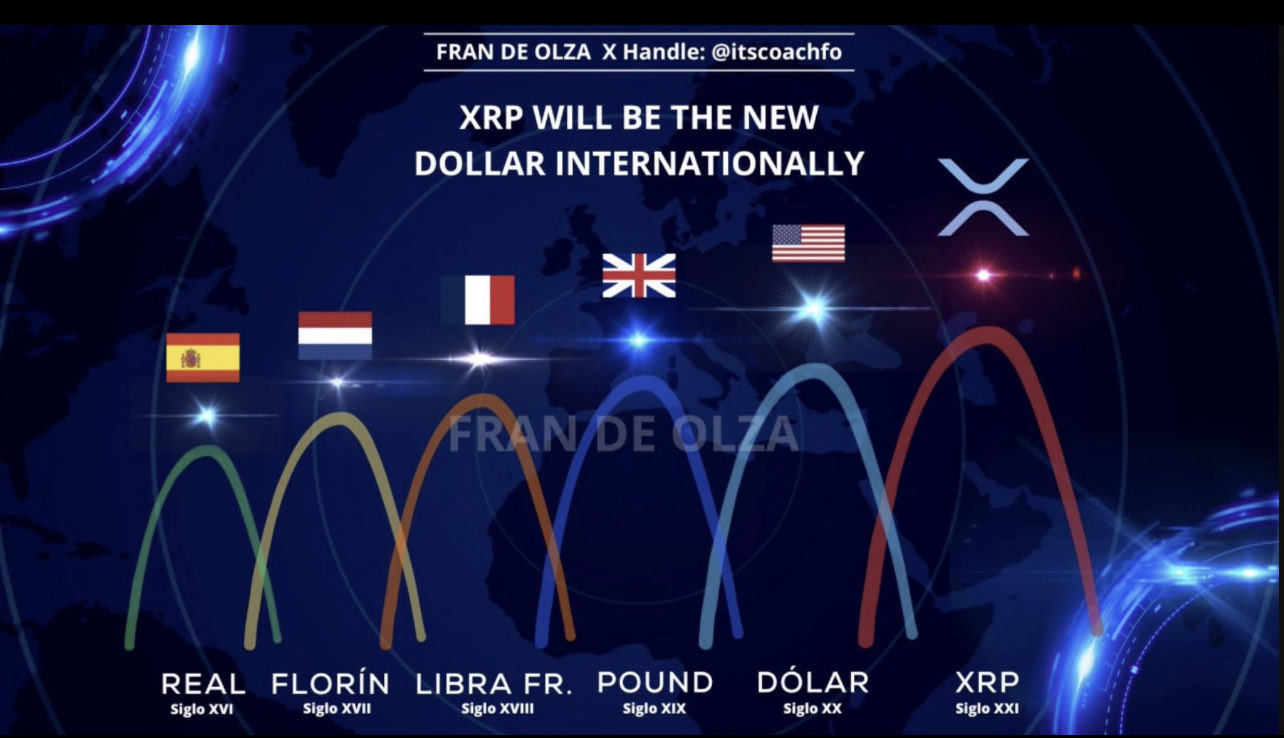 XRP could become the new benchmark dollar. Source: X/@itscoachfo
De Olza suggested that if a new global financial agreement emerges, similar to a modern Bretton Woods system, many could realize they were describing XRP’s role while assuming Bitcoin would fill it.
However, other analysts offered a more grounded view. Bitcoin’s strength in this case comes from its censorship resistance.
Iran’s priority is not efficiency but bypassing systems like SWIFT and the US dollar immediately. That makes Bitcoin useful in a sovereignty-driven scenario.
XRP, by contrast, is built for regulated financial systems operating at scale during stable periods. It focuses on institutional settlement, compliance, and integration with banking infrastructure.
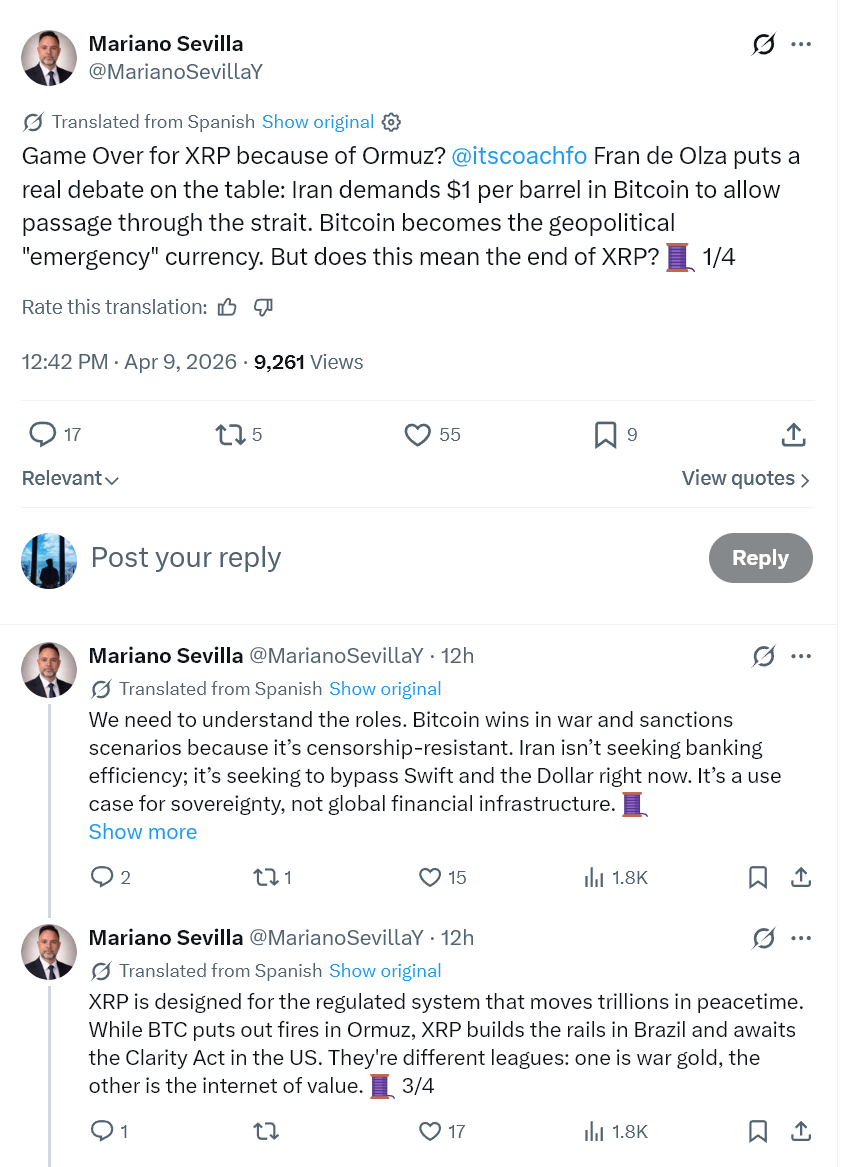 Source: X/Mariano Sevilla
Bitcoin handles urgent, high-pressure scenarios, while XRP is designed to support long-term financial rails. Both can succeed without displacing each other.
The 2026 market is increasingly multichain, with Bitcoin serving as a reserve and crisis tool, while XRP targets institutional settlement.
For now, as tankers wait and analysts debate, one point stands out. Crypto is no longer just a speculative market. It is becoming part of how power, trade, and finance operate in a fragmented global system.
0
0


 Manage all your crypto, NFT and DeFi from one place
Securely connect the portfolio you’re using to start.


0
0


0
0