
Bitcoin Demand is Contracting. Will it Lead to the Next Leg Down?

0
0

Bitcoin turned green on Monday, following a slight decline the day before. It peaked at $65,555 but faced slight rejections. Amid the selling pressure, it trades above $64,500 at the time of writing.
Nonetheless, there is growing unease about the current increases. Traders remain cautious despite the latest 2% hike. Their approach is further exacerbated by the ongoing geopolitical tension.
Towards the end of the previous week, talks between the US and Iran broke down. The trigger was the continued offensive in Lebanon. Looking back, progress was seen between June 13 and 14. It was also a contributing factor to the bullish start last Monday.
However, with tensions reaching new levels, it threatens price performance over the next few days. As the threat of escalation grows, the crypto market will likely see a notable decline over the next six days.
Nonetheless, it is worth noting that the previous week’s downtrend was largely due to the FOMC decision.
Going into the new session, investors are becoming increasingly cautious. Attesting to the growing trend, some big players are opting to stay off the market. They’ve begun moving assets into cold storage.
One report from CryptoQuant noted that between Sunday and Monday, exchange reserves reduced. Narrowing it down, between 9 and 10 UTC, a large outflow of around 11k BTC happened. Interestingly, the trend is ongoing, as a few hours ago, whales moved more assets from Binance and Coinbase Prime.
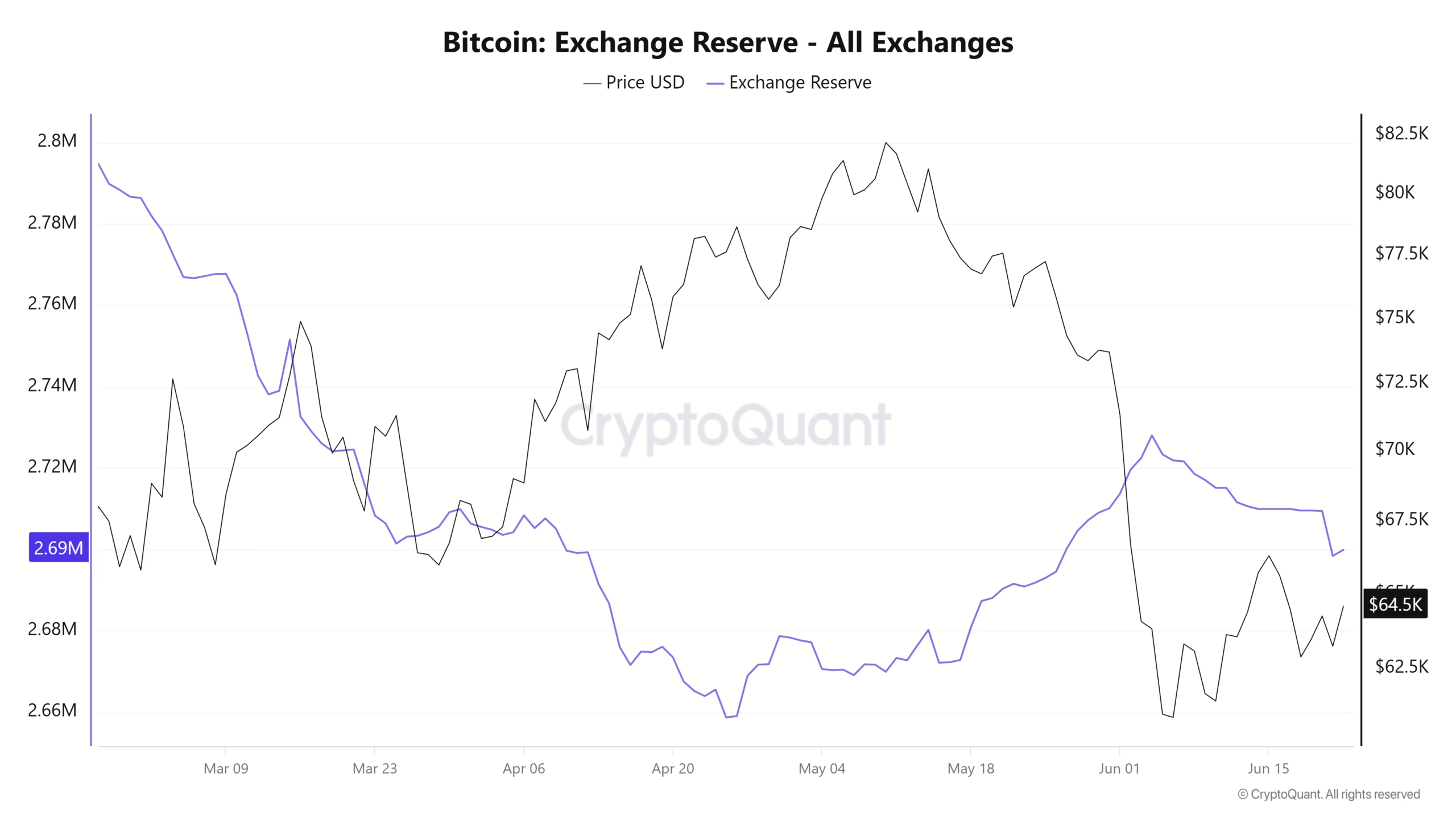
In summary, there is growing uncertainty across the market, and some actors are moving their assets from exchanges. Nonetheless, it is worth noting that when exchange reserves decline, it may indicate massive buys, and the recent price increase suggests that this may be the case.
It also shows significant volume in the spot market. However, one market that has largely contributed to the massive downtrend is ETFs.
Bitcoin Demand is Declining
Exchange reserves suggest that Bitcoin is seeing healthy demand from traders. Breaking it down shows a healthy interaction between different players in the market. For example, the crabs (holding between 0.1 and 1 BTC) are accumulating. They’ve maintained this spree for an extended period, accumulating around 20k last week.
Bitcoin also joined the frenzy, gulping down almost 19k BTC on Sunday. The whales are the top buyers, stacking up a massive 51k units. Nonetheless, the sharks and humpbacks continue to sell. Interestingly, buying volume outweighed the selling. Additionally, the selling pressure has progressively reduced over the last four days.
Focusing on the spot market paints a rosy picture. However, demand is contracting in exchange-traded funds. A big indication of this is the number of BTC held by the firms offering this product. Since May, the figure has been declining.
A closer look at actions over the last three weeks reveals one of the biggest drops. In the week starting June 1, holdings were at 1.27 million and ended the session at 1.25 million, an almost 20k change. The following week, ETF institutional reserves dropped by another 40k.
Last week, it declined once more, by 26k this time. In total, the investment funds shed almost 90k BTC in just three weeks. Interestingly, the outflow is ongoing at the time of writing. Data from SoSoValue shows that net inflow was negative $68 million on Monday.
With ETFs’ hold on the market, Bitcoin is likely to retrace lower in the coming days.
Will Bitcoin Retrace Lower?
If exchange-traded continues its massive outflow, the downtrend will continue. Away from ETFs, fundamentals are the biggest movers. The latest on talks between the US and Iran is that talks have almost completely collapsed.
The Middle Eastern country recently refuted claims it would give up its ambition to own nuclear weapons. It is worth noting that giving up this goal is core in the talks. If tensions escalate, the crypto market will experience further declines.
However, it remains to be seen if current fundamentals will lead to the next leg down. The 1-week chart provides insight into what may play out in the coming days.
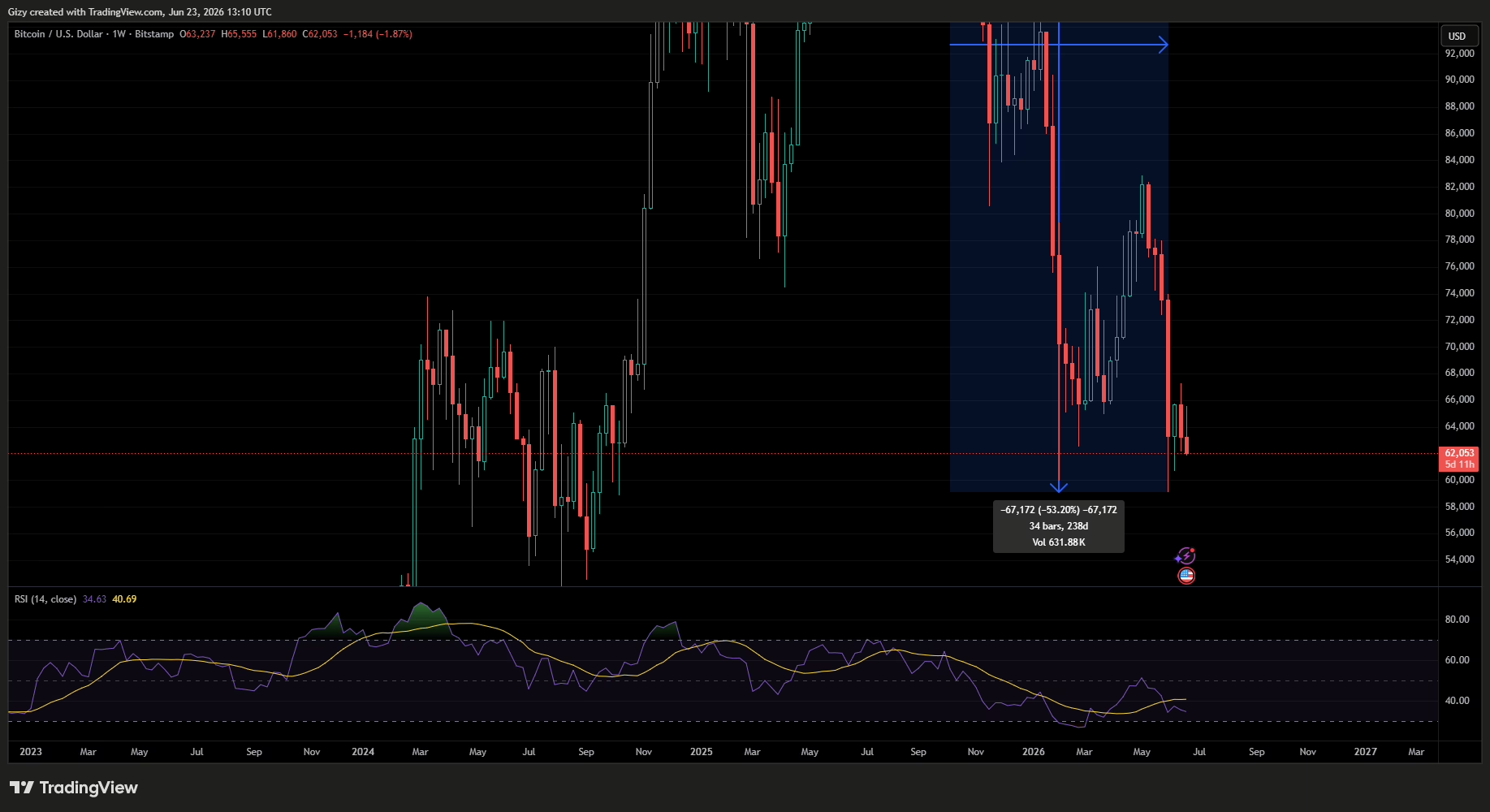
Following the February dip, the apex coin still maintained its downtrend for three weeks before a strong rally. During this period, it retraced to fill the CME gap it created the week after the initial retracement. For context, after the plummet to $59k in the second month and rebound, it retraced the next week to $65k and closed at $68k, creating an FVG.
It filled the gap and made a bigger one two weeks later. Nonetheless, investors ignored this gap, opting for rallies instead.
Prices are playing out as they did in February. Following its recent plummet to $59k and rebound three weeks ago. Bitcoin retraced to $60k the week after and rebounded, creating a fair-value gap. Its current correction brings it a few hundred dollars close to filling the FVG.
The Gap Will Be Filled In Two Weeks
If prices unfold as they did during the second month, BTC will fill the FVG within the next fourteen days. The 1-day chart shows it is trading close to short-term support. It rebounded above $62k on several occasions, indicating notable demand concentration.
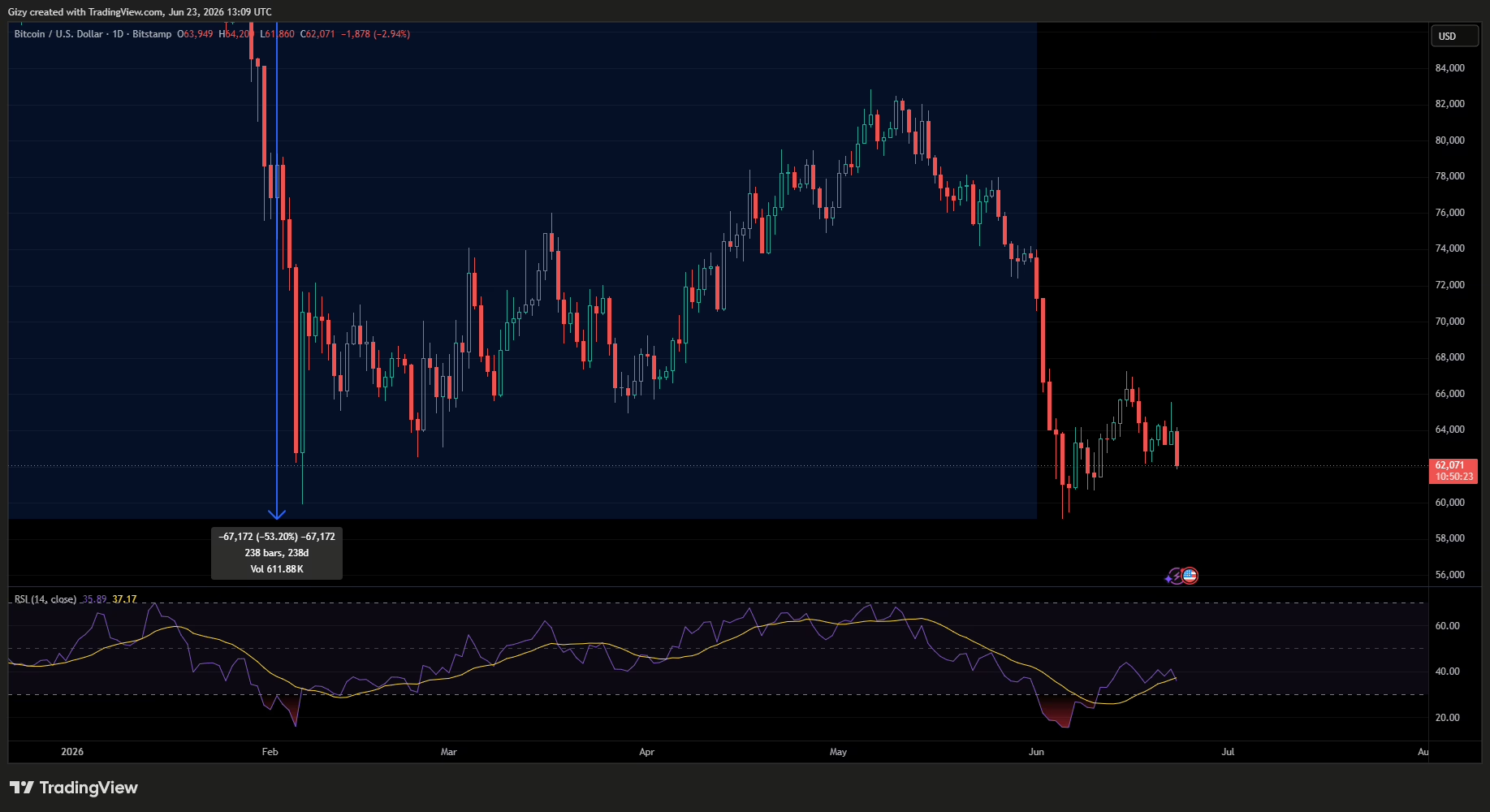
However, it briefly broke below it on Tuesday, suggesting mounting pressure. If the bulls fail to hold, it will likely retest $60,600, filling the gap.
Nonetheless, the apex coin is not guaranteed to start an uptrend. Further decline may send it as low as $59k. A rebound around this level may signal the end of the current downtrend.
In summary, ETFs are placing immense pressure on Bitcoin. There is still growing uncertainty around fundamentals, and these two catalysts may result in a new low. However, the chances of this being the next leg down are slim.
The post Bitcoin Demand is Contracting. Will it Lead to the Next Leg Down? appeared first on CoinTab News.
0
0

 Manage all your crypto, NFT and DeFi from one place
Securely connect the portfolio you’re using to start.


0
0


0
0