
Crucial Iran US Nuclear Talks Face Confusion as Delegation Plans for Islamabad Emerge

0
0
BitcoinWorld
Crucial Iran US Nuclear Talks Face Confusion as Delegation Plans for Islamabad Emerge
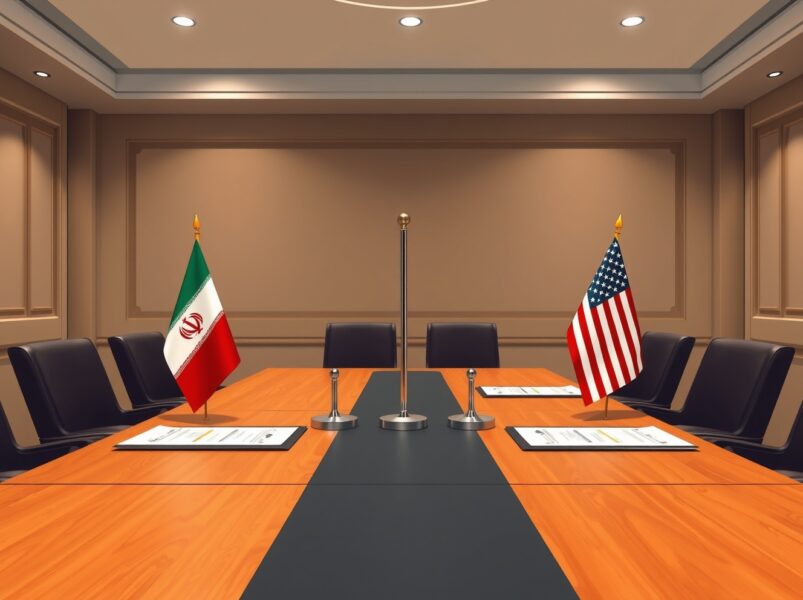
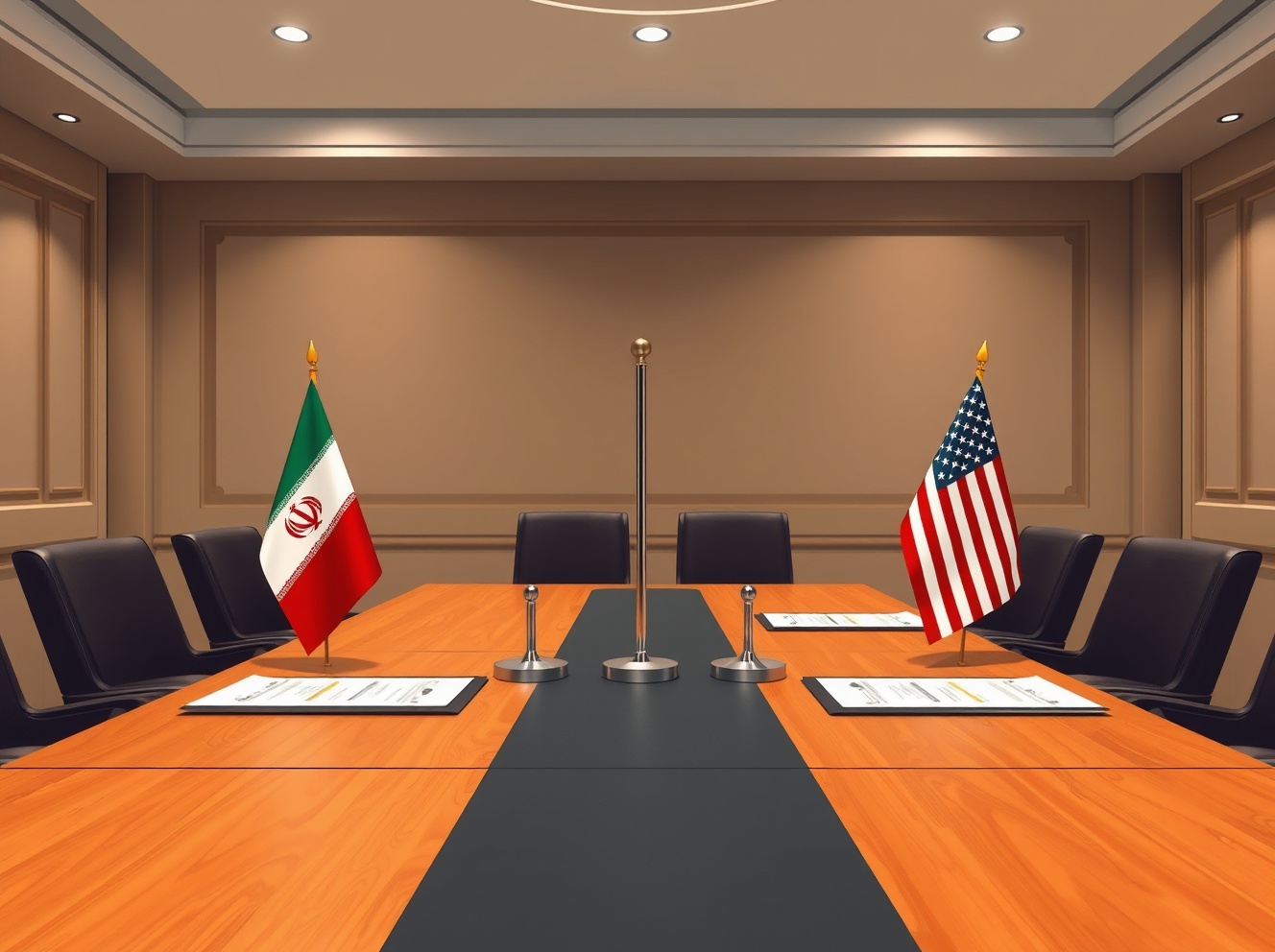
ISLAMABAD, April 22, 2025 — A critical development in the protracted diplomatic saga between Iran and the United States has emerged, as reports indicate Iran plans to send a negotiating team to Islamabad for a second round of Iran US nuclear talks. This move, however, is shrouded in official contradiction, creating a significant layer of uncertainty around the future of these high-stakes negotiations.
Conflicting Signals on Iran US Nuclear Talks
According to a report by The Wall Street Journal, citing informed sources, Iran has communicated to regional mediators its intention to dispatch a delegation to the Pakistani capital. The team’s arrival was reportedly scheduled for April 22. This development suggests a potential thaw or a strategic maneuver following the initial round of discussions. Consequently, the international community watches closely for any sign of progress.
However, the Iranian government has not formally confirmed this action. Furthermore, confusion deepened dramatically after a statement from Iranian Foreign Ministry spokesperson Baghaei. At a press conference on April 21, Baghaei explicitly stated there were no plans for a second round of negotiations in Islamabad. This direct contradiction between sourced reports and official pronouncements presents a classic puzzle in diplomatic analysis.
Historical Context of Distrust and Diplomacy
To understand the current ambiguity, one must examine the deep-seated historical context. Iranian President Pezeshkian has repeatedly articulated a profound and historical distrust of the U.S. government. He has emphasized that the Iranian people “would not bow to force,” a sentiment echoing decades of fraught relations. This backdrop of suspicion often manifests in cautious, and sometimes contradictory, diplomatic signaling.
Expert Analysis of Diplomatic Posturing
Diplomatic analysts frequently interpret such mixed messages as strategic posturing. A reported delegation move, paired with a public denial, can serve multiple purposes. Primarily, it allows Iran to test international reaction without full commitment. Additionally, it maintains domestic political cover by not appearing overly eager. This dual-track approach is a common feature in negotiations where domestic sentiment is highly charged.
The choice of Islamabad as a venue is also significant. Pakistan maintains relations with both nations and has historically positioned itself as a neutral intermediary. Key factors in this choice include:
- Geographic and Political Neutrality: Pakistan is not directly aligned with Western or Iranian blocs.
- Existing Channels: It has previously facilitated back-channel communications.
- Logistical Security: The location offers a secure environment for sensitive talks.
The Stakes: From JCPOA to Regional Stability
The original Joint Comprehensive Plan of Action (JCPOA), agreed in 2015, has been effectively dormant since the U.S. withdrawal in 2018. Subsequent attempts to revive the deal have stalled. The reported Iran US nuclear talks in Islamabad represent a new, possibly more limited, diplomatic channel. Their potential outcomes carry immense weight.
The implications extend far beyond the two primary nations. Regional stability, global non-proliferation efforts, and international energy markets are all directly impacted. A successful negotiation could de-escalate tensions in the Middle East. Conversely, a collapse could accelerate regional arms development. The table below outlines the core issues at stake:
| Issue for Iran | Issue for the United States | Regional Impact |
|---|---|---|
| Sanctions relief and economic recovery | Limiting uranium enrichment levels | Gulf security and maritime safety |
| International legitimacy and sovereignty | Robust verification and inspection mechanisms | Arms race dynamics with regional rivals |
| Guarantees against future U.S. withdrawal | Addressing regional proxy activities | Impact on global oil supply and prices |
Navigating the Path Forward in Islamabad
If the delegation proceeds, the talks in Islamabad will face immediate and substantial hurdles. The foundational distrust cited by President Pezeshkian is not merely rhetorical. It is rooted in a history of broken agreements and conflicting strategic interests. Therefore, building any semblance of mutual confidence will be the primary challenge for negotiators.
The U.S. approach will likely focus on concrete, verifiable steps to cap Iran’s nuclear program. In contrast, Iran’s central demand remains the lifting of crippling economic sanctions. Bridging this gap requires creative diplomacy and incremental confidence-building measures. The involvement of regional mediators suggests a recognition that bilateral channels alone may be insufficient.
The Role of Verification and Enforcement
Any potential agreement will live or die by its verification regime. The International Atomic Energy Agency (IAEA) would undoubtedly play a central role. However, past disputes over access to sites have been major sticking points. Designing a transparent and mutually acceptable inspection protocol is therefore a non-negotiable component of serious negotiations. Enforcement mechanisms for both nuclear compliance and sanctions relief will also be critically debated.
Conclusion
The reported plan for a second round of Iran US nuclear talks in Islamabad highlights the fragile and complex state of this decades-long dispute. The contradiction between the media report and official Iranian denial underscores the delicate political calculations on both sides. While the path to a sustainable agreement remains fraught with obstacles, the mere continuation of dialogue is a significant development. The world will watch Islamabad closely, understanding that the outcome of these discussions will resonate far beyond the conference room, shaping the geopolitical landscape of the Middle East and global security architecture for years to come.
FAQs
Q1: What is the main reason for the confusion surrounding the Iran-US talks?
The confusion stems from a contradiction between a Wall Street Journal report, citing sources, that Iran plans to send a delegation to Islamabad, and an official statement from Iran’s Foreign Ministry spokesperson denying any such plans.
Q2: Why is historical distrust a major factor in these negotiations?
Iranian leaders, including President Pezeshkian, consistently cite decades of broken agreements and adversarial relations, creating a deep-seated skepticism that makes building mutual confidence extremely difficult for any new deal.
Q3: What are Iran’s primary goals in these nuclear talks?
Iran’s core objectives are the lifting of international economic sanctions, the restoration of its ability to trade oil freely, and obtaining guarantees against the future collapse of any agreement.
Q4: What are the United States’ primary concerns?
The U.S. seeks to verifiably limit Iran’s uranium enrichment to levels unsuitable for weapons development, ensure robust international inspections, and address Iran’s support for regional proxy groups.
Q5: Why was Islamabad chosen as the reported venue for these talks?
Islamabad is seen as a neutral location. Pakistan maintains diplomatic ties with both countries and has historically acted as an intermediary, offering a secure and politically acceptable setting for sensitive discussions.
This post Crucial Iran US Nuclear Talks Face Confusion as Delegation Plans for Islamabad Emerge first appeared on BitcoinWorld.
0
0

 Manage all your crypto, NFT and DeFi from one place
Securely connect the portfolio you’re using to start.

0
0

0
0

0
0

0
0