
US Dollar Index Declines Despite Rising Safe-Haven Demand: Market Analysis

0
0
BitcoinWorld
US Dollar Index Declines Despite Rising Safe-Haven Demand: Market Analysis
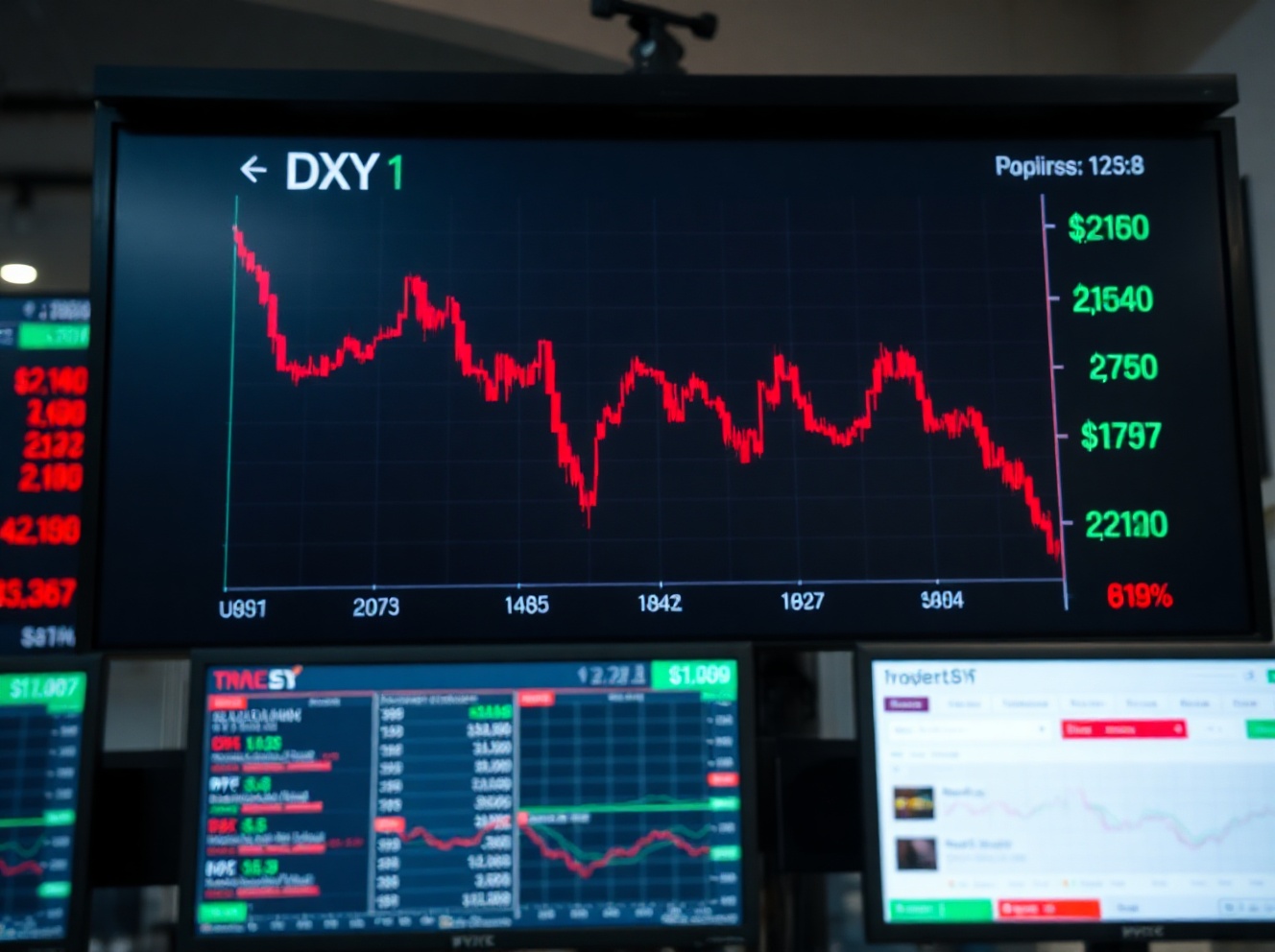
The US Dollar Index (DXY), a key measure of the greenback’s value against a basket of major currencies, has moved lower in recent trading sessions, a development that appears to defy the typical pattern of increased safe-haven demand. During periods of global economic uncertainty or market stress, the US dollar traditionally strengthens as investors seek the relative safety of the world’s primary reserve currency. The current divergence between the index’s direction and prevailing risk sentiment warrants closer examination of the underlying market dynamics.
Understanding the Divergence
The DXY’s decline comes at a time when geopolitical tensions and concerns over global growth have driven investors toward traditional safe-haven assets, including gold and government bonds. However, the dollar has not benefited from this shift as it has in previous cycles. Analysts point to several factors contributing to this unusual movement.
First, the Federal Reserve’s monetary policy trajectory has become a focal point. While the Fed has maintained a data-dependent stance, recent economic indicators, including softer employment figures and moderating inflation, have fueled speculation that the central bank may begin to ease policy sooner than previously anticipated. Lower interest rate expectations tend to reduce the dollar’s yield advantage, making it less attractive to foreign investors.
Second, the dollar’s decline is partly a story of relative performance. Other major currencies, particularly the euro and the Japanese yen, have shown unexpected strength. The euro has been supported by the European Central Bank’s commitment to maintaining restrictive policy, while the yen has benefited from intervention by Japanese authorities to stem its prolonged weakness.
Safe-Haven Demand: A Nuanced Picture
The traditional relationship between risk aversion and dollar strength has become more complex in the current environment. Safe-haven demand is not monolithic; it can flow into different assets depending on the nature of the underlying concern.
In recent weeks, investors have been rotating into gold, which has reached new all-time highs, and into government bonds, particularly US Treasuries. This flight to quality has not translated into dollar buying because the primary driver of risk aversion is not a global financial crisis, but rather concerns about US-specific fiscal sustainability and the potential for a slower domestic economy. In such a scenario, the dollar may not be perceived as the safest harbor.
Implications for Investors and the Broader Economy
The DXY’s decline has tangible consequences. A weaker dollar makes US exports more competitive on the global market, which could provide a tailwind for multinational corporations and the manufacturing sector. Conversely, it increases the cost of imported goods, which could feed into inflationary pressures at a time when the Fed is still working to bring prices under control.
For cryptocurrency markets, a declining dollar has historically been a supportive factor. Bitcoin and other digital assets have often been positioned as alternatives to fiat currencies, and a weakening dollar can enhance their appeal as a store of value. However, the relationship is not deterministic and depends on broader liquidity conditions and risk appetite.
Conclusion
The US Dollar Index’s decline amid rising safe-haven demand underscores the evolving nature of global currency markets. Traditional correlations are being tested by a unique combination of monetary policy expectations, relative economic performance, and shifting risk perceptions. For market participants, understanding these nuanced dynamics is essential for navigating the current environment. The coming weeks will be critical as investors digest upcoming economic data and central bank communications for further direction.
FAQs
Q1: What is the US Dollar Index (DXY)?
The US Dollar Index (DXY) measures the value of the US dollar relative to a basket of six major foreign currencies: the euro, Japanese yen, British pound, Canadian dollar, Swedish krona, and Swiss franc. It is a widely used benchmark for the dollar’s overall strength.
Q2: Why is the dollar declining if safe-haven demand is increasing?
Safe-haven demand is currently flowing into assets like gold and US Treasuries rather than directly into the dollar. Concerns about US-specific economic slowdown and fiscal policy have reduced the dollar’s traditional safe-haven appeal, while other currencies have strengthened on their own merits.
Q3: How does a weaker dollar affect the average consumer?
A weaker dollar can lead to higher prices for imported goods, including electronics, clothing, and oil, potentially contributing to inflation. However, it can also boost US exports, supporting domestic jobs in manufacturing and trade.
This post US Dollar Index Declines Despite Rising Safe-Haven Demand: Market Analysis first appeared on BitcoinWorld.
0
0

 Manage all your crypto, NFT and DeFi from one place
Securely connect the portfolio you’re using to start.

0
0

0
0


0
0