
Kevin Warsh Confirmation Vote: Senate Decision Reshapes Fed’s Future

0
0
BitcoinWorld
Kevin Warsh Confirmation Vote: Senate Decision Reshapes Fed’s Future
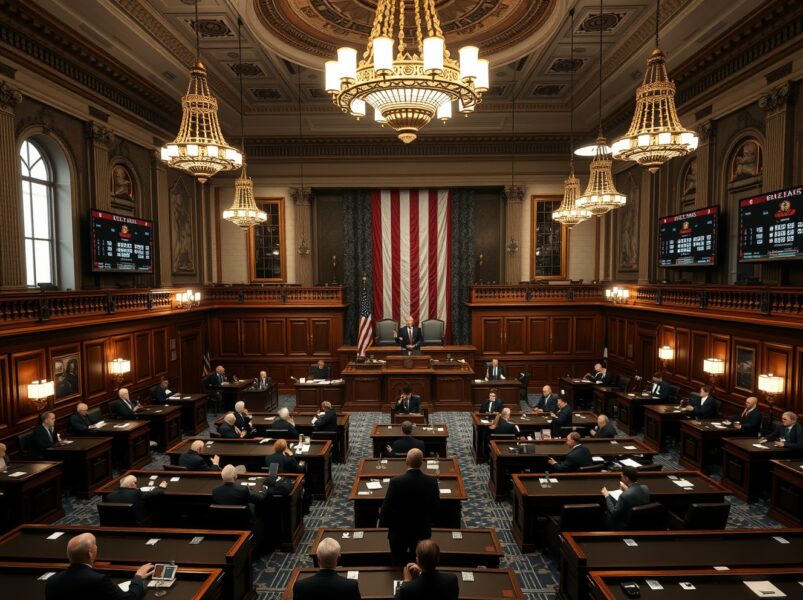
The U.S. Senate held a confirmation vote on Federal Reserve (Fed) chairman nominee Kevin Warsh on May 22, 2025, in Washington, D.C. This pivotal moment determines the future leadership of the central bank. The vote outcome carries significant weight for monetary policy, financial markets, and the broader economy.
Kevin Warsh Confirmation Vote: A Defining Moment for the Fed
The Senate confirmation vote for Kevin Warsh marks a critical juncture. Warsh, a former Fed governor, brings extensive experience to the role. His nomination follows a rigorous vetting process. Lawmakers debated his qualifications and policy views for weeks. The vote reflects deep divisions over the Fed’s direction.
Warsh served as a Fed governor from 2006 to 2011. He played a key role during the 2008 financial crisis. His experience includes navigating quantitative easing and bank bailouts. Supporters praise his crisis management skills. Critics question his stance on inflation control.
The confirmation process tested Warsh’s policy vision. He emphasized a return to data-driven decisions. He also advocated for clearer communication from the Fed. These positions resonated with some senators. Others demanded stronger commitments to price stability.
Senate Confirmation Process: Key Players and Timeline
The Senate Banking Committee advanced Warsh’s nomination on May 15, 2025. The full Senate vote followed a week later. Majority Leader Chuck Schumer scheduled the vote for May 22. The outcome required a simple majority. With a 50-50 split Senate, Vice President Kamala Harris cast the tie-breaking vote.
Key senators shaped the debate. Committee Chairman Sherrod Brown supported Warsh. Ranking Member Tim Scott also backed the nominee. Several moderate Democrats expressed concerns. They cited Warsh’s past advocacy for deregulation. Republican senators largely united behind him.
The timeline included multiple hearings. Warsh testified before the Banking Committee on May 8. He answered questions on interest rates, bank supervision, and economic outlook. His responses drew praise from some quarters. Others found them too vague.
Expert Analysis of the Confirmation Vote
Economists closely watched the vote. Many see Warsh as a steady hand. His prior tenure at the Fed earns him credibility. “Warsh understands the institution’s inner workings,” said former Fed economist Dr. Sarah Chen. “His experience could stabilize policy during uncertain times.”
Market analysts also weighed in. The confirmation vote signals continuity. Investors expect Warsh to maintain gradual rate adjustments. Bond yields moved slightly after the vote. Stock markets showed muted reactions. The overall sentiment remains cautiously optimistic.
Monetary Policy Implications of the Warsh Nomination
Warsh’s leadership could reshape monetary policy. He inherits an economy facing inflation and growth concerns. The Fed’s benchmark rate stands at 5.25%. Markets anticipate a potential cut later this year. Warsh’s views on this path remain under scrutiny.
His past statements suggest a hawkish tilt. He warned against keeping rates too low for too long. He also stressed the importance of independence from political pressure. These positions align with traditional Fed orthodoxy. They also appeal to conservative lawmakers.
Warsh faces immediate challenges. Inflation hovers above the 2% target. Labor markets remain tight. Geopolitical risks add uncertainty. His first major test will be the June Federal Open Market Committee meeting. The vote outcome shapes the agenda.
Comparison of Warsh’s Policy Views with Predecessors
| Policy Area | Kevin Warsh | Jerome Powell | Janet Yellen |
|---|---|---|---|
| Inflation targeting | Strict adherence | Flexible approach | Symmetrical target |
| Bank regulation | Reduce red tape | Moderate oversight | Strong oversight |
| Rate policy | Hawkish | Data-dependent | Accommodative |
| Communication | Clear, limited | Transparent | Forward guidance |
This table highlights key differences. Warsh’s strict inflation focus stands out. His deregulation stance contrasts with Yellen’s approach. Market participants will watch for policy shifts.
Financial Market Reactions to the Confirmation Vote
Financial markets reacted calmly to the vote. The S&P 500 rose 0.3% on the day. The Dow Jones Industrial Average gained 0.2%. Bond yields fell slightly. The 10-year Treasury yield dropped to 4.15%. These moves reflect investor confidence in a smooth transition.
Currency markets also responded. The U.S. dollar strengthened against major peers. The euro fell to $1.08. The yen weakened to 155 per dollar. Traders priced in a steady policy path. Volatility remained low across asset classes.
Sector-specific impacts emerged. Bank stocks gained on deregulation hopes. Regional banks saw particular strength. Technology stocks held steady. Energy shares slipped on oil price concerns. Overall, the confirmation vote provided clarity.
Key Market Indicators Post-Vote
- S&P 500: +0.3% to 5,320
- 10-Year Treasury Yield: 4.15%
- U.S. Dollar Index: +0.2% to 104.8
- Gold: $2,350/oz, unchanged
- Bitcoin: $67,000, +1.1%
These indicators suggest a market at ease. The focus now shifts to Warsh’s first policy moves.
Economic Impact of the Fed Chair Nominee
The Warsh confirmation vote affects real economic outcomes. Businesses await clearer policy signals. Consumers face uncertain borrowing costs. Housing markets remain sensitive to rate changes. Warsh’s leadership could influence all these areas.
Mortgage rates currently average 7.2%. A potential rate cut could lower them. This would boost homebuyer demand. Builders also watch for regulatory changes. Warsh’s deregulation stance may ease lending standards.
Small businesses seek stable financing conditions. Many rely on bank loans. Warsh’s approach to bank supervision matters. Lighter regulation could increase credit availability. Tighter oversight might constrain lending. The balance remains unclear.
Long-Term Economic Projections Under Warsh
Economists model different scenarios. A hawkish Warsh could slow growth. Inflation might fall faster. Unemployment could rise modestly. A dovish approach would support expansion. Prices might stay elevated longer. The median forecast sees GDP growth of 2.1% in 2026.
International implications also matter. Warsh’s global experience helps. He worked on G7 and G20 issues. His relationships with foreign central bankers are strong. Coordinated policy responses remain possible. Trade tensions could complicate matters.
Political Ramifications of the Senate Vote
The confirmation vote carries political weight. It tests bipartisanship in a divided Congress. Warsh secured some Democratic support. This signals potential for cross-party cooperation. It also reflects the importance of Fed independence.
President Biden nominated Warsh in March 2025. The choice surprised some observers. Warsh served under President George W. Bush. His Republican credentials raised eyebrows. Biden emphasized experience over ideology. The strategy appears to have worked.
Senate dynamics shifted during the process. Moderate Democrats faced pressure from progressives. Republicans largely stayed united. The final vote tally showed 53-47 in favor. Three Democrats crossed party lines. This outcome strengthens Warsh’s mandate.
Conclusion
The Kevin Warsh confirmation vote marks a new chapter for the Federal Reserve. His leadership promises continuity with a hawkish edge. Markets and economists await his policy decisions. The Senate’s decision provides clarity. The focus now shifts to economic outcomes. Warsh’s tenure will shape U.S. monetary policy for years to come.
FAQs
Q1: What is the Kevin Warsh confirmation vote?
The Kevin Warsh confirmation vote is the U.S. Senate’s decision to approve or reject his nomination as Federal Reserve chair. The vote took place on May 22, 2025, and resulted in his confirmation.
Q2: Why is the Fed chair nominee important?
The Fed chair nominee sets monetary policy direction. This includes interest rates, inflation control, and bank regulation. The role directly impacts the economy, markets, and consumers.
Q3: How does the Senate confirmation process work?
The Senate Banking Committee first reviews the nominee. It holds hearings and votes to advance the nomination. The full Senate then debates and votes. A simple majority confirms the nominee.
Q4: What are Kevin Warsh’s policy views?
Warsh favors strict inflation targeting and reduced bank regulation. He supports data-driven policy decisions. He also emphasizes clear communication from the Fed. His views lean hawkish compared to his predecessors.
Q5: How might Warsh’s confirmation affect interest rates?
Warsh may maintain current rates or cut them gradually. His hawkish stance suggests caution. Markets expect a potential rate cut later in 2025. The exact timing remains uncertain.
This post Kevin Warsh Confirmation Vote: Senate Decision Reshapes Fed’s Future first appeared on BitcoinWorld.
0
0

 Manage all your crypto, NFT and DeFi from one place
Securely connect the portfolio you’re using to start.

0
0


0
0

0
0