What We Added: Profit and Loss Control, New Chains and Ordinals

Published November 16, 2026 · Last updated
Three launches stand out this month: a switch that keeps a single transaction out of your profit and loss, three more chains you can connect, and two API endpoints that read what a Bitcoin wallet holds beyond its BTC balance. After those, a quick run through everything else we shipped between October 16 and November 16.
Decide which transactions count toward your profit and loss
Every transaction in a portfolio used to count toward its profit and loss, whether it belonged there or not. A transfer you logged twice, a test trade, a token someone sent you: all of them moved the number.
Open any transaction from the Transactions page and you now get an Include in Profit/Loss switch. Turn it off and the transaction stays in your history, keeps its note and still counts toward your balances, but your profit and loss figure ignores it. Turn it back on and the figure updates again.
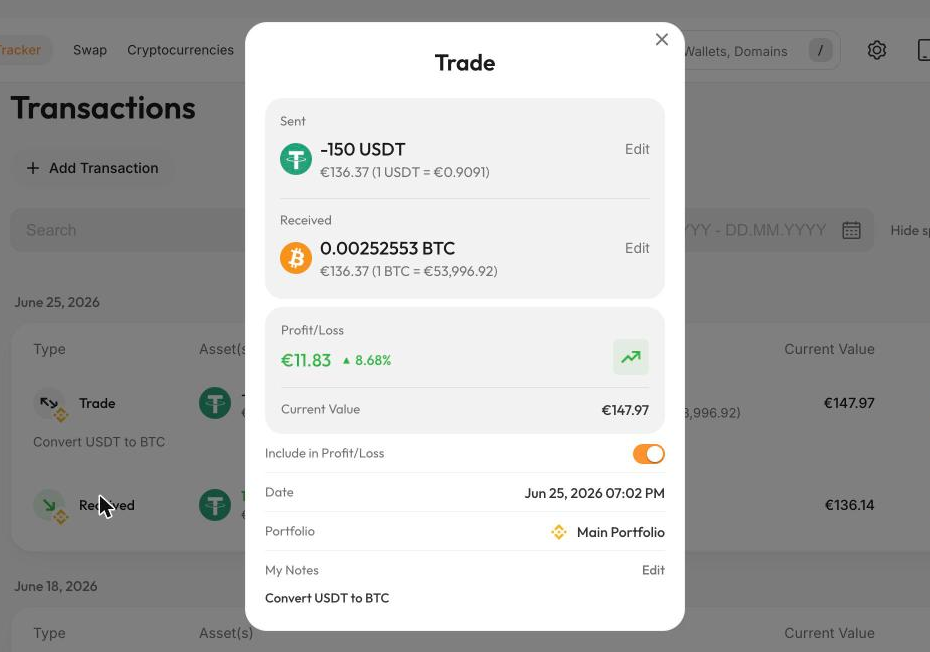
The same panel is where you edit the sent and received amounts, read what that one transaction made or lost, and write yourself a note. Open your Transactions page.
Three more chains you can connect
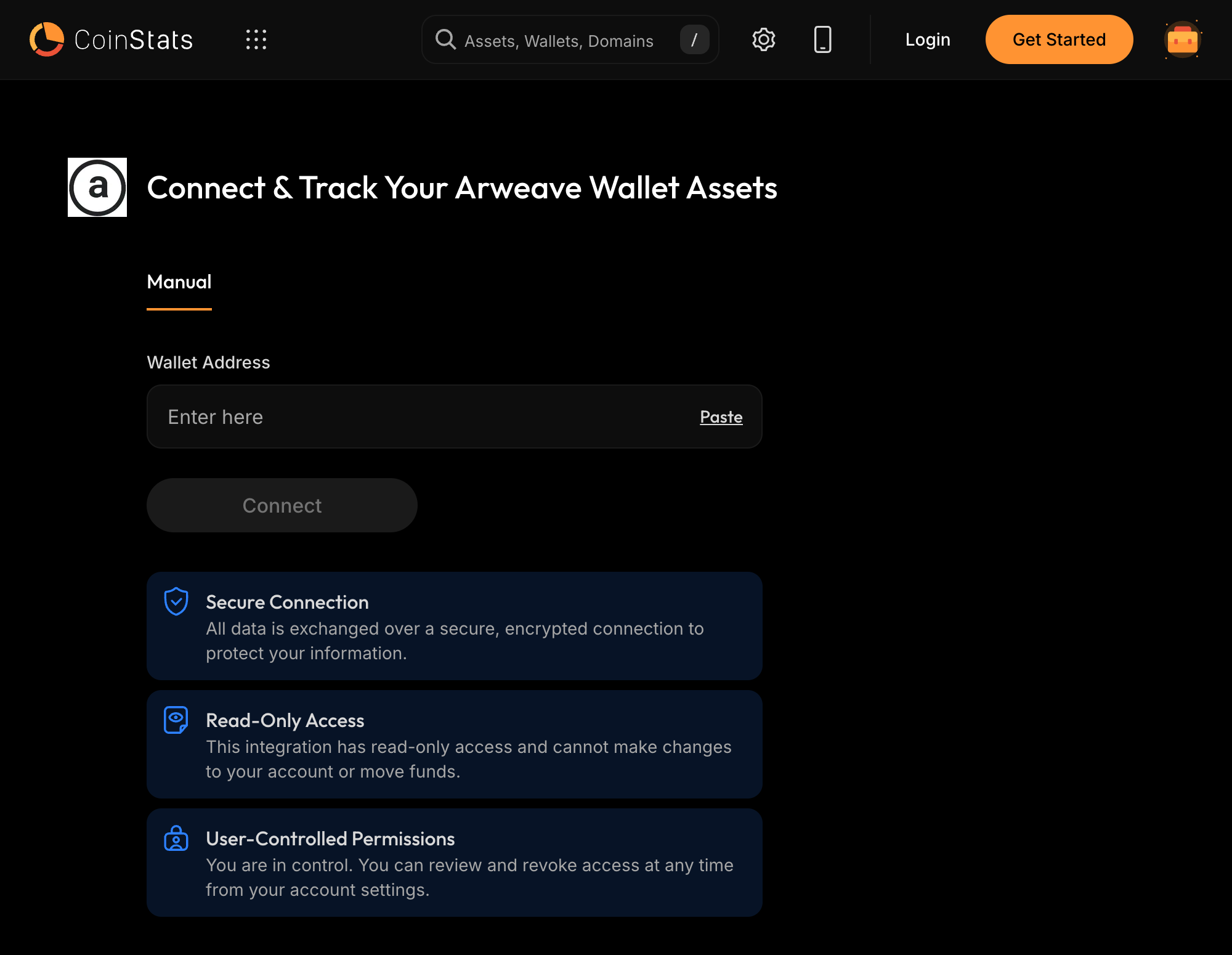
Arweave, Qubic and KCC are now wallet chains you can add to a portfolio. Paste an address and CoinStats reads the balance. Arweave and Qubic bring full transaction history too, including the network fee on sent transactions and, on Arweave, on data uploads.
Two chains already on the list went deeper. HyperEVM wallets now sync transaction history instead of balances alone, and Polkadot wallets read Asset Hub token balances alongside DOT. Two went the other way: Blast has shut down and Meter is no longer supported, so both are gone from wallet syncing and from the API.
All three new chains work on the API wallet endpoints as well. Connect an Arweave wallet, a Qubic wallet or a KCC wallet.
Read a Bitcoin wallet’s ordinals and runes from the API
If you build on the CoinStats API, a Bitcoin address now gives you more than its BTC balance. Two endpoints went live in late October.
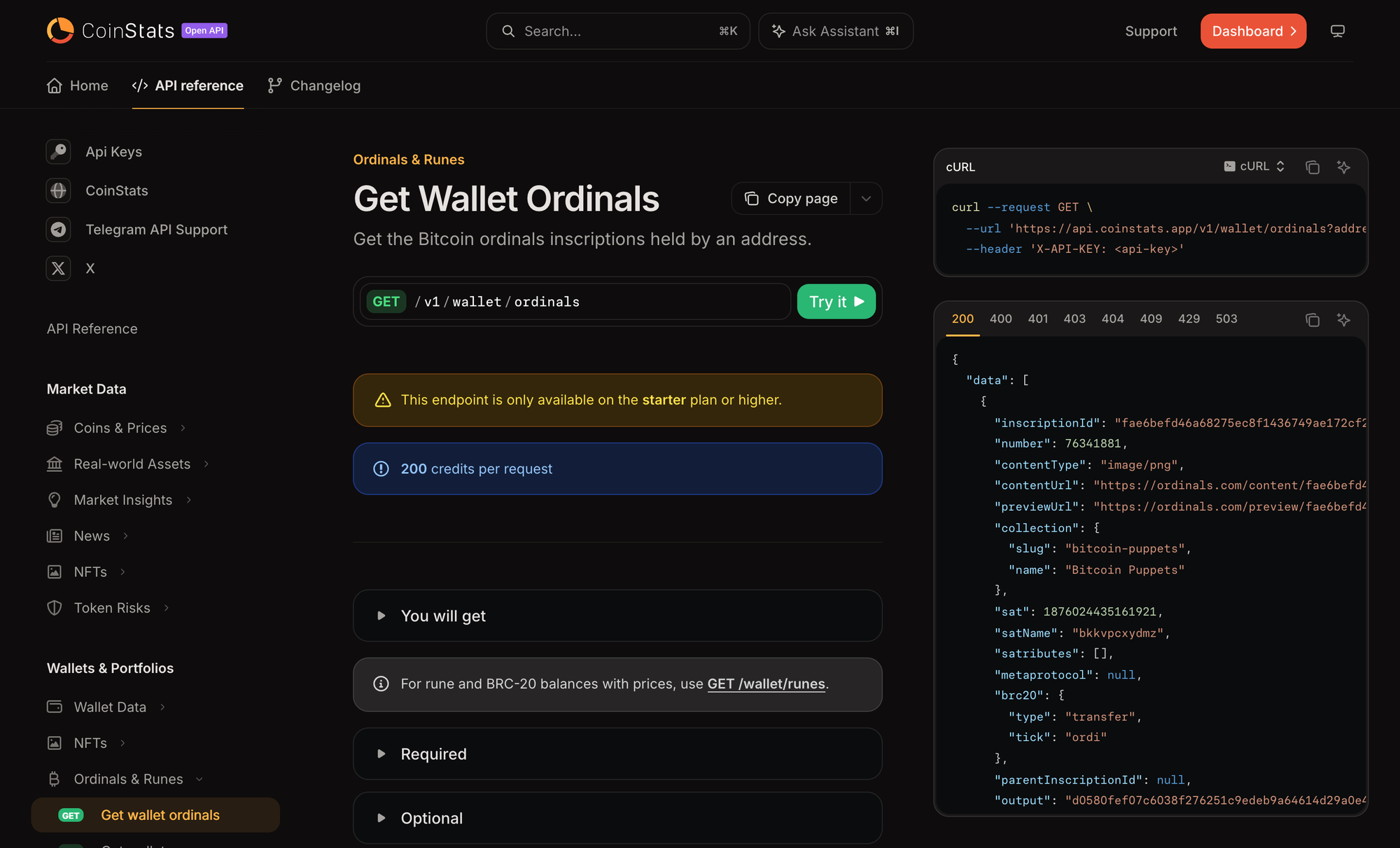
Get Wallet Ordinals returns the inscriptions an address holds, with content and preview links, the collection, the sat and its name, rare sat traits, and the output each inscription sits in. Page through them 100 at a time. Get Wallet Runes returns rune balances in whole units, priced and valued in any supported fiat currency, with the CoinStats coin id when the token is listed; runes we do not list are priced from their latest trade.
Both cost 200 credits per request and run on a Starter plan or higher. Read the Get Wallet Ordinals reference.
More from October 16 to November 16
- Spam and address poisoning: spoofed sends and look alike copies of USDC, USDT and other poisoned coins are flagged during sync, the apps hide them behind a Hide spam switch, and the API gained an excludeDetectedSpam filter and an isSpam flag.
- NFTs across 23 chains: Solana, Robinhood Chain and Ink joined the NFT endpoints, Solana collections carry floor prices from Magic Eden, and airdrop spam is flagged from each token’s own metadata.
- Perpetual positions in the API: two endpoints return your open positions and synced trade history from connected exchanges, Hyperliquid included.
- Prediction markets: Polymarket US joined as a third venue, the events endpoint took on the odds browser filters and a sort by the biggest price gap between venues, and both mobile apps picked up a Prediction Markets tab.
- Swap v5: KyberSwap routing, cross chain swaps, Solana and gasless swaps, with a chain list endpoint behind them.
- Portfolio tree: the portfolio list endpoint takes includeChildren, which nests exchange and per chain portfolios under their parent.
- Binance: Funding equity orders and conversions now import, and Portfolio Margin accounts bring their open positions with them.
- OKX: Flash Earn holdings and claimed rewards and BTC Yield+ holdings now sync, and the sign in handshake runs on your own OKX domain.
- Everstake: pooled ETH staking positions are tracked in DeFi.
- Apple Watch and widgets: both follow the display currency you picked in the app.
- Real world assets on mobile: the iOS and Android apps picked up an RWA home tab, hub and asset screens.
- Account security: wallet sign in challenges expire and can be used only once, and repeated login attempts are rate limited.
- Perpetual trade details: trade size reads as a base coin amount, and funding you paid counts toward Total Fees.