
Can the Zcash Ironwood Upgrade Purge Counterfeit Coins After 50% Crash?

0
0
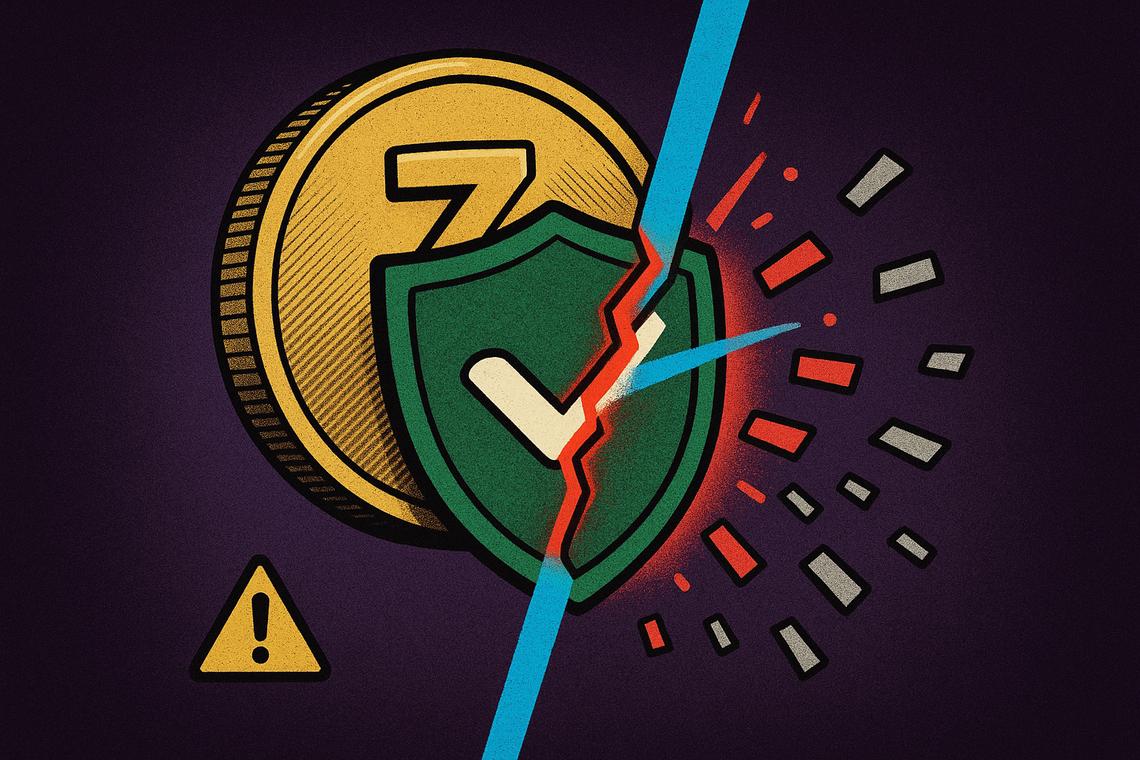
Zcash is moving fast to close a critical chapter in its security history. The Zcash Ironwood upgrade — formally known as NU6.3 — has been locked in for July 28 activation, with core developer Sean Bowe confirming the network will flip at block height 3,428,143, expected around 8 a.m. EST. The confirmation comes after weeks of technical scrambling following the discovery of a serious flaw in the network’s primary privacy layer.
Key takeaways
- The Ironwood upgrade activates on July 28, 2026 at block height 3,428,143 — one week later than initially planned.
- Ironwood replaces the Orchard shielded pool after an “infinity” bug was found that could theoretically allow unlimited counterfeit ZEC creation.
- Funds exiting Orchard must pass through an accounting checkpoint, which acts as a forensic filter for any fake coins.
- No evidence exists that the bug was ever exploited to mint counterfeit ZEC.
- ZEC dropped roughly 50% after the vulnerability went public, recovering to $492.61; separately, over 80% of the 21 million maximum supply has now been issued.
Ironwood activation: locked in for July 28
The date is set, and the stakeholders are aligned. Sean Bowe stated plainly: “All of the major organizations are committed to activation of NU6.3 at height 3428143, which is approximately July 28th at 8AM EST.” That statement settles weeks of uncertainty about whether the upgrade would proceed on schedule.
The final date represents a one-week delay from the originally planned July 21 rollout. The slip was driven largely by concerns from Shielded Labs, which flagged that exchanges, mining pools, and wallet providers were simultaneously swapping out Zcash’s long-running zcashd software in favor of the new Z3 stack — a bundle that includes Zebra, Zaino, and Zallet. Running two major transitions at once left preparation windows uncomfortably tight. Despite Shielded Labs floating the possibility of a longer delay, Bowe’s announcement made clear that July 28 stands.
Why Ironwood exists: the Orchard vulnerability explained
The Ironwood upgrade was not routine maintenance. It was conceived as a direct response to what developers called an “infinity” bug discovered inside the Orchard shielded pool — Zcash’s primary privacy-focused transaction layer. The flaw was severe in theory: it could have allowed a bad actor to mint unlimited counterfeit ZEC without detection inside the shielded environment.
Shielded Labs, which disclosed the issue, was careful to note that no evidence was found of the vulnerability being exploited. Emergency software updates were pushed before the bug became public knowledge. Developers first disabled Orchard transactions entirely through a temporary network patch, then activated the NU6.2 hard fork on June 3 to fix the underlying code and restore pool functionality.
But fixing the bug wasn’t enough. The deeper problem was the uncertainty it left behind. Even with no proof of exploitation, the possibility that counterfeit coins could exist inside Orchard — silently, undetectably — was not something the network could simply declare resolved and move on from. Ironwood is the mechanism designed to answer that question definitively.
The accounting checkpoint: a forensic filter for fake coins
The technical heart of the Ironwood upgrade is an accounting checkpoint embedded into the fund migration process. Under the new protocol, any ZEC leaving the Orchard pool must pass through this checkpoint before entering the newly created private pool that Ironwood establishes. The checkpoint is designed to expose discrepancies — if counterfeit ZEC was ever created, moving it would trigger detection.
The consequence of this design is deliberately asymmetric. Any hypothetical counterfeiter faces an unpleasant choice: attempt to migrate fake coins and risk exposing them, or leave them permanently stranded in a pool that will no longer accept new activity. Either way, the network comes out cleaner. What makes this elegant from a security standpoint is that it transforms the migration itself into a verification process — every user who moves funds is, in effect, participating in a distributed audit.
Market impact: ZEC’s sharp drop and partial recovery
The vulnerability disclosure hit ZEC hard. When the Orchard bug became public on June 3 — the same day as the NU6.2 hard fork — ZEC fell approximately 50%, sliding from $602.68 to $299.25. For a privacy-focused coin where the integrity of the shielded pool is essentially the entire value proposition, the reaction was predictable.
Since then, the token has recovered a meaningful portion of those losses, trading back up to $492.61 at the time of writing. That partial recovery reflects a market willing to give Zcash credit for how it handled the crisis — rapid response, transparent disclosure, and a concrete technical plan. Whether the Ironwood activation itself becomes a catalyst for further recovery or a sell-the-news event remains an open question for traders watching the July 28 block.
A supply milestone arrives alongside the upgrade
Separately, Zcash crossed a notable threshold this week that has nothing to do with the bug but underlines the network’s maturity. According to a post by community account ruZCASH on July 6, the circulating supply reached 16,806,723 ZEC — meaning more than 80% of the cryptocurrency’s 21 million maximum supply has now been issued. The milestone drew little attention at the time, with ruZCASH noting they may have been the first to flag it publicly.
The timing is worth noting. A network crossing 80% of its total issuance is entering scarcity territory — a structural factor that tends to matter more over longer time horizons than near-term price action. Combined with the Ironwood upgrade addressing the network’s most significant security incident to date, July 2026 looks like a defining month for the project regardless of how markets respond in the short term.
FAQ
When is the Ironwood upgrade for Zcash scheduled to activate?
The Ironwood upgrade is scheduled to activate on July 28, 2026, at block height 3,428,143, expected around 8 a.m. EST.
What is the purpose of the Ironwood upgrade?
The Ironwood upgrade replaces the Orchard shielded pool to address a counterfeit token vulnerability. It introduces an accounting checkpoint that any funds leaving Orchard must pass through, designed to detect whether any fake ZEC was ever created through the earlier bug.
Was the Orchard bug exploited to create counterfeit ZEC?
No evidence has been found that the Orchard bug was exploited to create counterfeit ZEC. The flaw was addressed through emergency updates and the NU6.2 hard fork on June 3 before it became public.
How did the ZEC price react to the vulnerability disclosure?
ZEC fell approximately 50% after the public disclosure on June 3, dropping from $602.68 to $299.25. The token has since partially recovered, trading back up to $492.61.
Article produced with the assistance of artificial intelligence and reviewed by the editorial team.
0
0

 Manage all your crypto, NFT and DeFi from one place
Securely connect the portfolio you’re using to start.

0
0

0
0

0
0

0
0