
Kalshi Identifies Three Insider Trading Incidents in Prediction Markets

0
0
The evolving landscape of prediction markets has taken a sharp turn in 2026 as scrutiny intensifies around election-linked trading activity. The Kalshi political insider trading situation has emerged as one of the most discussed regulatory flashpoints of the year. A recent internal review uncovered that multiple political candidates allegedly placed bets on their own electoral outcomes, raising serious concerns about fairness and market integrity.
The Kalshi political insider trading case has quickly become a reference point in debates over prediction market insider trading and crypto prediction markets regulation, especially as lawmakers question whether such platforms can fully prevent manipulation in politically sensitive markets.
Kalshi Suspends Candidates After Self-Betting Discovery
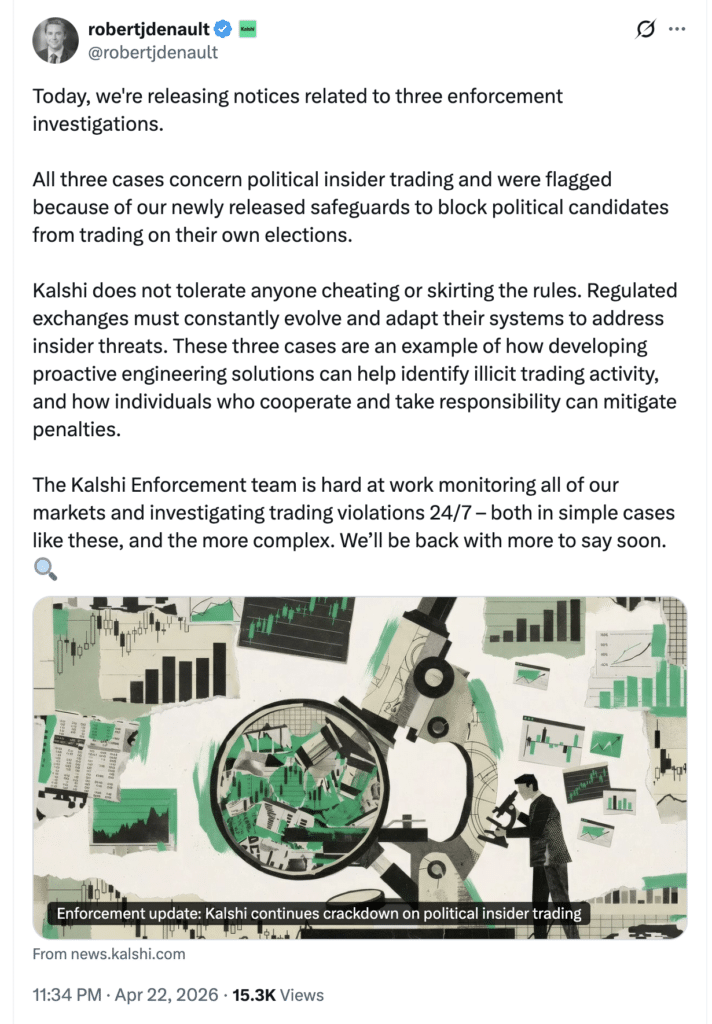
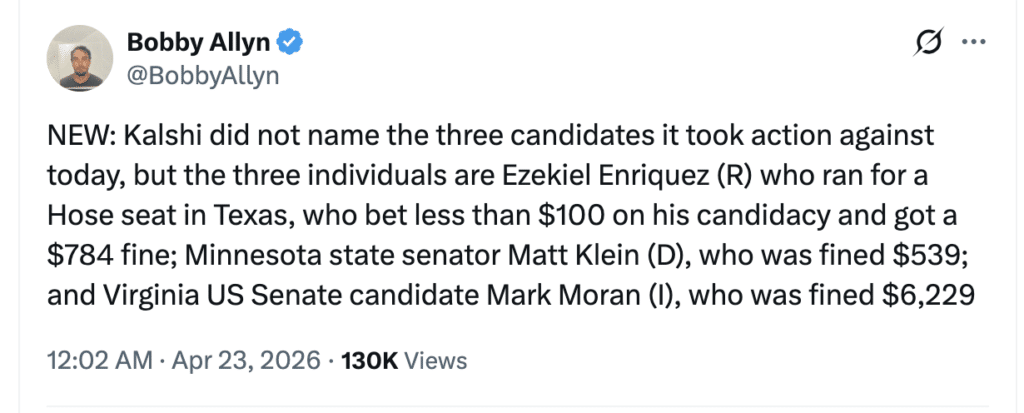
The first wave of action in the Kalshi political insider trading situation involved the suspension of three political candidates after the platform identified trades linked directly to their own election races. The company stated that these actions violated internal exchange rules, which strictly prohibit participants from trading on markets where they hold direct influence.
This incident is now widely referenced as one of the most visible Kalshi insider trading cases in 2026. The suspensions highlight growing concerns around political betting controversy 2026, especially as prediction platforms expand deeper into real-world electoral forecasting markets.
Internal Review Confirms Election Race Violations
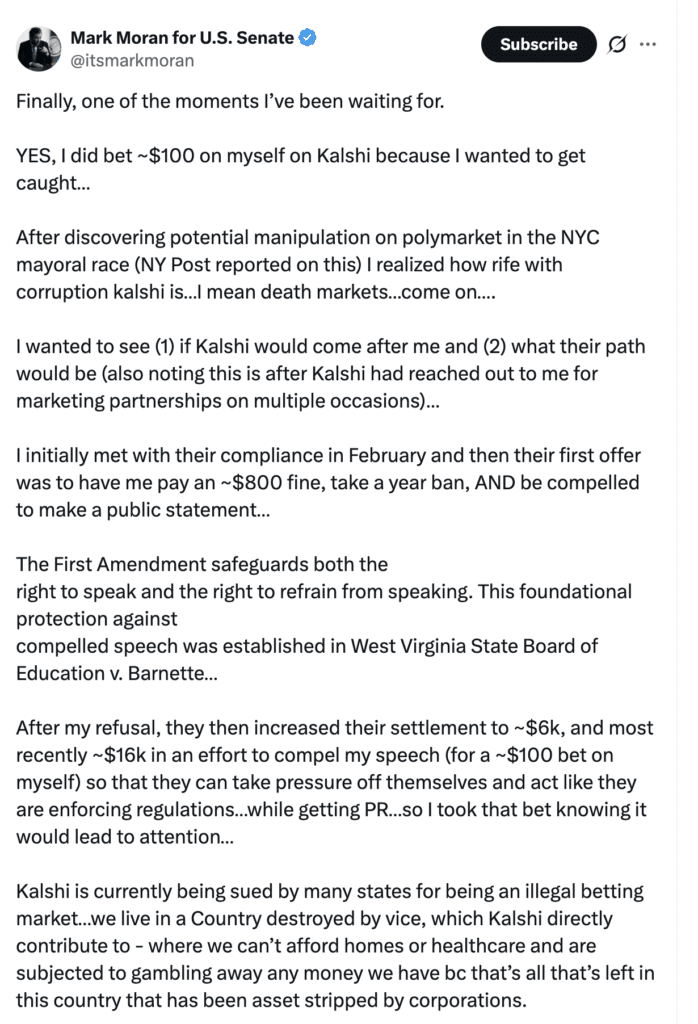
A deeper internal investigation confirmed that the candidates had engaged in self-directed betting behavior, escalating the Kalshi political insider trading narrative into a broader compliance issue. Among the individuals involved, Mark Moran reportedly admitted to placing a bet on his own race, framing it as a minor action, though still a clear breach of platform rules.
This development intensified debate over election betting rules violation standards and raised questions such as can politicians bet on their own elections without triggering regulatory consequences. The Kalshi political insider trading findings demonstrate how even small trades can create major integrity concerns in insider trading in prediction markets.
Pressure Builds on Prediction Market Regulation
The Kalshi political insider trading controversy has placed prediction markets under increased regulatory pressure in 2026. Lawmakers and financial analysts are now questioning whether current frameworks are sufficient to manage politically sensitive contracts. The incident has become a case study in US election betting scandal explained, as it highlights vulnerabilities in platforms that blend financial trading with electoral forecasting.
Critics argue that the rise of political market manipulation risks undermining trust in decentralized forecasting systems. At the same time, supporters of prediction markets emphasize their transparency, noting that improved safeguards could address many of these concerns without restricting innovation.
CFTC-Approved Rules and Exchange Breach Concerns
According to the platform, the actions involved in the Kalshi political insider trading case violated exchange rules that had been approved under Commodity Futures Trading Commission oversight. This has intensified discussion around crypto prediction markets regulation, especially since Kalshi operates under a regulated framework rather than an unregulated crypto exchange model.
The company described the behavior as “political insider trading,” reinforcing the seriousness of the breach. Despite the relatively small size of the wagers, the enforcement action signals a strict stance under the Kalshi safeguards update, demonstrating how seriously compliance is treated in modern prediction platforms.
Disciplinary Action Without Federal Referral
In a notable outcome, the Kalshi political insider trading enforcement did not lead to referrals to the Commodity Futures Trading Commission or the Department of Justice. Instead, the platform opted for internal disciplinary measures, including suspensions and trading bans. Kalshi stated that while the behavior violated platform rules, the scale of activity did not warrant escalation to federal enforcement agencies.
This approach raises broader questions about how prediction markets prevent insider trading and whether internal governance is sufficient in cases involving Kalshi candidates banned from participating due to rule breaches. The situation continues to shape discussions on future Kalshi enforcement update insider trading cases.
Conclusion
The Kalshi political insider trading situation in 2026 highlights the growing tension between innovation in prediction markets and the need for strict compliance systems. As platforms expand into politically sensitive territories, the risk of US political betting scandal explained scenarios increases significantly.
The case demonstrates that even small violations can trigger major enforcement responses, reinforcing the importance of robust monitoring systems and transparent rules. Moving forward, market participants and regulators will likely continue evaluating the impact of insider trading in prediction markets, shaping the next phase of Kalshi safeguards insider trading crackdown efforts.
Appendix: Glossary of Key Terms
Prediction Market: A platform for trading outcomes of real-world events like elections.
Kalshi Political Insider Trading: Cases where election participants allegedly traded on their own races.
Election Betting Rules Violation: Breaking rules by betting on markets with direct personal influence.
Insider Trading in Prediction Markets: Using non-public information to gain unfair trading advantage.
Crypto Prediction Markets Regulation: Laws governing digital event-based trading platforms.
Political Betting Controversy 2026: Debates over fairness and manipulation in election betting markets.
Frequently Asked Questions About Kalshi Political Insider Trading
What is Kalshi political insider trading?
It refers to cases where participants allegedly used their position or knowledge to trade on election outcomes in violation of platform rules.
Why were candidates banned from Kalshi platform?
Candidates were banned due to violations involving self-directed election betting, which breaches exchange integrity policies.
How does Kalshi prevent insider trading?
The platform uses internal monitoring systems, compliance checks, and enforcement actions under its updated safeguards.
Are politicians allowed to bet on their own elections?
No, such activity is prohibited under prediction market rules due to conflict-of-interest concerns.
References
Read More: Kalshi Identifies Three Insider Trading Incidents in Prediction Markets">Kalshi Identifies Three Insider Trading Incidents in Prediction Markets
0
0

 Manage all your crypto, NFT and DeFi from one place
Securely connect the portfolio you’re using to start.

0
0


0
0