
FT: Last Gulf LNG Tankers Have Left and Flow Stops Completely in 10 Days

0
0
The LNG supply crisis is about to hit a more visible phase. The last cargoes that left the Gulf before the Strait of Hormuz closed are still on water. But this is not for too long. Once they are delivered over the next 10 days, supply from the region effectively stops. For markets already reacting to the Iran war energy disruption, this is when the real shortage will begin to show.
Also Read: Gold Price Crash: Worst Week in Decades, Safe Haven Demand Falls
Pakistan Will Run Dry by the End of the Month as Asian LNG Prices Double to $23
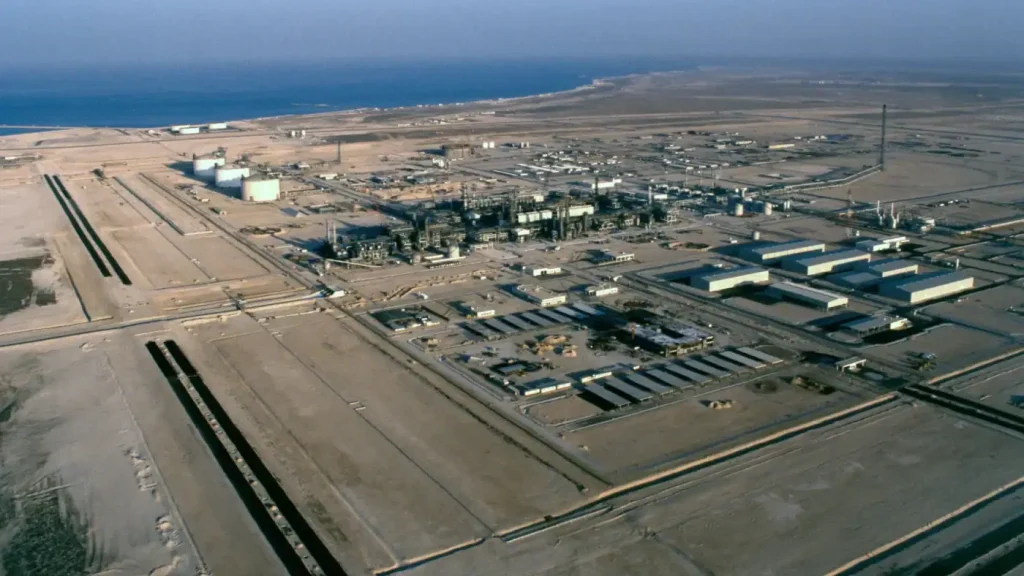
A report by the Financial Times notes that the final batch of LNG cargoes that left the Gulf. This was before the closure of the Strait. After this delivery, supply from the region is expected to halt completely. Qatar’s Ras Laffan accounts for roughly 20% of global LNG supply. It has suspended exports following damage to its Ras Laffan facility.
For now, earlier shipments are still cushioning the blow. But prices are already reacting. Asian LNG benchmarks have climbed to about $23 per MMBtu. This is double what they were before the conflict, according to reports. Oil markets have seen similar volatility due to the rising tensions.
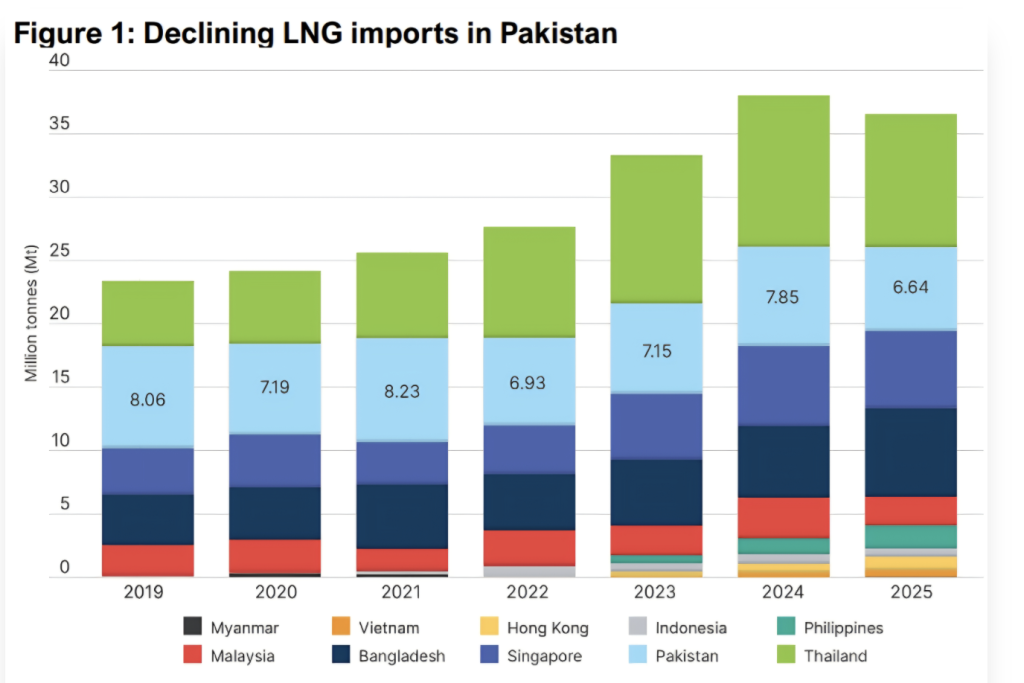
Pakistan is among the most exposed to the Gulf LNG shortage. The country reportedly sourced about 99% of its imports from Qatar’s LNG supply last year. The country’s two import terminals have notably reduced operations. Industry officials say gas dispatch will likely stop entirely by the end of the month. In addition, they haven’t been able to secure alternative cargoes due to high spot prices.
It should be noted that Pakistan’s situation was already fragile. The country entered 2026 with excess LNG after demand weakened. This was partly due to high prices and rising solar adoption. Amidst this, surplus cargoes have to be pushed out or resold. This exposed cracks in how its supply deals were structured.
Also Read: Morgan Stanley $1T Hides a 401k Recession Risk
How Is The Rest of Asia Adjusting?
Other Asian buyers were also in trouble, but they were making changes. Bangladesh introduced rationing measures. This includes the temporary closures of universities. Taiwan has secured enough cargoes to last through April. But officials have warned that summer demand could tighten the situation again.
In larger markets, the response has been more flexible. China and Japan are expected to pick some spot LNG cargoes to cover the shortfall. But buying has been cautious. Both countries are leaning more on coal, while Japan is also increasing nuclear output. Its exposure to the Gulf supply is relatively limited. Only a small share of imports passes through the Strait of Hormuz.
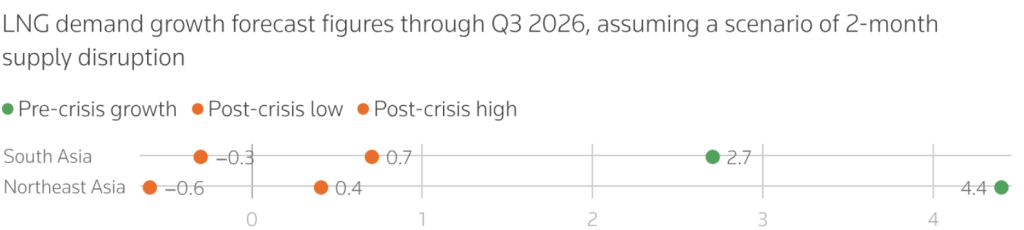
The shift is already showing up in demand. Earlier expectations of steady LNG growth across Asia are being dialed down. This is because utilities are cutting usage and inclining toward other fuels.
Even if shipments resume, the supply picture may not ease quickly. Qatar’s energy minister, Saad Al-Kaabi, said about 17% of the country’s LNG capacity could remain offline for three to five years following damage to Ras Laffan. He added,
“This means that we will be compelled to declare force majeure for up to five years on some long-term LNG contracts.”
Also Read: Gold Price Crash Below $4,500: Key Technical Levels to Watch
0
0


 Manage all your crypto, NFT and DeFi from one place
Securely connect the portfolio you’re using to start.

0
0

0
0

0
0

0
0