
Gasless Stablecoin Transfers: How to Send USDT Without Holding TRX in 2026

0
0
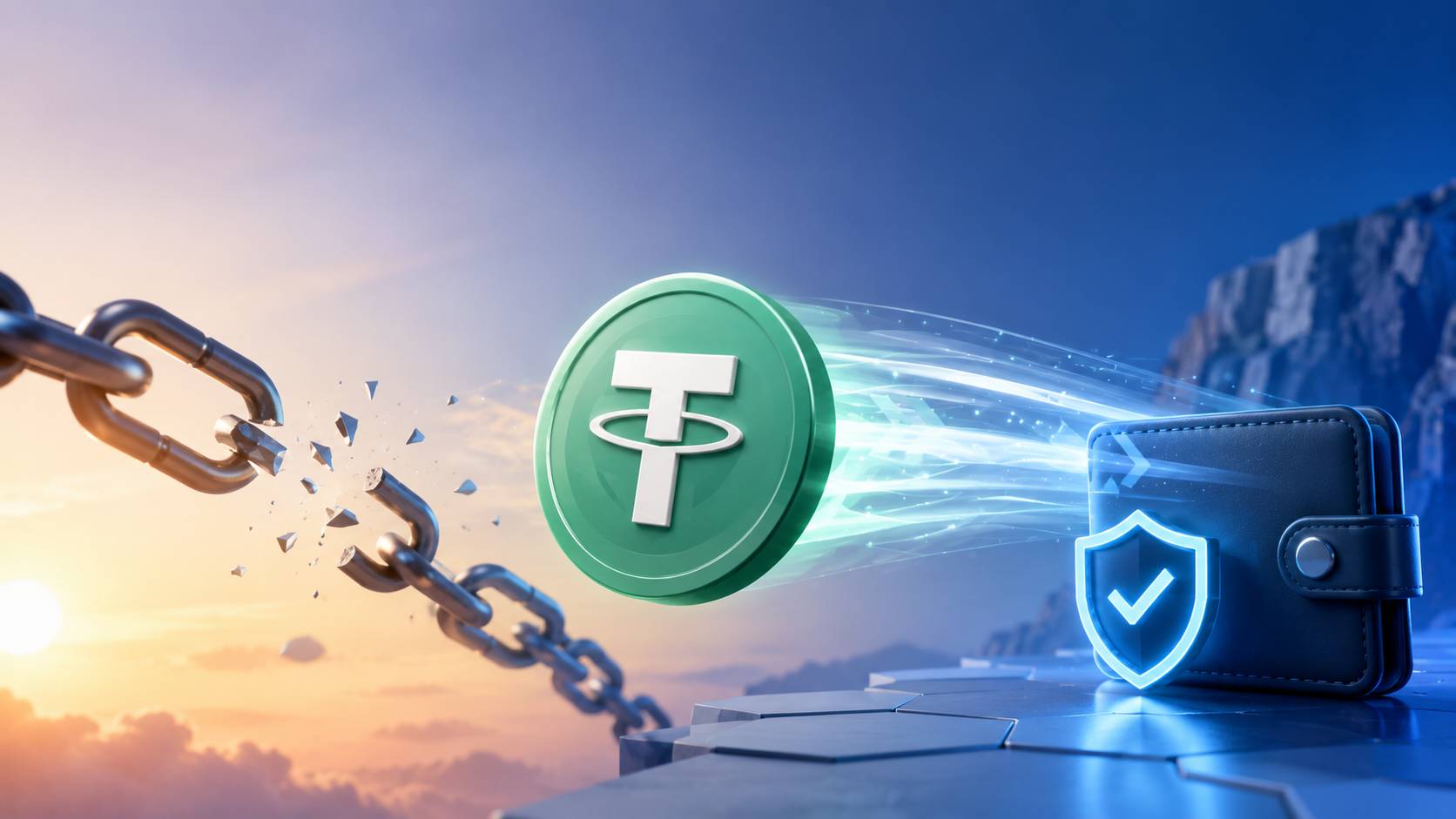
USDT holders on Tron hit the same wall every month: the wallet balance shows hundreds of dollars in stablecoins, but the transfer fails because there's no TRX to pay the network fee.
A new generation of wallets and services solves this by deducting the fee from the USDT being sent, not from a separate TRX balance.
Three methods now exist to send USDT without TRX. The cleanest path runs through wallets that integrate Tron's Gas-Free network feature directly. Energy rental services and TRX staking work as alternatives. The walkthrough below covers the mechanism and a step-by-step guide using IronWallet.
Why Tron Asks for TRX When You Send USDT
Tron runs on a resource model with two native components: Energy and Bandwidth. Every account gets a small daily Bandwidth allowance, but Energy must be earned or paid for.
USDT transfers on Tron are smart contract calls, which means they consume Energy. When a wallet has no Energy reserves, the network automatically burns TRX from the sender's balance to cover the cost. A typical USDT transfer burns 6 to 13 TRX, depending on the recipient address state.
The problem hits when the wallet has zero TRX and zero Energy. The network has no way to pay for the transaction, the smart contract call fails, and the user sees an "insufficient energy or balance" error. Funds aren't lost, but they're stuck until the wallet receives some TRX.
Three Ways to Send USDT Without Holding TRX
The question of how to send USDT without TRX has three working answers in 2026, each with different trade-offs on cost and convenience.
1. Gasless USDT Wallets
A growing group of wallets integrates Tron's Gas-Free flow directly. The fee gets deducted from the USDT being sent, with no TRX balance required at any point. IronWallet, Klever, NOW Wallet, and Guarda all support this method, each with slightly different fee structures.
2. Tron Energy Rental
Third-party services rent Energy to wallet addresses for a small fee paid in USDT. The wallet receives Energy temporarily, the user sends USDT, and the rental expires. Services like TronSave and TronCastle offer this through Telegram bots or web dashboards. Renting is often cheaper than burning TRX directly, especially for occasional senders.
3. TRX Staking for Energy
Users who already hold TRX can stake it to generate Energy automatically. Each frozen TRX produces a daily Energy allowance, and the staked amount can be unfrozen after a lockup period.
Practical only for users who already have significant TRX holdings, since around 6,000 to 7,000 TRX is typically needed to cover a single USDT transfer through staking alone after Tron's August 2025 energy price cut.
For most users holding only stablecoins, Method 1 is the simplest. It removes the need to manage TRX entirely.
How to Send USDT Without Holding TRX Using IronWallet
The six steps below walk through a complete gasless USDT transfer using IronWallet.
-
Download IronWallet from the App Store or Google Play. The app runs on iOS and Android.
-
Create or import a wallet. No email, no phone number, no KYC, no verification step. The app generates a 12-word seed phrase locally on your device.
-
Back up your seed phrase securely. Write it down offline. IronWallet uses double-key encryption on the device, and the seed phrase is the recovery method if the device is lost.
-
Add or select the Tron network inside the app. Copy your TRC-20 address and use it to receive USDT.
-
Open the send screen, enter the recipient address and the USDT amount. IronWallet routes the transfer through Tron's gasless flow automatically.
-
Confirm with PIN or biometric login. The commission is deducted directly in USDT, not in TRX. No separate gas token balance is required at any step.
The same flow applies to gasless USDC on Ethereum. Add the Ethereum network in the app, copy your ERC-20 address, and send USDC without holding ETH for gas.
What Gasless USDT Actually Costs
"Gasless" doesn't mean free. The network fee still exists, but it gets paid in the stablecoin instead of in TRX. Typical costs across the wallets that support this flow run from 1 USDT (Klever, Guarda) to 1.5 USDT (NOW Wallet) per transfer. IronWallet deducts the commission directly from the stablecoin being sent.
For a $50 USDT transfer, the difference between burning TRX and using a gasless USDT wallet is usually small but predictable. Burning TRX costs 6 to 13 TRX (around $1 to $3 at typical prices) and depends on network congestion. A flat USDT fee removes that variability.
When This Approach Makes Sense
Gasless USDT transfers fit best when the user holds only stablecoins, sends infrequently, and wants to skip TRX management entirely. Single transfers, peer-to-peer payments, and small remittances all match this profile.
High-frequency senders moving USDT dozens of times per day usually save money by staking TRX for Energy instead, because the per-transfer USDT fee adds up. Institutional flows and exchange-scale operations have their own infrastructure for fee management that doesn't rely on per-wallet gasless features.
Conclusion
How to send USDT without TRX is no longer an obscure workaround in 2026. Wallets that integrate Tron's Gas-Free flow turn it into a default option, with the network fee deducted from the stablecoin itself.
IronWallet extends the same model to USDC on Ethereum, which gives stablecoin holders a multi-chain answer to the gas token problem. No KYC, no email, and no native token requirement at signup or transfer time.
FAQ
Is gasless USDT safe?
Yes, when used through a non-custodial wallet. The mechanism deducts the network fee from the USDT being sent and does not require sharing private keys with any third party. IronWallet keeps private keys on the device with double key encryption, and the gasless flow runs through Tron's native Gas-Free feature with no custody risk.
Does gasless USDT work for both sending and receiving?
Receiving USDT on Tron never requires gas, with or without a gasless feature. The recipient only needs an active TRC-20 address. Gasless support matters specifically for the sending side, where the network fee normally requires TRX.
Can I use gasless USDT to send to an exchange?
Yes. The recipient address can be any valid Tron address, including exchange deposit addresses for Binance, Bybit, OKX, KuCoin, and others. The gasless mechanism affects only how the network fee gets paid on the sender's side, not where the USDT lands.
What if I accidentally send USDT without enabling gasless?
The transfer behavior is automatic in wallets that support gasless flows by default. IronWallet routes USDT transfers through the gasless path when the wallet has no TRX balance, so there's no separate toggle to forget. If a wallet requires manual selection and the gasless option is missed, the transfer either burns TRX from the wallet or fails with an insufficient resources error.
Disclaimer: This article is provided for informational purposes only. It is not offered or intended to be used as legal, tax, investment, financial, or other advice.
0
0


 Manage all your crypto, NFT and DeFi from one place
Securely connect the portfolio you’re using to start.

0
0

0
0

0
0

0
0