
Bitmine Makes Record ETH Investment For 2026, As $290 Million Kelp Dao Hack Hits Defi 🚨

0
0

The leading cryptocurrencies staged a significant recovery this week, as some of the largest corporate treasury firms made their biggest crypto investments of 2026 📈.
Bitcoin rose to a weekly top above $79,400, reaching a near 2-month high last seen at the beginning of February, driven by a massive $2.5 billion investment by Michael Saylor’s Strategy, the company’s third-largest investment in history.
The largest corporate Ethereum holder, Bitmine, also stepped in with a $235 million acquisition, delivering its biggest investment since December 2025 🏦.
However, the market’s recovery was limited by the ripple effects of the $290 million hack on Kelp DAO, of which $175 million had already moved as attackers started laundering the funds.
Adding to investor fears, the hacker used the stolen funds to borrow a huge loan from Aave, leaving about $230 million in bad debt on the largest lending protocol.
Crypto investors fled in fear of cross-contagion, pulling $18 billion from DeFi applications and taking much of the momentum that drove this week’s gains, awaiting the final decision on how Aave will process the scenario.

In this week’s CoinStats Scoop, you’ll find:
📊 Crypto Market Analysis And The Most Important News In Web3
🔥 Bitmine buys $235 million in ETH in its largest investment for 2026
🚨 Kelp DAO hacked for $290 million, attackers launder $175 million
📉 DeFi TVL crashes by $18 billion as investors fear Aave’s $230 million bad debt
⚖️ Justin Sun sues Trump-linked World Liberty Financial over locked tokens
🔮 Analysis And Key Events That Will Shape The Crypto Market Next Week
Bitmine Buys $235 Million In ETH In Its Largest Investment For 2026 🚀
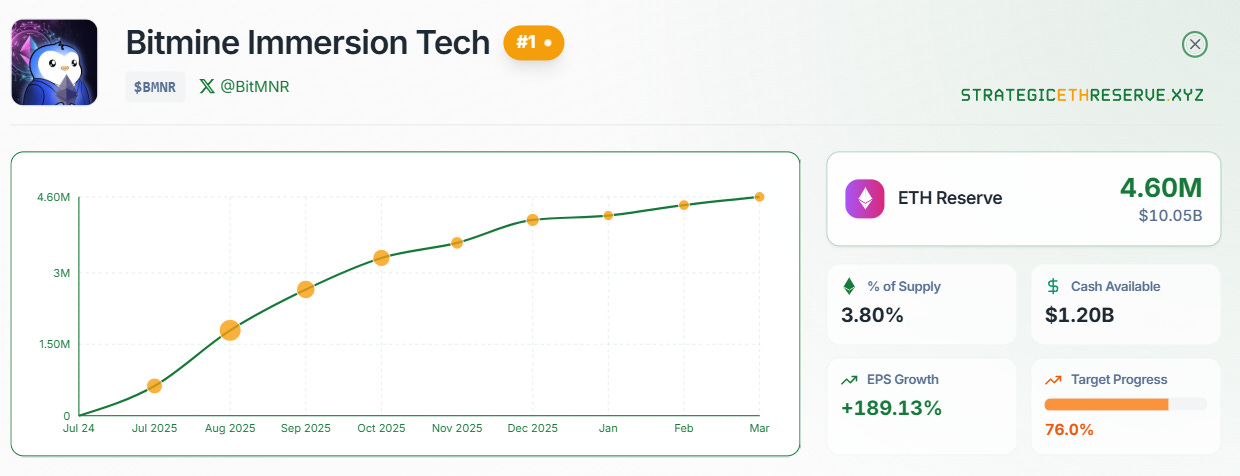
Bitmine Immersion Technology, the world’s largest corporate Ether holder, made its biggest investment of the year, signaling deeper institutional appetite for digital assets.
Bitmine bought 101,627 Ether for about $235 million during the past week, pushing the company’s holdings to 4.97 million ETH tokens, representing over 4% of the total ETH supply, according to an April 20 announcement.
Moreover, the treasury firm said that the crypto bear market is steadily coming to an end, setting up Ether to continue outperforming the traditional stock market, commented Thomas Lee, Chairman of Bitmine 🧠.
✍️ “We see growing signs that the ‘mini-crypto’ winter is coming to an end. As downside tail risks for the US-Iran war diminish, ETH has risen 41% from its early February lows. And ETH has outperformed the S&P 500 by 2,280 basis points since the war started and remains the single best-performing asset in the world (besides crude oil prices).”
Lee predicted that ETH is in the “final stages of the mini-crypto winter,” adding that the company has accelerated its investments during the past 4 weeks.
BitMine’s $235 million investment is the highest weekly figure since December 15, 2025, signaling more incoming investments from BitMine, ranked as the largest corporate Ether holder with over $10 billion worth of ETH reserves 🏦.
Kelp DAO Hacked For $290 Million, Attackers Laundered $175 Million 🚨
Kelp DAO was exploited for $290 million as attackers staged the biggest crypto hack so far in 2026, sending shockwaves across the industry.
On April 18, a hacker drained 116,500 rsETH worth about $290 million from the rsETH bridge run by liquid restaking protocol Kelp DAO 💸.
The vulnerability stemmed from attackers exploiting a vulnerability in Kelp’s 1/1 decentralized verified network (DVN) setup, a configuration that created a single point of failure for the exploit, claimed interoperability LayerZero, which was the DVN provider for Kelp’s exploited bridge.
✍️ “The subject of this highly sophisticated attack was the poisoning of the downstream RPC infrastructure used by the LayerZero Labs DVN. All affected RPC nodes have been deprecated and replaced, and the LayerZero Labs DVN is now live.”
Following the attack, LayerZero said it would demand applications using 1/1 DVN setups to migrate to multi-DVN setups to avoid similar security shortfalls 🔐.
The exploit delivers another blow to the credibility of decentralized finance applications, as cybersecurity incidents remain one of the leading challenges for mainstream adoption.
On April 21, the hacker had moved $175 million worth of the stolen funds, as it began laundering the proceeds through Thorchain to make them untraceable and cash out.

DeFi TVL Crashes By $18 Billion As Investors Fear Aave’s $230 Million Bad Debt 📉
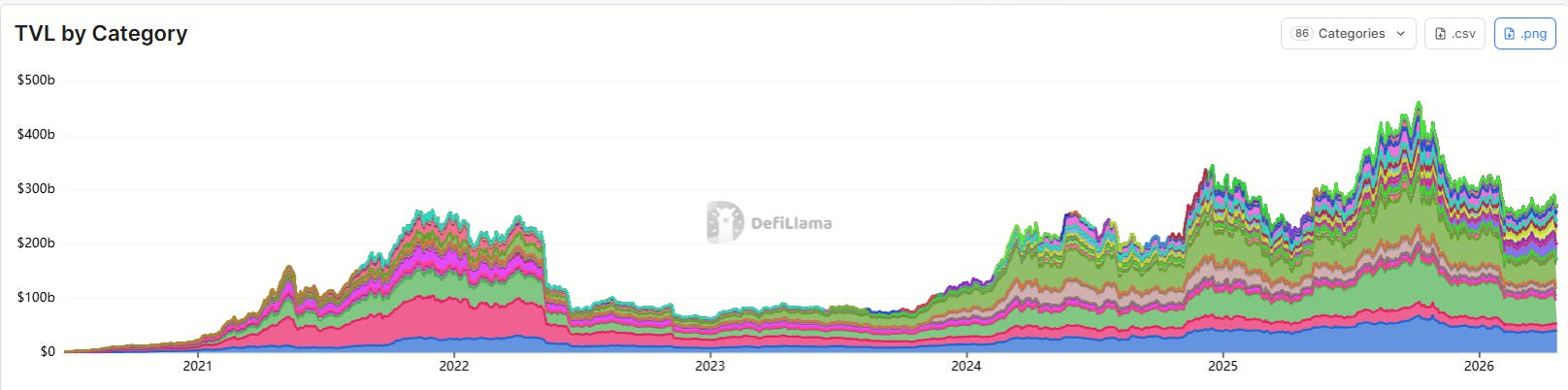
Crypto investors staged a capital flight from decentralized finance (DeFi) protocols after contagion fears spread following the $290 million exploit on Kelp DAO on April 18.
Investors withdrew $18 billion from DeFi applications in the 4 days following the Kelp exploit, as Total value locked (TVL) across all DeFi applications fell from $291 billion on April 18 to $273 billion by April 22, according to DeFiLlama data.
Ethena Labs’s USDe synthetic dollar saw one of its largest redemption events, as investors pulled $800 million or 14% of its supply in just 3 days, wrote crypto analytics firm CryptoQuant, adding ⚠️.
“Liquidity is exiting fast, and pressure is spreading across DeFi.”
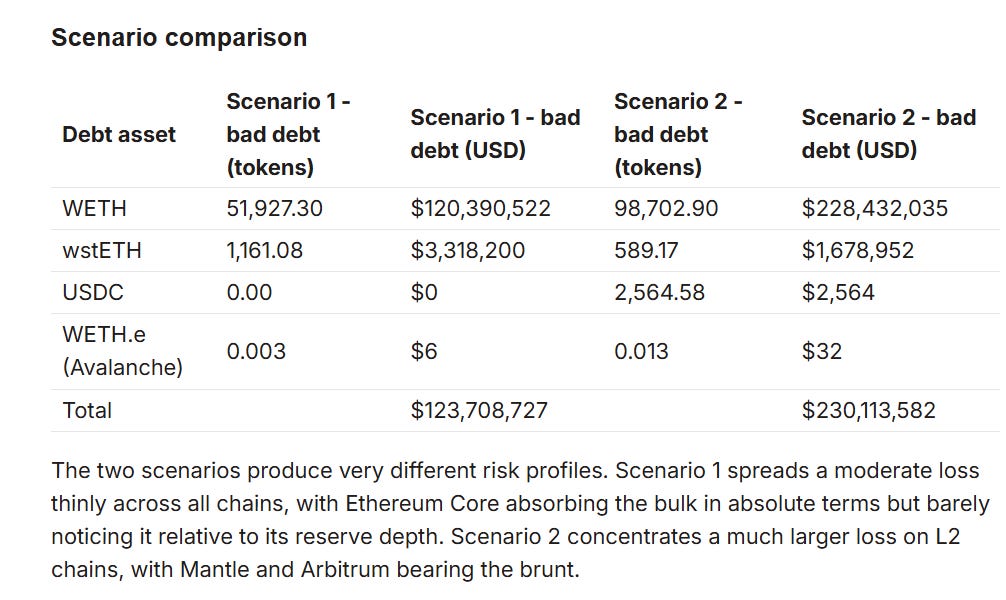
The hack alone was a damaging incident, but the hacker used the stolen funds to borrow funds on Aave, creating around $124 million to $230 million in “bad debt” for the lending protocol and sparking fears of a wider contagion effect akin to the Terra-Luna collapse.
Aave risk manager LlamaRisk proposed two solutions to mitigate the bad debt. The first one would spread losses across rsETH holders on Ethereum and L2s, leaving $123 million in bad debt for Aave. The second would spread the entire loss to holders on L2s, leaving Aave with $230 million in bad debt.
Justin Sun Sues Trump-Linked World Liberty Financial Over Locked Tokens
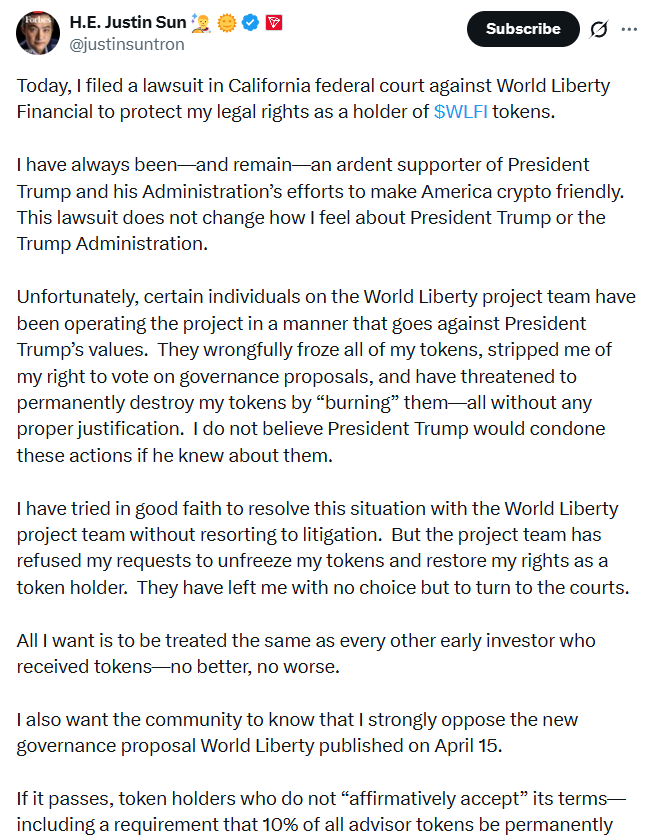
Tron blockchain founder Justin Sun sued the Trump family-backed World Liberty Financial platform over his early token investment in the platform.
Sun filed a lawsuit in a California federal court against World Liberty Financial over his locked WLFI token allocations, accusing the project of freezing his tokens and threatening to burn them with no “proper justification” 📄.
“All I want is to be treated the same as every other early investor who received tokens - no better, no worse,” wrote the founder in an announcement, adding that he opposes the governance proposal put forth by World Liberty on April 15.
✍️ “If it passes, token holders who do not ‘affirmatively accept’ its terms - including a requirement that 10% of all advisor tokens be permanently burned - will have their tokens locked indefinitely.”
Sun also claimed that for early purchaser tokens, the governance proposal imposed a 2-year cliff lockup followed by another 2-year vesting schedule, adding that he cannot vote against the proposal since his tokens were frozen back in 2025.
World Liberty Financial has yet to publicly respond to the lawsuit, but it threatened to sue Justin Sun last week, claiming that he is making “baseless allegations to cover up his own misconduct” ⚠️.
World Liberty’s governance process came under scrutiny in March, after a proposal to determine token lock-up periods received 76% of the voting power from just 10 wallets.
Market Overview: Bitcoin Tops $79K As Analysts Warn Of Another Correction Before The Cycle Bottom 📊
Bitcoin price staged a 6.4% recovery this week, briefly topping a 7-week high of $79,400 last seen at the beginning of February, as investors digested more rumors of peace negotiations in the Middle Eastern conflict.
Strategy and Bitmine, the largest Bitcoin and Ether holding firms, both made near-record purchases this week, showing more underlying institutional appetite for digital assets 🏦.
Still, Bitmine’s $235 million Ether purchase was not enough to push ETH past the crucial $2,500 psychological mark, capping its movement to a 2% weekly gain, data from CoinStats shows.

Bitcoin holders rejoiced following the significant weekly rally, but some of the most popular analysts cautioned that the move may only be a temporary relief rally.
“First time in this bear market that the Bull Score Index enters neutral zone (50),” wrote CryptoQuant’s head of research, Julio Moreno, adding that this setup led to a week of “neutral” price action back in March 2022, before BTC resumed its decline.

The top 200 largest cryptocurrencies are also spotting similar patterns, based on a breadth indicator published by Real Vision’s chief crypto analyst, Jamie Coutts. He wrote:
✍️ “79% of the top 200 crypto assets hit a 1-year new low. That’s higher than June 2022. In 2022, that reading was followed by one more flush - then the actual cycle low. Not a buy signal. A proximity signal.”

However, some institutions brought some much-needed bullish hope for digital asset holders 🌱.
Grayscale, the largest crypto-focused asset manager, said that Bitcoin’s cyclical bottom may already be in, despite conflicting analyst views.
“$BTC has rallied nearly 20% since February 5th. Recent buyers are back at breakeven around ~$74K,” wrote Grayscale, adding that this setup reduces sell pressure and flips short-term sentiment, often serving as an earthly indicator of the “first phase of a bull cycle.”

Tweets & Memes
Crypto is currently in the “depression phase” before the next accumulation period, according to Grok 😟.

More troubling connections around the Trump-linked WLFI project 🧩.

Crypto scams find their way into maritime warfare 🚢?

Thank you for reading the weekly CoinStats Scoop Newsletter.
CoinStats will continue to guide you through the world of crypto and DeFi. We’ll see you next week for another edition of CoinStats Scoop! 😎
0
0


 Manage all your crypto, NFT and DeFi from one place
Securely connect the portfolio you’re using to start.


0
0

